

For broader selection context, see Comprehensive Guide to Electroplating Rectifiers: Definition, Working Principle, and Selection.
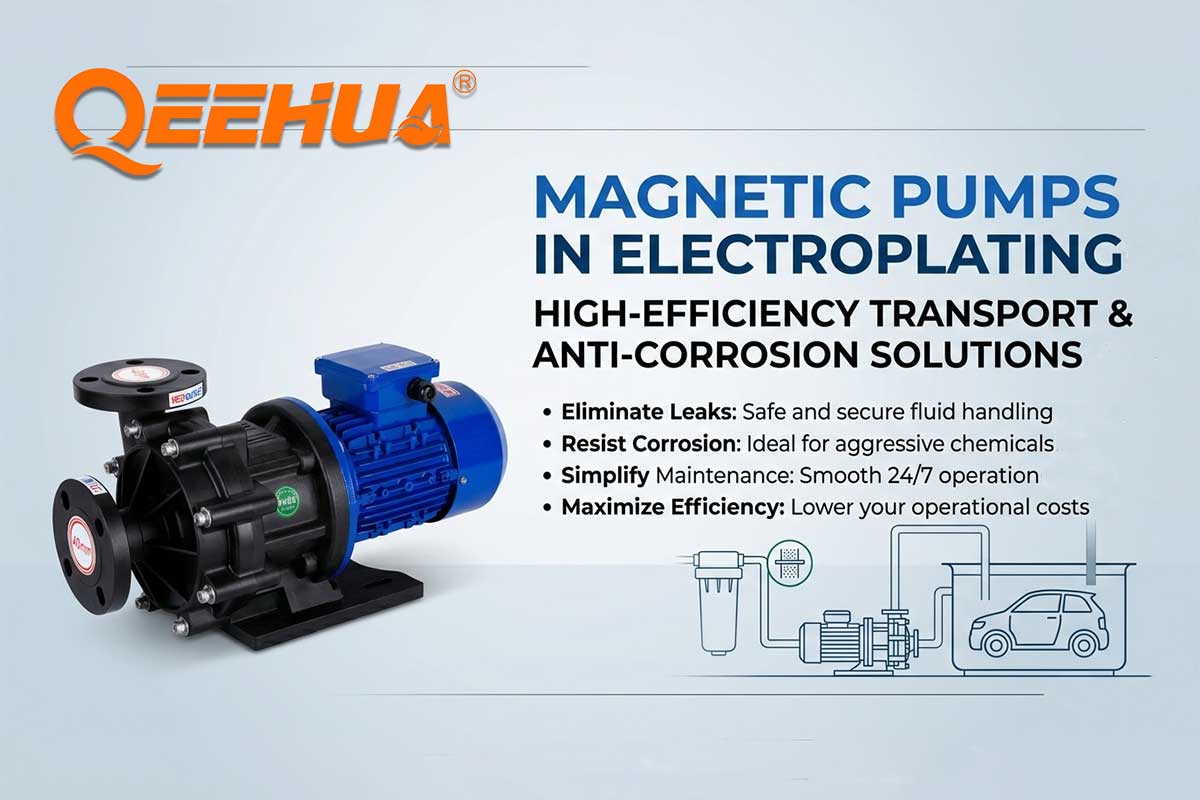
A magnetic drive pump can jam, overheat, or lose flow when metal particles enter the pump chamber, because the magnetic coupling and close internal clearances are designed for clean corrosive liquids, not abrasive or ferrous solids. In electroplating and PCB wet-process lines, iron fines, copper flakes, plating sludge, broken filter media, and crystallized salts should be stopped before the pump, or the system should use a different pump style. For clean acid and alkali transfer, plastic magnetic pumps are useful because they avoid mechanical seal leakage, but they need a clean-liquid operating envelope.
This guide is for plant managers, equipment OEMs, maintenance engineers, and purchasing teams who are deciding whether a sealless magnetic pump is still the right choice after repeated jamming, high current, noise, or unexplained flow loss in a plating, etching, cleaning, or PCB chemical circulation loop.
Why Metal Particles Jam Magnetic Drive Pumps
A magnetic drive pump transfers torque through an outer magnet and an inner magnet instead of through a shaft seal. That sealless construction removes a common leak path, which is why it is attractive for acids, alkalis, solvents, and PCB wet-process chemicals. The same construction also means the liquid side contains close-running internal parts: impeller, shaft, bearing, thrust surfaces, containment shell, and inner magnetic rotor.
When clean liquid lubricates and cools those parts, the pump can run steadily. When hard particles or ferrous fines enter the pump, the risk changes. Particles can lodge between rotating parts, scratch bearing surfaces, block small passages, or collect near the inner magnet. Ferrous debris is especially dangerous because it can be attracted into the magnetic field and remain in the coupling area instead of passing through the pump.
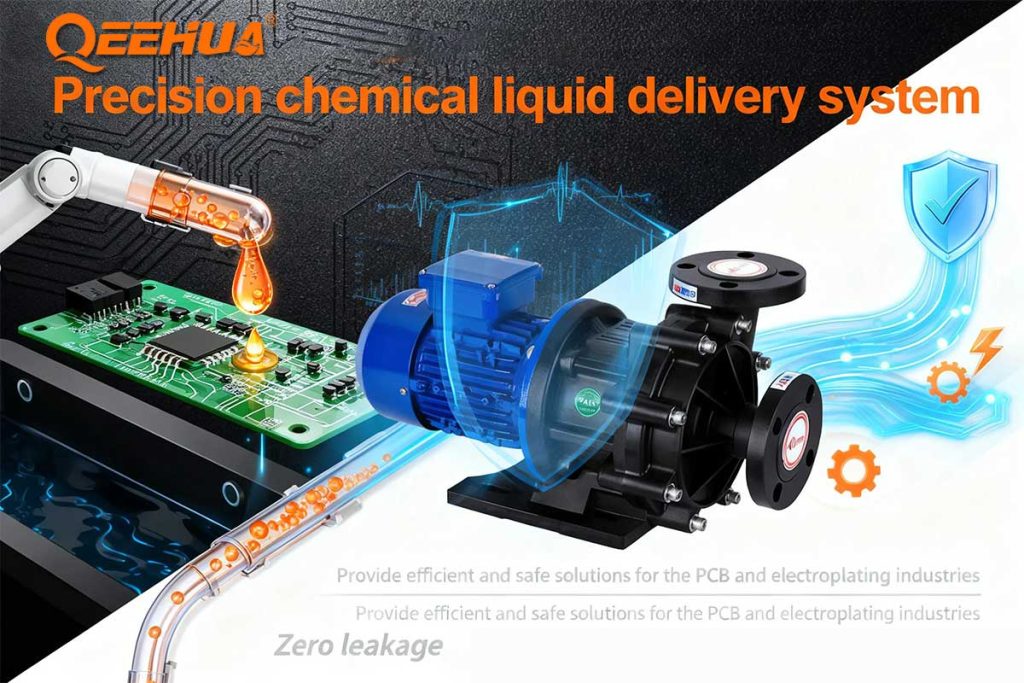
QEEHUA local product material notes classify magnetic pumps as suitable for clean corrosive transfer and warn against media with small solid impurities, especially magnetic metal particles. That does not mean every plating line should avoid magnetic pumps. It means the line must control solids before the pump and should not use the pump as a substitute for filtration.
Symptoms Maintenance Teams See First
Metal-particle damage rarely starts as a dramatic failure. It usually begins as a small operating change that is easy to misdiagnose as a valve, power, or filter issue. The key is to compare current behavior with the pump’s normal baseline: flow, pressure, amperage, noise, temperature, and vibration.
| Observed symptom | Likely particle-related mechanism | Immediate check |
|---|---|---|
| Flow drops but the motor still runs | Impeller passage, suction strainer, or bearing clearance is partially blocked | Check suction restriction, filter differential pressure, and pump discharge flow |
| Sharp noise or scraping sound | Debris is rubbing between the impeller, containment shell, or magnetic rotor area | Stop the pump and inspect before the containment shell is damaged |
| Current rises after startup | Rotor drag increases because particles are trapped in close clearances | Compare motor current with nameplate and previous operating records |
| Pump trips on overload or cannot restart | Impeller or inner magnet is jammed by solids, crystallization, or plating deposits | Lock out power, drain safely, and rotate/inspect the wet end manually |
| Repeated bearing and shaft sleeve wear | Abrasive fines are passing through filtration and wearing sliding surfaces | Review pre-filtration grade, bath contamination, and maintenance interval |
These symptoms overlap with deadheading, gas binding, reverse rotation, and filter blockage. If the outlet valve is closed or the bypass is wrong, the failure mode is closer to magnetic drive pump deadheading. If the filter pressure climbs quickly, compare the symptoms with electroplating filter pressure too high before assuming the pump itself is the root cause.
Where Particles Enter Electroplating Loops
Electroplating and PCB wet-process systems create particles from more than one source. A pump may be selected correctly at the beginning, but the actual liquid becomes dirtier after months of operation, tank maintenance, chemistry drift, or filter bypass.
Common sources include metal chips from workpieces or racks, copper fines from PCB handling, anode sludge, plating flakes, carbon treatment residues, broken filter cartridges, degraded O-rings, pipe scale, rust from nearby steel parts, crystallized salts after cooling, and precipitates from unstable bath chemistry. In electroless nickel service, plate-out and crystallization can also create hard deposits inside low-flow areas. In acid copper or bright nickel service, organic breakdown products may load the filter and push more debris toward the pump if the filtration loop is not maintained.
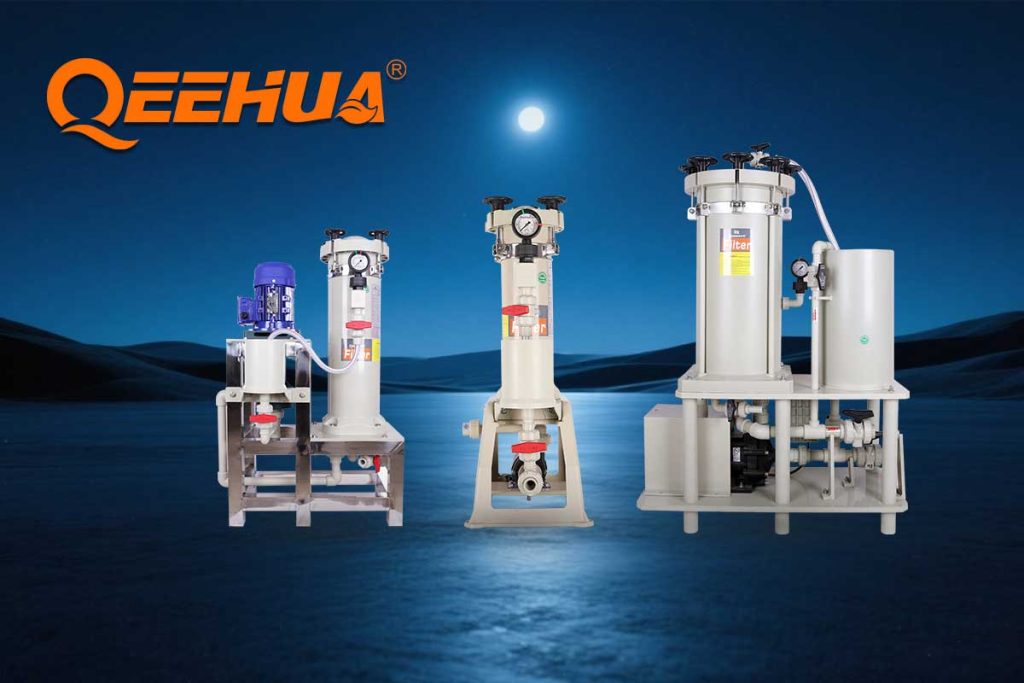
For PCB and electroplating lines, filtration has to be treated as part of pump protection, not only as a product-quality accessory. QEEHUA’s PCB wet process filtration guide explains how the chemical filter and pump should be selected together so particles are captured without starving or overloading the pump.
Diagnosis Before Restarting the Pump
A closely related QEEHUA reference is The Ultimate Guide to Plating Filters: Enhancing Electroplating Quality and Efficiency.
Do not repeatedly jog a magnetic drive pump that is noisy, jammed, or drawing high current. Each restart can grind particles into the bearing and containment shell. A safer sequence is to isolate the problem, remove stored chemical energy, and inspect from the system outward.
Field diagnosis sequence:
- Record the process: chemical name, temperature, specific gravity, solids source, recent bath maintenance, and whether the failure followed filter replacement or tank cleaning.
- Check suction conditions: liquid level, vortexing, suction strainer, blocked inlet, undersized pipe, and air leakage at joints.
- Check discharge conditions: valve position, filter differential pressure, bypass position, clogged cartridge, and return-line restriction.
- Check electrical data: phase sequence, voltage balance, overload setting, current trend, and whether the motor trips immediately or after heating.
- Drain and flush safely: follow lockout, depressurize, drain the pump, and neutralize or collect chemicals according to site procedure.
- Open the wet end: inspect the impeller, shaft, bearing, containment shell, and inner magnet area for scratches, lodged particles, plating deposits, or magnetic fines.
If the pump contains metal particles, also inspect the tank and piping. Replacing the pump without removing the source only moves the same failure to the new unit. In severe cases, the maintenance team should sample solids from the suction strainer, filter housing, and pump chamber separately to identify whether the source is process sludge, broken media, ferrous contamination, or corrosion products.
Prevention and Pump Selection Checklist
The best fix depends on whether particles are an abnormal contamination event or a normal feature of the process. A clean chemical circulation loop can still use a magnetic pump if the solids source is corrected. A process that regularly carries abrasive or magnetic solids needs a different selection discussion.
| Process condition | Recommended control | Selection note |
|---|---|---|
| Clean acid, alkali, or PCB wet-process solution | Use proper inlet protection, prevent dry running, and keep filtration in service | Magnetic drive pump remains a strong leak-free option |
| Occasional tank-cleaning debris or plating flakes | Flush tank, clean suction strainer, verify cartridge integrity, and inspect pump before restart | Keep magnetic pump only if contamination is corrected |
| Ferrous dust, iron chips, or magnetic metal fines | Add upstream removal, magnetic trap where compatible, and strict tank housekeeping | Avoid using a standard magnetic pump as the primary solids-handling device |
| Regular nonmagnetic particles below a controlled size | Confirm particle size, concentration, and material compatibility with the pump supplier | Consider compatible centrifugal or vertical pump construction |
| High solids, abrasive sludge, or unstable precipitate | Separate settling, filtration, and transfer duties; protect the transfer pump from solids loading | Do not select on flow/head alone; ask for an application review |
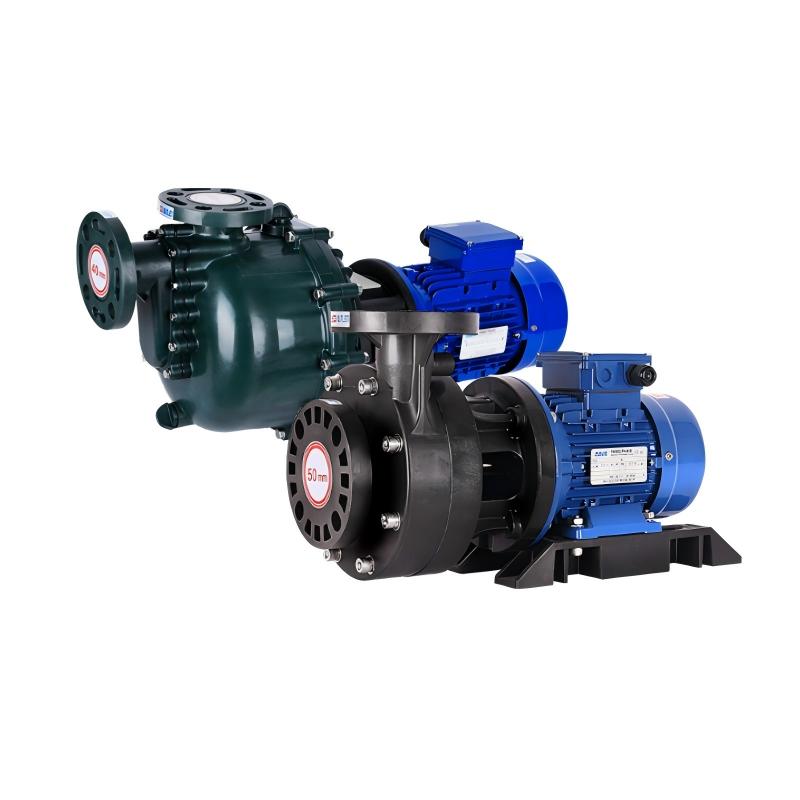
For pump purchasers, the key specification question is not only flow and head. Ask the supplier what the pump can tolerate in terms of particle size, solids concentration, magnetic metal risk, temperature, and specific gravity. QEEHUA product knowledge notes show that plastic centrifugal pumps can be more appropriate for some liquids with small nonmagnetic impurities, while magnetic pumps are preferred where leakage control and clean chemical compatibility are the main priorities. For corrosive transfer with limited solids, review a compatible plastic centrifugal pump option instead of forcing a sealless magnetic pump into a dirty loop.
Practical safeguards for OEMs and maintenance teams
Build protection into the skid or wet-process line from the beginning. Use a removable inlet strainer where maintenance access is safe. Keep filter housings correctly assembled so damaged cartridges or loose O-rings do not bypass particles. Install differential pressure monitoring across the filter. Avoid dead legs where crystals or sludge settle. Add low-level protection and dry-run protection so operators do not continue running a pump after flow is lost.
For existing lines, create a simple inspection standard: normal pressure, normal flow, normal current, normal sound, and normal pump casing temperature. When one value changes, stop and diagnose. This habit prevents a small contamination problem from becoming a containment-shell, bearing, shaft, and magnet replacement.
For a related troubleshooting angle, review How Plating Rectifier Works in Plating Process: A Complete Guide before finalizing the pump decision.
FAQ
Can a magnetic drive pump handle solids?
A standard magnetic drive pump should be treated as a clean-liquid pump unless the manufacturer confirms a specific solids allowance. Small abrasive or ferrous particles can damage the bearing surfaces, impeller, containment shell, or magnetic rotor area.
Why are metal particles worse than ordinary sludge?
Ferrous particles can be attracted by the magnetic field and stay near the inner magnet or coupling area. Once trapped, they can scrape rotating parts, raise current, generate heat, and cause the pump to jam.
Should I add a finer filter before the pump?
Sometimes, but not blindly. A finer filter can protect the pump, but it can also starve the pump or raise system pressure if undersized. Match filter area, micron rating, flow, and cleaning interval to the bath contamination load.
What should I do if the pump is jammed?
Stop the pump, lock out power, depressurize, drain safely, and inspect the wet end. Do not repeatedly restart the motor. Find and remove the source of particles before installing replacement parts.
When should I choose a different pump type?
Choose a different construction when particles are a normal part of the process, when sludge cannot be removed upstream, or when the liquid contains magnetic metal fines. If the liquid can be kept clean and the main risk is chemical leakage, compare the service against QEEHUA’s magnetic drive pump chemical handling guide; otherwise, a compatible centrifugal or vertical pump may be safer for dirty circulation than a standard magnetic drive pump.
If your electroplating or PCB line has repeated pump jamming, unexplained flow loss, or metal-particle contamination, send QEEHUA the liquid name, temperature, specific gravity, particle source, flow/head requirement, and current pump model. Email QEEHUA at info@qeehua.com for a pump and filtration fit review before replacing the same failed unit again.
