


For broader selection context, see PCB Wet Process Filtration: How to Choose the Right Chemical Filter and Pump.
When electroplating filter pressure is too high, the usual causes are clogged cartridges, crystallized chemistry, trapped air, undersized filter area, too much pump flow, a blocked discharge path, or a pressure gauge that no longer reads correctly. For PCB and metal-finishing plants, the fix is not simply to install a stronger pump. The safer approach is to compare clean-start pressure against current pressure, confirm flow, inspect the filter media and valves, then match the pump and filter as one circulation system. If you are still sizing the line, QEEHUA’s guide to PCB wet process filtration and chemical filter pump selection is the natural starting point.
This article focuses on the maintenance and process-risk question plant engineers actually face: why the pressure gauge keeps climbing, why flow falls even though the pump is running, and how to prevent a chemical filter loop from turning into a leak, cartridge-collapse, or bath-contamination problem.
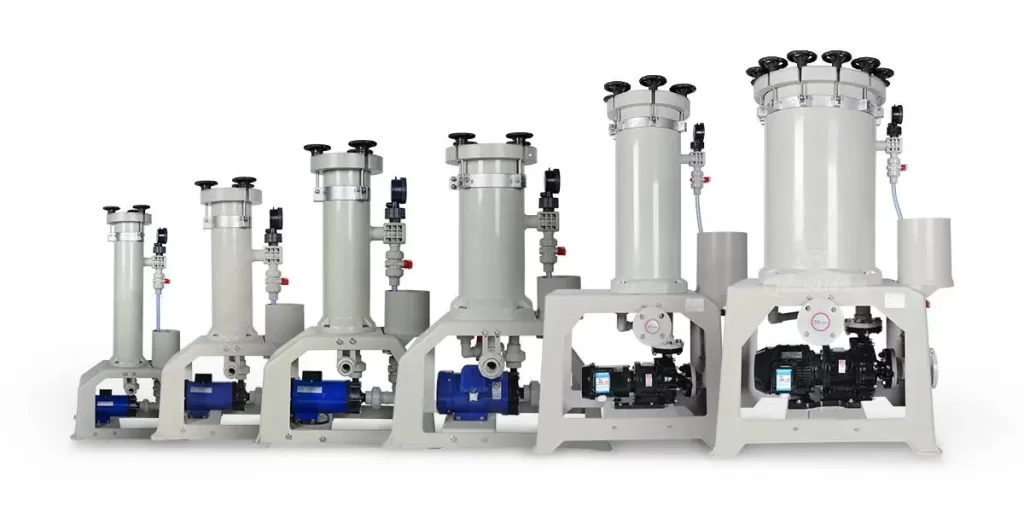
Why Electroplating Filter Pressure Rises
A chemical filter creates resistance to flow. Some resistance is normal because the cartridge, filter bag, carbon layer, or filter paper is doing useful work. The problem starts when resistance rises faster than expected or exceeds the filter housing, cartridge, seal, or piping design. In electroplating and PCB wet process lines, high pressure often means the system is trying to push solution through a restriction instead of circulating smoothly.
QEEHUA’s local field checklist for electroplating and PCB systems repeatedly points to the same operating pattern: dirty filter media, unvented filter housings, undersized filters paired with larger pumps, crystallized nickel or copper salts, wrong start-up sequence, and blocked valves. These are not isolated filter problems. They are circulation-loop problems involving the pump, filter, valves, pipe layout, chemistry, and maintenance schedule.
Symptoms Operators Should Not Ignore
High pressure is only one symptom. Operators should also watch for falling return flow, louder pump noise, vibration, reduced spray quality, frequent seal leakage, filter barrel swelling, cartridge collapse, or a pressure gauge that does not return to zero after shutdown. In a chemical filter loop, pressure and flow must be read together. High pressure with falling flow usually means restriction. High pressure with normal flow may point to an oversized pump, partially closed valve, or undersized downstream piping.
On PCB developing, etching, copper plating, nickel, chemical copper, chemical nickel, and chemical gold lines, pressure instability can become a process-quality problem. Poor circulation lets particles remain in the bath, shortens cartridge life, and can make local concentration or temperature less uniform. If particles still pass even after filtration, compare this article with QEEHUA’s separate troubleshooting guide on PCB chemical filter short circuit, because low filtration efficiency and high pressure can appear together but do not always have the same root cause.
Root-Cause Checklist for PCB and Plating Lines
1. The cartridge or filter bag is loaded
The most common reason is also the easiest to overlook: the filter media has done its job and is now restricting flow. In plating lines with fine filtration requirements, a 1-5 micron cartridge can load quickly if there is no coarse pre-filter, if tank sludge is not removed, or if the bath has been disturbed after maintenance. Replacing the cartridge without correcting the solids source only resets the failure clock.
2. Pump flow is higher than the filter can handle
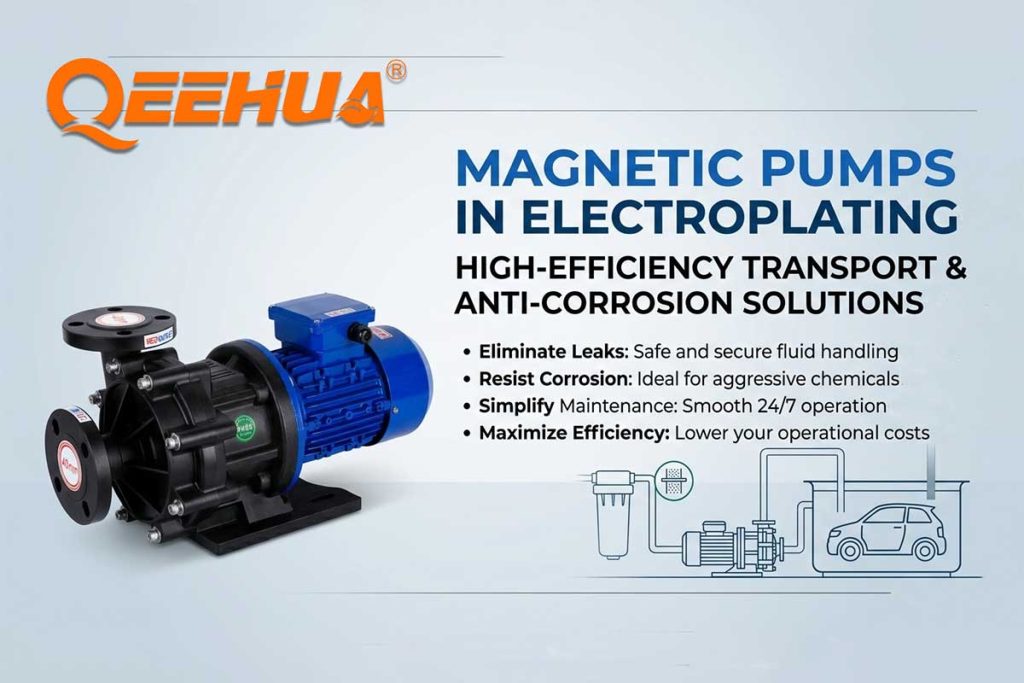
A pump that is too large for the filter housing can overload cartridges, raise pressure, damage media, and shorten maintenance intervals. QEEHUA’s field notes use a practical matching rule: pump flow should normally stay close to the filter’s rated flow, often around 1.1 to 1.2 times the filter flow where adjustment is required, rather than several times higher. If the line uses a magnetic drive pump, the selection should be checked against head, flow, specific gravity, temperature, and chemical compatibility, not only pipe size. QEEHUA’s article on choosing a magnetic drive pump for PCB wet process lines gives the pump-side context.
3. Air is trapped in the filter housing
Air lock can make the pressure reading unstable and can reduce useful flow through the media. This is common when the vent valve is not at the true high point, the operator starts the pump before venting, or the suction line pulls air through a loose fitting. A filter should be filled and vented before normal operation. If air repeatedly returns, inspect the suction side, tank level, inlet pipe slope, and any gasketed fittings.
4. Crystallization or scaling has narrowed the flow path
Nickel, copper, high-salt, and temperature-sensitive baths can crystallize in dead zones, pressure-gauge diaphragms, discharge valves, cartridge surfaces, and pump chambers after shutdown. Once crystals form, pressure rises even with a relatively new cartridge. The usual prevention is controlled bath temperature, proper insulation where needed, complete drainage during shutdown, and warm-water or compatible rinse circulation before deposits harden.
5. The pressure gauge or valve position is misleading
Do not assume the gauge is correct. A diaphragm gauge can plug with crystals, and a damaged gauge may not return to zero. A downstream valve that is partly closed, a check valve installed backward, or a blocked return line can also make the pump work against unexpected back pressure. Before replacing the pump, confirm the simple mechanical checks.
Troubleshooting Table
A closely related QEEHUA reference is QEEHUA PUMP: Bag Filter Housing Material Selection.
| Observed condition | Likely cause | Immediate check | Recommended action |
|---|---|---|---|
| Pressure rises gradually; flow declines | Cartridge, bag, carbon layer, or filter paper is loading with solids | Compare current pressure with clean-start pressure and inspect media | Clean or replace media; add coarse pre-filtration if fine cartridges clog too fast |
| Pressure spikes after a new pump is installed | Pump flow exceeds filter rating or discharge valve is throttled too hard | Check pump curve, filter rated flow, valve opening, and return pipe size | Limit flow with correct valve control, resize the filter, or select a better-matched pump |
| Pressure fluctuates and filter makes noise | Air trapped in housing or air leak on suction side | Open the high-point vent and inspect suction fittings | Vent before operation; repair suction leaks; improve inlet pipe layout |
| Pressure remains high after cartridge replacement | Crystallized chemistry, blocked return line, or faulty pressure gauge | Check gauge zero, discharge path, pressure-gauge diaphragm, and dead zones | Flush with compatible warm water or process-approved cleaning fluid; replace faulty gauge |
| Filter housing leaks near cover or center rod | O-ring misalignment, uneven tightening, overpressure, or media collapse | Stop, depressurize, drain, and inspect sealing surfaces | Replace damaged seals, tighten evenly, and correct the pressure root cause before restart |
Selection and Prevention Rules
The best fix is to prevent the pressure problem during design. Start with chemistry, temperature, particle load, required filtration precision, target circulation turnover, and maintenance access. Then choose filter area, media grade, pump material, pump flow, and piping size together. QEEHUA’s chemical pump filter overview is useful when comparing filter arrangements for corrosive liquid service.
For electroplating and PCB lines, avoid making the filter the smallest part of the system. If the process needs continuous filtration, consider duty/standby filters, bypass valves for maintenance, visible pressure gauges, high-point venting, and a documented clean-pressure baseline after every media change. If the line handles chromic acid, fluoride-containing chemistry, strong oxidizers, strong alkali, or elevated temperature, verify PP, PVDF, PTFE, EPDM, FKM, ceramic, and other wetted materials against the actual concentration and temperature.
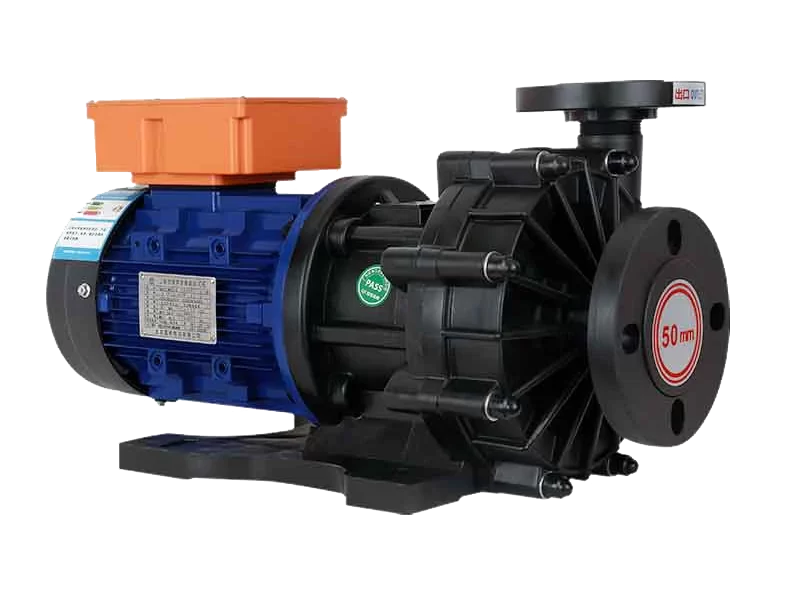
Because the pump can either stabilize or worsen filter pressure, do not select by horsepower alone. A larger motor does not solve a blocked cartridge, and a higher-flow pump can create more pressure risk if the filter area is too small. For corrosive wet process loops, QEEHUA commonly evaluates magnetic pumps, vertical pumps, plastic centrifugal pumps, and chemical filters together so the final system has compatible materials, manageable pressure, and realistic maintenance intervals. You can also review QEEHUA’s chemical filter product range when deciding whether the existing filter housing is still appropriate for the duty.
For a related troubleshooting angle, review Pump Pressure and Head: Principles, Formulas, and QEEHUA Application Guide before finalizing the pump decision.
FAQ
What is the first thing to check when electroplating filter pressure is too high?
First compare current pressure with the clean-start pressure recorded after the last media change. If pressure is much higher and flow is lower, inspect the cartridge, filter bag, carbon layer, and discharge path before changing the pump.
Can an oversized pump cause high chemical filter pressure?
Yes. If pump flow exceeds the filter’s rated flow, the media can load quickly, deform, tear, or create excessive back pressure. Match pump flow to filter capacity and use valve control only within the safe operating range.
Why does pressure stay high after replacing the cartridge?
Common reasons include crystallized deposits in the housing or piping, a blocked return valve, an unvented air pocket, or a faulty pressure gauge. If the gauge does not return to zero when the pump is off, verify the instrument before deeper troubleshooting.
Should operators keep running the line if pressure is high but production is urgent?
No. In corrosive electroplating service, high pressure can lead to leaks, spray, cartridge collapse, cover seal failure, or unplanned downtime. Stop safely, depressurize, drain if required, and identify the restriction.
What information should I provide for pump and filter selection?
Provide chemical name, concentration, temperature, tank volume, required turnover, filtration precision, current pressure and flow, pipe size, installation height, operating schedule, and any failure photos. That lets the supplier check both material compatibility and hydraulic fit.
Need help checking a high-pressure electroplating filter loop? Share your bath chemistry, filter model, pump flow/head, pressure reading, and photos with QEEHUA. Email info@qeehua.com for pump and chemical filter selection support.
