


A magnetic drive pump for PCB wet process lines should be selected by matching the chemical solution, temperature, flow rate, head, installation layout, filtration accuracy, and protection controls. In PCB etching, plating, developing, stripping, and surface treatment, the pump is not just a transfer device. It directly affects chemical uniformity, line stability, leakage control, particle risk, and production yield.
For most PCB wet process applications, a sealless magnetic drive pump is preferred because it removes the mechanical seal leakage path. The right choice usually depends on three questions: what chemical is being circulated, how stable the process flow must be, and what failure modes must be prevented before they damage the pump or contaminate the line.
Why PCB Wet Process Lines Need Specialized Chemical Pumps
PCB manufacturing uses many wet chemical stages, including cleaning, etching, copper plating, nickel-gold treatment, developing, stripping, rinsing, and wastewater treatment. These lines handle acids, alkalis, oxidizers, metal-containing solutions, and high-purity process fluids. The pump must therefore resist corrosion while keeping flow stable enough to support uniform chemical action on the board surface.
In a PCB factory, pump problems often become quality problems. Insufficient circulation can cause uneven etching or plating. Air entering the suction line can create flow fluctuation. Leaks can contaminate boards or damage nearby equipment. Particles from corrosion, poor installation, or worn components can scratch fine circuits or create short-circuit risks.
QEEHUA’s existing article on the role of QHX magnetic drive pumps in PCB wet processes explains why stable, leak-free circulation is especially valuable in PCB production.

What Is the Best Pump Type for PCB Etching and Plating?
For corrosive PCB wet process solutions, the best pump type is often a plastic magnetic drive pump or a fluorine-lined magnetic drive pump. The sealless structure uses magnetic coupling to drive the impeller, so there is no traditional shaft seal exposed to chemical attack.
This matters because mechanical seals are common leakage points in aggressive chemical service. In contrast, a magnetic drive pump keeps the liquid inside a closed pump chamber. For PCB lines that use corrosive etchants, plating chemicals, or high-value surface treatment solutions, leak prevention helps protect workers, equipment, and process consistency.
For a broader explanation of this pump structure, see QEEHUA’s complete guide to magnetic drive pumps.
Key Selection Factors for a PCB Magnetic Drive Pump
1. Match the Pump Material to the Chemical
Material compatibility is the first decision. In QEEHUA’s product knowledge materials, common wetted materials include PPH, PVDF, fluoroplastics such as FEP/PFA, ceramic, silicon carbide, EPDM, and FKM.
For ordinary acid and alkali solutions at moderate temperature, PPH may be suitable. For stronger acids, higher cleanliness requirements, or chemical nickel and chemical gold lines where solution adhesion and crystallization are concerns, PVDF is often preferred. For highly aggressive chemicals, strong oxidizers, or more demanding purity requirements, fluorine-lined or fluoroplastic wetted parts should be considered.
Seal and elastomer choices also matter. EPDM is commonly used for many alkaline solutions and ordinary acid conditions, while FKM is often selected for many acidic chemicals and some solvent environments. The exact material should always be confirmed against the real chemical concentration and temperature.
2. Confirm Flow Rate and Head Against the Process, Not Only the Pump Curve
PCB equipment often requires stable spray pressure, circulation flow, or filtration turnover. The pump should be selected around the actual operating point, not only the maximum flow or maximum head.
When the pump is oversized, operators may throttle it heavily, which can increase heat, waste energy, and create unstable operation. When the pump is undersized, etching or plating uniformity can suffer. A practical selection should include:
- Required circulation flow
- Total dynamic head
- Pipe diameter and pipe length
- Number of bends and valves
- Filter pressure drop
- Spray nozzle or distribution header resistance
- Expected chemical temperature and viscosity
3. Protect Against Dry Running
Dry running is one of the most serious risks for magnetic drive pumps. The liquid being pumped helps lubricate and cool internal components such as the shaft and bearing. If the pump runs without liquid, friction and heat rise quickly. The result can be bearing damage, impeller seizure, magnet damage, or pump chamber deformation.
For PCB lines, dry running may happen when the tank level drops, the suction line leaks air, the inlet strainer blocks, the bottom valve fails, or the pump is started before the chamber is filled.
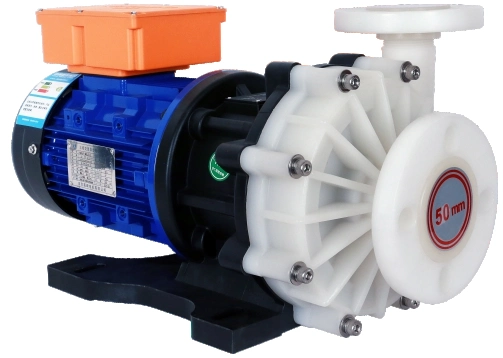
Recommended protection includes:
- Low-level interlock in the tank
- Dry-run protector or power monitoring
- Suction-side inspection for air leakage
- Correct priming before startup
- Regular cleaning of inlet strainers
- Operator procedures that prevent startup with closed or empty lines
QEEHUA’s dry-run article gives more detail on pump bearing failure and dry-running protection.
4. Prevent Cavitation and Air Binding
Cavitation and air binding can reduce flow, create noise, damage bearings, and produce unstable circulation. In PCB wet process lines, this can show up as uneven etching, unstable spray pressure, poor filtration performance, or repeated pump overheating.
Common installation causes include a suction pipe that is smaller than the pump inlet, too many elbows, suction lift above the rated range, upward pipe sections that trap air, blocked filters, and high liquid temperature.
Good practice includes:
- Keep the suction pipe at least the same diameter as the pump inlet
- Shorten the suction line where possible
- Reduce elbows and sudden contractions
- Use eccentric reducers where needed to avoid air pockets
- Keep actual suction lift within a conservative range
- Put the exhaust valve and pressure gauge at useful high points
- Remove air fully before startup
5. Use the Right Filtration Setup
Filtration is closely connected to pump selection. In PCB production, wrong filter precision or unstable pump flow can allow particles, residues, or metal contaminants to remain in the chemical bath. This may lead to residual glue, poor copper deposition, circuit scratches, or surface defects.
For fine processes such as developing, solder mask, chemical copper, or surface finishing, high-precision filtration may be required. For rougher etching or general circulation, the filtration target may be different. The pump flow should match the rated filter capacity; excessive flow can damage filter cartridges or force contaminants through the system.
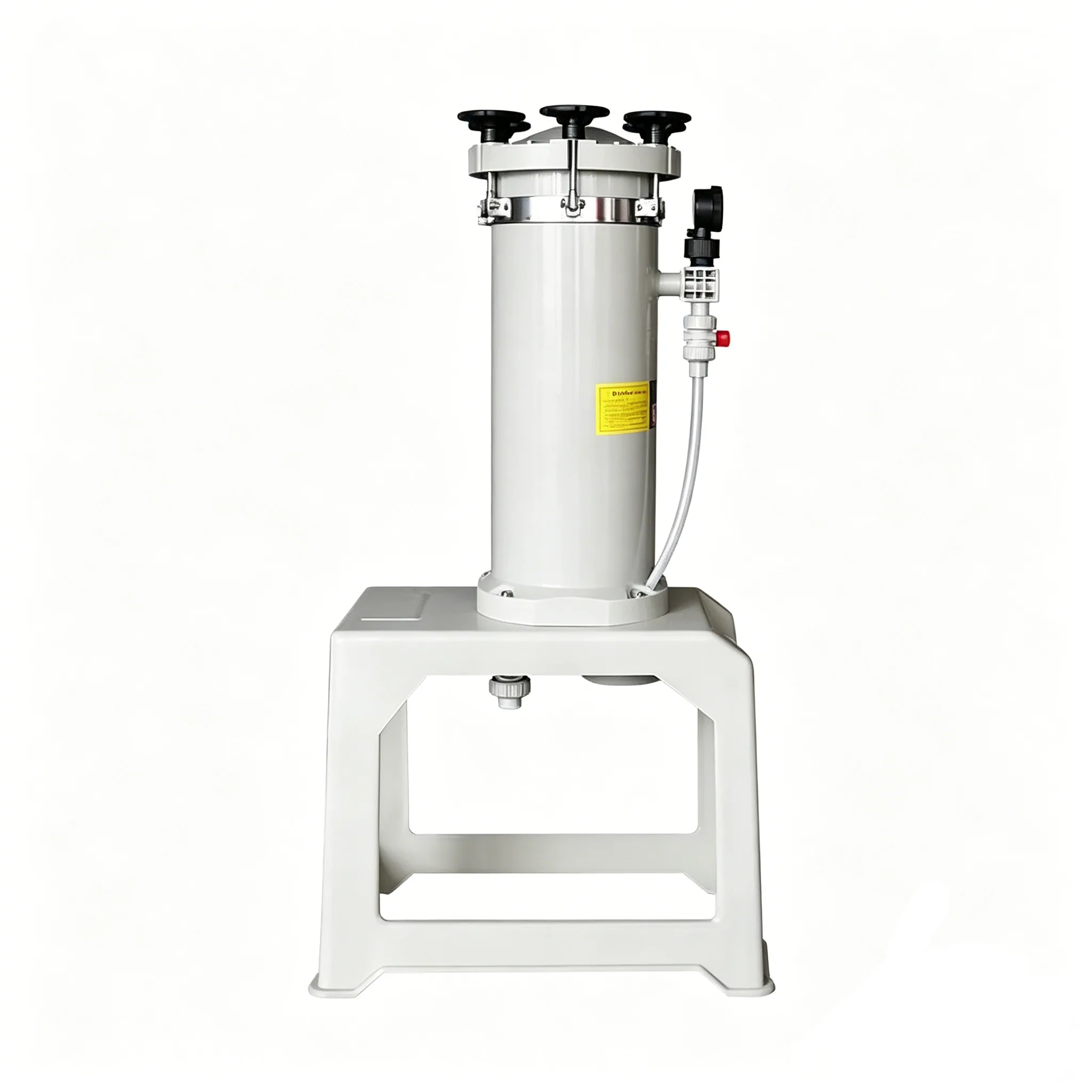
6. Design the System for Maintenance Without Stopping Production
The pump is only one part of the wet process system. PCB factories often benefit from bypass piping, check valves, drain valves, clean maintenance procedures, and dedicated filtration for sensitive baths.
Useful design details include:
- Bypass valves for filter maintenance
- Anti-backflow valves when one filter serves multiple tanks
- Drain valves at the bottom of filter housings
- Splash trays or containment around chemical equipment
- Clean handling procedures for cartridges and seals
- Anti-corrosion cable protection in acid mist areas
- Proper grounding and anti-static design where required
Recommended Pump Choices by PCB Wet Process
Etching Lines
Etching lines require stable circulation and chemical resistance. PVDF or fluoroplastic magnetic drive pumps are commonly considered when the solution is strongly corrosive or temperature is elevated. The suction design should avoid air entrainment because unstable flow can affect etching uniformity.
Copper Plating and Electroplating Lines
For plating circulation, the pump should support consistent bath movement and filtration. Material selection must consider the bath chemistry, metal ions, additives, and temperature. For higher cleanliness requirements, smooth wetted materials and compatible seals are important.
Chemical Nickel, Chemical Gold, and Surface Finishing
These processes may involve valuable and sensitive solutions. A leak-free pump with suitable corrosion resistance helps reduce loss and contamination risk. PVDF or higher-grade fluoroplastic options may be preferred depending on the chemistry.
Developing, Stripping, and Cleaning
For alkaline or stripping solutions, elastomer and plastic compatibility must be checked carefully. Flow stability and filtration help control residue and particle levels.
Quick Selection Checklist
Use this checklist before choosing a magnetic drive pump for a PCB wet process line:
- Identify the chemical name, concentration, temperature, and solids content
- Confirm whether PPH, PVDF, FEP/PFA, ceramic, SSIC, EPDM, or FKM is compatible
- Calculate actual flow and head, including filters and nozzles
- Keep the pump operating near a stable working point
- Design suction piping to prevent cavitation and air pockets
- Add dry-run, low-level, and overload protection
- Match pump flow to filter capacity
- Confirm whether the process needs high-purity or low-contamination wetted parts
- Plan bypass, drainage, and maintenance access
- Use corrosion-resistant supports, cables, and grounding in wet chemical areas
FAQ
What is the main advantage of a magnetic drive pump in PCB wet process lines?
The main advantage is leak-free chemical handling. Because the pump uses magnetic coupling instead of a traditional mechanical seal, it reduces leakage risk when circulating corrosive PCB process chemicals.
Is PVDF better than PP for PCB chemical pumps?
PVDF is generally preferred for stronger acids, higher temperatures, smoother wetted surfaces, and more demanding chemical environments. PP or PPH can be suitable for many ordinary acid and alkali solutions, but the final choice depends on chemical concentration, temperature, and process cleanliness requirements.
Can a magnetic drive pump run dry?
No. A magnetic drive pump should not run dry unless it is specifically designed and protected for that condition. Dry running can quickly damage bearings, shafts, impellers, magnets, or plastic components.
Why does cavitation matter in PCB production?
Cavitation reduces pump performance and can create unstable flow. In PCB wet processes, unstable flow may affect etching uniformity, plating quality, filtration performance, and equipment life.
Should one filter system serve multiple PCB chemical tanks?
It is usually safer to use dedicated filtration for sensitive tanks. If a shared filter system is used, each line should have suitable check valves, flushing procedures, and contamination control to prevent chemical cross-contamination.
Conclusion
Choosing a magnetic drive pump for PCB wet process lines is not only about pump size. The best selection combines chemical compatibility, stable hydraulic design, dry-run protection, cavitation prevention, filtration matching, and clean maintenance planning.
For PCB etching, plating, developing, stripping, and surface treatment, QEEHUA magnetic drive pumps provide a practical leak-free solution for corrosive chemical circulation. To compare pump structures and selection principles, read QEEHUA’s magnetic pump working principle and selection guide, or contact QEEHUA for application-specific pump sizing.
