

For broader selection context, see Guide to Choosing Seal-less Magnetic Drive Pumps.
A PCB etching pump running backwards usually points to wrong three-phase sequence, motor rewiring after maintenance, or a commissioning check that was skipped. The pump may still make noise and move some liquid, but it will not deliver the designed head, spray pressure, or nozzle balance. In an etching line, that can create uneven copper removal, line-width drift, over-etching on one side of the panel, poor rinse carryover control, and unnecessary pump replacement. If the line is being specified from scratch, start with the broader magnetic drive pump selection logic for PCB wet process lines, then add the rotation checks below to the commissioning SOP.
This article focuses on a practical question maintenance teams, OEM engineers, and plant managers often face: when a PCB wet-process pump has low flow after installation or service, how do you tell reverse rotation from cavitation, gas binding, a clogged filter, or the wrong pump size?

Why reverse rotation matters in PCB etching
Etching is unforgiving because pump output is translated directly into spray coverage, nozzle velocity, chemical exchange at the copper surface, and the stability of the conveyor process window. A centrifugal or magnetic drive pump uses impeller geometry designed for one rotation direction. When the motor runs backwards, the impeller may still throw liquid outward, but the pump curve is no longer the curve the OEM selected.
For a production team, the risk is not just lower flow. The real process risk is hidden instability. Spray pressure can look barely acceptable at the manifold while individual nozzles lose impact. A board may pass a quick visual check and still show line-width variation, pinholes, residual copper, or over-etching after downstream inspection. In a high-mix HDI or fine-line process, that delay makes root-cause analysis expensive.
QEEHUA local application notes identify wrong phase sequence in PCB etching as a usage-stage fault that can reverse liquid movement, disturb etching uniformity, and push line width outside specification. That is why rotation verification should be treated as a process-quality control point, not only an electrical safety step.
Symptoms operators see first
The first symptom is usually low discharge pressure or weak spray, especially after the motor, control cabinet, VFD, or power cable has been serviced. Operators may report that the pump is running but the etching chamber is slow to reach normal spray pressure. If the pump was recently removed, replaced, or rewired, wrong rotation should be checked before the team opens the pump casing.
Common symptoms include unstable spray fan shape, poor left-right uniformity, louder hydraulic noise than usual, lower current than expected under load, a pressure gauge that does not climb to the normal range, and a pump that seems to run but cannot restore process flow. If the same symptom includes air pockets, surging, or repeated loss of prime, compare it with the separate troubleshooting pattern in PCB developer pump gas binding before deciding that rotation is the only cause.
| Observed condition | Reverse rotation clue | Other causes to rule out | Immediate check |
|---|---|---|---|
| Low spray pressure after wiring work | Motor direction was not checked after phase reconnection | Blocked nozzle, closed valve, clogged filter | Verify motor fan or shaft rotation against the pump arrow |
| Flow present but much lower than normal | Pump produces partial flow because impeller is rotating backwards | Gas binding, cavitation, undersized suction pipe | Check pressure, current, and rotation before dismantling |
| Etching width varies across the panel | Spray manifold no longer receives stable design flow | Nozzle wear, manifold fouling, panel speed drift | Measure manifold pressure and inspect nozzle pattern |
| New pump does not match expected duty point | Rotation direction is wrong or VFD parameters were changed | Wrong head selection, wrong impeller trim | Compare actual head with the selected duty point |
Root causes: phase sequence, wiring, and backflow
The most common root cause is simple: two phases were swapped during installation, motor replacement, VFD wiring, control-panel maintenance, or emergency repair. Three-phase motors reverse direction when any two incoming phases are exchanged. If the pump casing has an arrow but the technician cannot see the shaft directly, the check may be skipped.
Another root cause is incomplete commissioning after equipment relocation. PCB plants often move wet-process modules, add filters, or change pump skids during capacity upgrades. A pump may be electrically correct at the workshop but reversed after field reconnection. OEMs should therefore include a rotation witness mark, a phase-sequence check, and a pressure confirmation step in the factory acceptance and site acceptance checklist.
Backflow can make the diagnosis confusing. A check valve may hold liquid in the discharge line, or another pump may push liquid through a shared manifold. The pump then appears to have flow during a short observation, even though its own rotation is wrong. This is one reason QEEHUA source guidance also warns against multi-tank cross-flow and recommends dedicated or properly valved circuits for clean PCB chemistry.
Field checks before replacing the pump
A closely related QEEHUA reference is How to Choose a Magnetic Drive Pump for Handling Chemical Media (Complete Selection Guide).
A closely related QEEHUA reference is Magnetic Drive Pump Deadheading: Symptoms, Risks, and Protection for Chemical Lines.
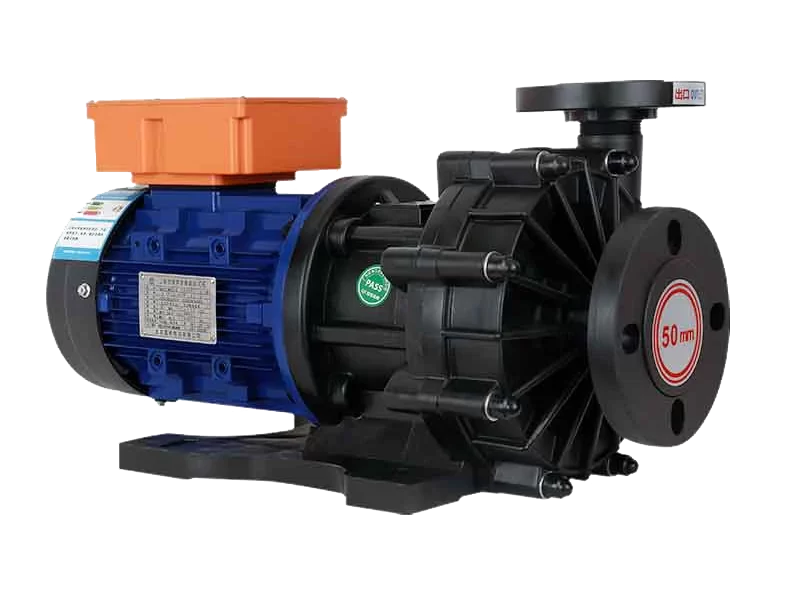
Before replacing bearings, impellers, magnetic couplings, or a complete pump, confirm whether the pump is actually rotating in the designed direction. For a pump that has just been wired, jog it briefly while observing the motor fan, coupling side, or direction indicator. Do not allow a chemical pump to run dry during this check. If the casing design prevents safe observation, use a phase-sequence meter at the motor terminal or control cabinet.
Next, compare the operating point with the expected head and flow. A pump running backwards often shows low head and poor pressure response even when the suction line is flooded. The pump pressure and head guide is useful here because the maintenance team needs to separate an electrical rotation problem from a hydraulic selection problem.
Then inspect the suction and discharge conditions. Reverse rotation is not the only reason for weak spray. A blocked inlet filter, trapped air, high bath temperature, suction piping smaller than the pump inlet, or a clogged precision filter can create similar symptoms. If pressure rises sharply upstream of the filter while downstream spray is weak, the issue may belong to the filter train; QEEHUA’s PCB wet process filtration guide explains how pump and filter flow should be matched.
Recommended field sequence
- Lock out the equipment according to plant procedure before touching wiring or rotating parts.
- Confirm valve position, liquid level, and suction flooding so the pump is not tested under a false dry-run condition.
- Jog the motor briefly and confirm rotation against the arrow on the pump or motor fan cover.
- If direction is wrong, exchange any two three-phase leads only by qualified electrical personnel.
- Restart, vent trapped air, and verify discharge pressure, spray pattern, and current draw.
- Record the phase sequence, pressure value, and technician name in the wet-process maintenance log.
Corrective actions and prevention checklist
The immediate correction is to restore the proper phase sequence, then retest the pump at the normal process duty point. Do not compensate for reverse rotation by opening valves, increasing VFD speed, or replacing nozzles. Those actions may hide the symptom while leaving the pump outside its designed curve.
After correcting rotation, flush the line if the fault affected chemical quality. In etching and developing processes, weak circulation can leave suspended particles, reaction byproducts, or concentration gradients in the line. If panels were processed during the fault, quality staff should review the affected lot window and compare line width, residual copper, and surface defects against normal data.
| Prevention point | What to specify | Why it matters for PCB lines |
|---|---|---|
| Commissioning checklist | Rotation, current, pressure, venting, valve position, and filter differential pressure | Prevents a wiring mistake from being mistaken for a pump or chemistry defect |
| Visible rotation marking | Permanent arrow on pump casing and motor fan cover | Lets maintenance confirm direction quickly after motor service |
| Electrical protection | Phase-loss, overload, and dry-running protection where the process risk justifies it | Reduces damage risk when abnormal electrical or hydraulic conditions appear |
| Hydraulic confirmation | Reference pressure range at the manifold and filter inlet/outlet | Makes abnormal low head visible before panels are affected |
| Maintenance release | Operator sign-off after spray-pattern and first-panel checks | Connects pump maintenance with process-quality control |
Reverse rotation should also be separated from deadheading. Deadheading occurs when the pump runs against a closed or blocked discharge, while reverse rotation usually causes weak head and poor delivery. The protection logic is different, so use the magnetic drive pump deadheading guide when the pressure is abnormally high or the discharge valve is closed.
When pump selection affects the risk
Good pump selection cannot prevent a swapped phase by itself, but it can reduce the damage and process-risk window. For PCB etching, developing, stripping, copper, nickel, and gold-related chemistry, material compatibility comes first. QEEHUA local product training identifies PPH or GFRPP for common acid and alkali solutions, PVDF for stronger acids and smoother surfaces in easy-crystallizing chemical nickel or chemical gold solutions, and CFRETFE or fluoroplastic options for more aggressive acid, alkali, and solvent conditions.
For horizontal magnetic drive pumps, the sealless structure helps avoid shaft-seal leakage in corrosive liquid transfer, but the pump still needs correct rotation, flooded operation, and protection from dry running. QEEHUA’s intelligent triple-protection concept is designed around dry running, overload, and phase loss; it is relevant when the buyer wants the pump package and protection logic simplified instead of buying separate external devices for every skid.
Vertical pumps have a different risk profile. QEEHUA source material notes that plastic vertical pumps are widely used in electroplating, PCB, glass etching, and scrubber systems, and the shaft-seal-free construction can be useful where leakage control and clean operating areas matter. However, even vertical pump systems need correct liquid level, stable immersion, and correct motor direction after wiring work.
If you are building or upgrading a PCB wet-process module, specify rotation verification in the OEM documentation, label the motor leads, keep the pump curve with the equipment file, and define the pressure points that operators must check after every electrical service event. For a protected package, review QEEHUA’s pump protection device options as part of the control strategy rather than treating protection as an afterthought.
For a related troubleshooting angle, review PCB Developer Pump Gas Binding: Causes, Risks, and Fixes for Wet Process Lines before finalizing the pump decision.
For a related troubleshooting angle, review Magnetic Drive Pumps: The Ultimate Guide to Working Principles & Selection (2026) before finalizing the pump decision.
FAQ
Can a centrifugal or magnetic drive pump move liquid while running backwards?
Yes. It may move some liquid, but it normally cannot deliver the selected head, flow, or stable spray pressure. That partial flow is why reverse rotation can be missed during a quick visual check.
What is the fastest way to confirm reverse rotation?
Check the motor fan or shaft direction against the pump’s rotation arrow during a brief, liquid-safe jog. If the direction is not visible, use a phase-sequence meter at the motor or control cabinet.
Can reverse rotation damage a magnetic drive pump?
Reverse rotation mainly reduces hydraulic performance, but it can contribute to abnormal heat, vibration, unstable lubrication at internal bearing surfaces, and process upsets. If the pump also runs dry or against a blocked line, damage risk rises quickly.
How is reverse rotation different from gas binding?
Reverse rotation is an electrical direction problem. Gas binding is air or gas trapped in the pump or suction line. Both can cause low flow, so check rotation, venting, suction leakage, liquid level, and inlet restriction before replacing the pump.
Should OEMs include rotation checks in the machine manual?
Yes. For PCB wet-process equipment, the manual should include phase-sequence verification, rotation arrow location, normal pressure range, venting steps, and a release checklist after wiring or motor service.
If your PCB etching, developing, or plating line has repeated low-flow faults after electrical service, QEEHUA can help review the pump type, material, protection logic, and commissioning checklist. Email QEEHUA at info@qeehua.com with the liquid, temperature, required flow, head, motor voltage, and a photo of the pump nameplate.
