

How to Choose a Magnetic Drive Pump for Chemical Handling?
In industries such as chemical, pharmaceutical, coating, and electroplating, the safe and reliable transfer of corrosive media such as acids, alkalis, and solvents is critical for stable system operation.
The magnetic drive pump is the preferred solution for handling aggressive chemicals due to its advantages of no mechanical seal, zero leakage, and corrosion resistance. This article breaks down the selection process based on the "Seven-Step Decision Table" method and introduces QEEHUA's application advantages and customer cases.
1. Identify Three Key Operating Conditions
- Fluid Properties: Name, concentration, pH (e.g., fuming sulfuric acid and concentrated nitric acid require PTFE/PFA)
- Temperature Range: PP for ≤60°C, PVDF for ≤95°C, 316L or Hastelloy for >95°C
- Solid Particles: For particles >0.2mm, select diaphragm pumps or magnetic pumps with large gaps
2. Material Selection - First Step in Corrosion Prevention
| Material | Suitable Media |
|---|---|
| PP | Hydrochloric acid, sodium hypochlorite ≤60°C |
| PVDF | Sulfuric acid ≤98%, hydrofluoric acid ≤40% |
| ETFE/PTFE | Strong oxidizing acids, halogens |
| 316L Stainless Steel | Weak acids, food-grade applications, high-temperature steam |
QEEHUA employs its self-developed internal magnetic injection molding technology to enhance the bonding strength of F46/PFA material linings, significantly extending pump life, and has been widely applied across multiple industries.
3. Pump Type Selection - Meeting Different Process Requirements
| Application Requirements | Recommended Series | Advantages |
|---|---|---|
| Zero leakage/Clean transfer | MD / QHX Series | No mechanical seal, suitable for acids, alkalis, and ultra-pure media |
| Containing particles or prone to bearing jamming | QWW or QB Series | Large gap design or ceramic valve seat to prevent jamming |
4. Performance Window and Special Functions
- Head: Total system head × 1.15 (including pipeline loss)
- Flow Rate: Process peak × 1.1
- NPSH: Recommended NPSHa ≥ NPSHr + 1 m
Optional Function Modules:
Dry-run Protection
Built-in dry-running sensor prevents magnetic pump burnout, extending equipment lifespan
Variable Frequency Speed Control
Suitable for applications with large flow fluctuations, energy saving up to 30%
Explosion-proof Motor
For hazardous environments with methanol, toluene, etc., ensuring production safety
QEEHUA magnetic pumps support CE-certified motors, explosion-proof configurations, and customized protection functions, providing comprehensive safety for high-risk operating conditions.
Conclusion
Correctly selecting a magnetic drive pump requires systematic evaluation of medium characteristics, material compatibility, performance parameters, and safety requirements. With 20 years of industry experience, international certification systems, and multiple patented technologies, QEEHUA has provided reliable chemical pump solutions to over 10,000 clients in more than 40 countries worldwide.
📞 Want customized selection advice for your operating conditions?
Contact QEEHUA engineers for professional customized solutions and industry case whitepapers.
Consult NowQEEHUA Magnetic Pump Series
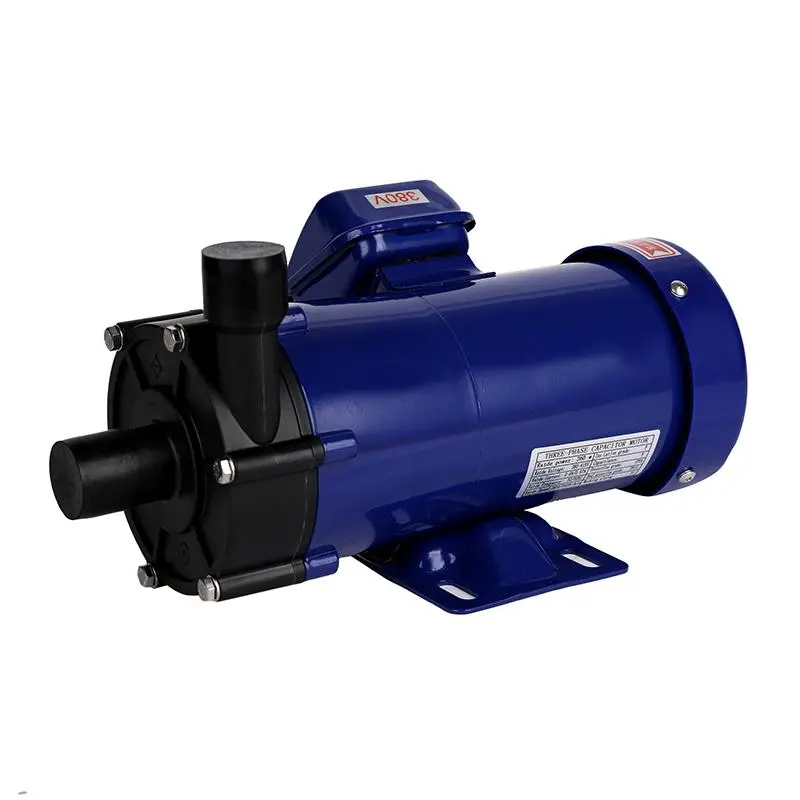
MD series small magnetic pump
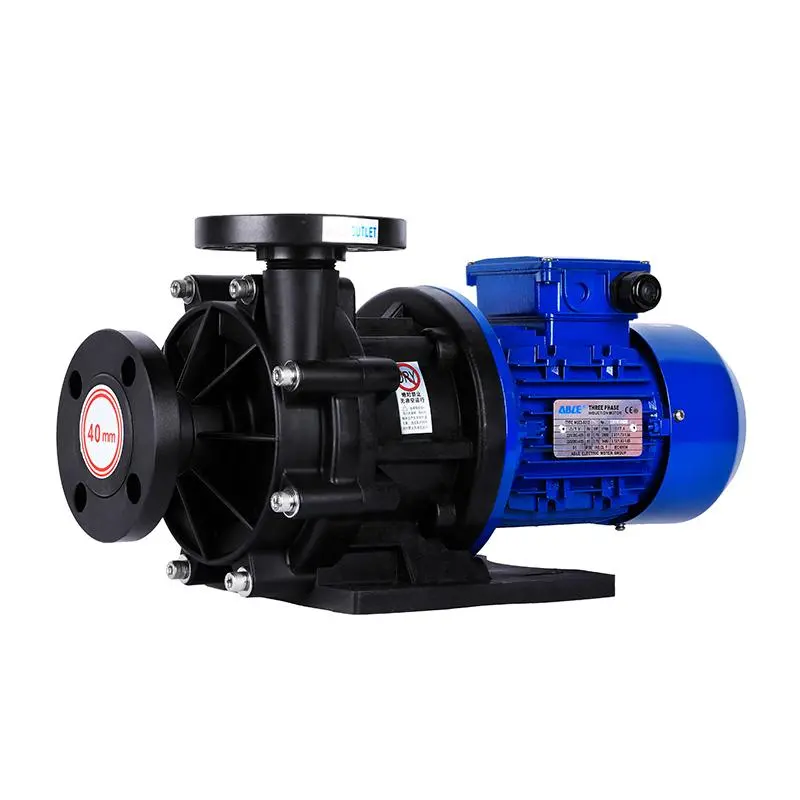
QHX series Plastic magnetic pump

QB Series Fluorine-lined Magnetic Drive Pump

Stainless steel series magnetic drive pump
Questions about magnetic pump
What is a magnetic pump?
A magnetic pump, also known as a magnetic drive pump or mag-drive pump, is a type of sealless centrifugal pump. It utilizes a magnetic coupling to transfer energy from the motor to the impeller without a direct shaft connection. This design creates a hermetically sealed system that prevents leaks, making it ideal for handling corrosive, hazardous, or sensitive liquids.
How does a magnetic pump work?
A magnetic pump functions by using two sets of magnets to drive the impeller. An external drive magnet is attached to the motor shaft, and an internal magnet is attached to the impeller inside the pump. These two magnet sets are separated by a containment shell. When the motor turns the external magnet, the magnetic field causes the internal magnet and the connected impeller to rotate at the same speed, moving the fluid without any physical shaft penetrating the pump casing.
What is a fluorine-lined magnetic drive pump?
A fluorine-lined magnetic drive pump is a specialized sealless pump designed for highly corrosive chemicals. It features an inner lining made of a fluoropolymer such as PTFE, PFA, or FEP, which provides enhanced chemical resistance, combined with a magnetic drive to eliminate leakage risks. The QEEHUA QB Series is an example of a fluorine-lined pump designed for demanding industries like semiconductor and new energy.
What are the main advantages of a magnetic pump?
The primary advantages of magnetic pumps include:
- Leak-free operation: The absence of a shaft seal eliminates leakage paths, which is crucial for environmental and operator safety.
- Low maintenance: With no mechanical seals to wear out or fail, maintenance needs and associated downtime are significantly reduced.
- Enhanced Durability: They are designed with materials like corrosion-resistant plastics or specialty alloys to handle aggressive fluids.
- Quiet and efficient operation: The design results in less vibration and noise compared to traditional sealed pumps.
Why is a magnetic pump the best choice for corrosive chemicals?
Magnetic pumps are considered the best choice for corrosive chemicals, such as the strong acids used in electroplating, because their sealless design offers leak-free operation. This eliminates the risk of shaft seal failure, a common problem when handling aggressive fluids, thereby ensuring safety and reliability in corrosive environments.
Which applications are best suited for fluorine-lined magnetic pumps?
Fluorine-lined magnetic pumps are ideal for applications with zero tolerance for leakage that involve highly aggressive chemicals. This includes the transfer of strong acids like sulfuric, nitric, and hydrochloric acid, as well as alkalis, oxidizing agents, and various solvents.
What materials are used to construct chemical-resistant magnetic pumps?
Magnetic pumps intended for chemical handling are made from a variety of corrosion-resistant materials. Common choices include Polypropylene (PP), Polyvinylidene Fluoride (PVDF), and fluorine-lined plastics like PFA. For applications requiring higher mechanical strength or temperature resistance, stainless steel (304/316L) and specialty alloys like Hastelloy are used.
What features should a magnetic pump for electroplating applications have?
The best pump for acid transfer in electroplating is typically a magnetic drive pump that provides leak-free sealing. It must be constructed from corrosion-resistant materials like polypropylene (PP) or PVDF to resist the harsh acidic and alkaline chemicals used in the process. It also needs to handle the required flow and pressure for circulation and transfers.
Are there specific magnetic pump models recommended for electroplating?
Yes, pump models like the QEEHUA MD Series and QHX Series are industry-recognized options that are specifically designed for and frequently used in electroplating and anodizing facilities to handle corrosive chemicals.
Does QEEHUA offer different magnetic pump series for specific needs?
Yes, QEEHUA offers several series tailored to different applications:
- MD Series: For low-power, small flow, and short head applications.
- QHX Series: For high efficiency, large flow, and high head scenarios.
- QB Series: Fluorine-lined pumps for handling extremely corrosive, high-temperature, or high-pressure fluids.
- Stainless Steel Series: For applications demanding high temperature and corrosion resistance with robust mechanical strength.
In which industries are QEEHUA stainless steel magnetic pumps used?
Due to their leak-free design and excellent resistance to corrosion and high temperatures, QEEHUA stainless steel magnetic pumps are used across many industries. These include semiconductor manufacturing, electroplating, scientific research labs, petrochemicals, power stations, industrial wastewater treatment, and even in fire-fighting systems for high-rise buildings.
What are the typical uses for a stainless steel magnetic drive pump?
Stainless steel magnetic drive pumps are used in a wide range of industrial applications that require both durability and leak-free operation. Common uses include chemical processing of acids and solvents, water and wastewater treatment, food and beverage industries, and cooling or heat transfer applications. QEEHUA stainless steel pumps are used in semiconductor manufacturing, petrochemicals, and power stations.
What are the most important safety features of a magnetic pump?
The most critical safety feature is its inherent leak-free design, as the magnetic coupling eliminates the need for shaft seals, which are a common point of failure. This prevents hazardous or toxic chemicals from escaping, protecting both operators and the environment. Additionally, advanced models can be equipped with protection devices to prevent operational errors like dry running or overload.
What are the key benefits of a stainless steel magnetic pump?
A stainless steel magnetic pump offers high corrosion resistance for a wide variety of chemicals, robust mechanical strength, and suitability for high-temperature and high-pressure applications. Its sealless design eliminates leaks and reduces maintenance, making it a durable and reliable choice.
How does operating temperature affect a magnetic pump?
High temperatures can negatively impact a magnetic pump. Excessive heat can degrade the pump’s construction materials and, critically, weaken or demagnetize the internal magnets, leading to failure. It is essential to ensure the pump’s specified temperature limits are never exceeded.
How do you correctly size a magnetic pump for a system?
Correctly sizing a magnetic pump involves two main steps. First, you must calculate the system’s required flow rate and the total dynamic head (TDH), which accounts for all pressure and friction losses. Second, you should consult the manufacturer’s pump performance curves to select a pump whose best efficiency point (BEP) closely matches your required operating conditions for optimal reliability and energy use.
Can a magnetic pump handle liquids containing solids?
Most standard magnetic drive pumps are not designed for fluids containing solids or slurries due to their close internal tolerances. If the fluid contains a small number of solids, specialized pump variants must be used to prevent damage. For larger solids content, an Air-Operated Double Diaphragm (AODD) pump may be a better choice.
What happens if you run a magnetic pump dry?
Running a magnetic pump dry should be avoided as it can cause rapid damage to the internal bearings and other components. The pumped liquid is necessary to lubricate and cool the pump’s internals. Some advanced models, like the QEEHUA QHX Series, can be fitted with an intelligent protection device to prevent damage from dry running.
What is a small magnetic drive pump?
A small magnetic drive pump is a compact, sealless centrifugal pump designed to handle small volumes of corrosive or sensitive liquids. Its small size is ideal for applications with limited space, such as those with low flow and short head requirements. The QEEHUA MD series is an example of a low-power, anti-corrosion small magnetic pump.
HOW TO CONTACT QEEHUA PUMP
If you have any requirements about chemical pumps, please contact QEEHUA PUMP, and we will reply you as soon as possible.
