

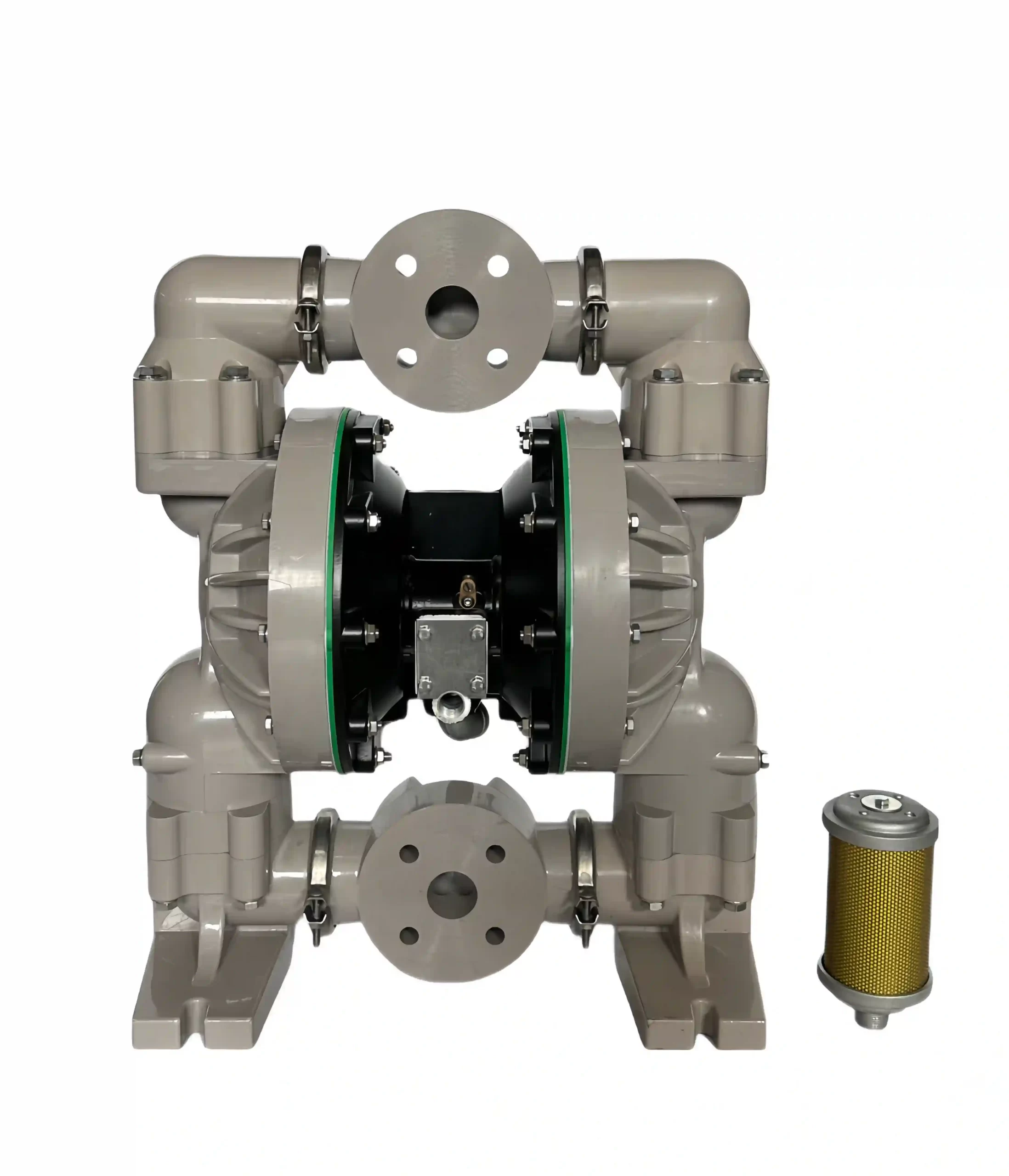
A QA series AODD pump is a good candidate when the liquid is corrosive, viscous, particle-containing, intermittent, or difficult to handle with a conventional electric motor pump. The series should be specified with the actual liquid behavior in mind, not only the chemical name. Viscosity, solids size, suction lift, discharge pressure, and air supply stability can change the real flow more than the model name does.
QEEHUA’s QA product page describes the series as air-operated diaphragm pumps for corrosive, viscous, and particle-containing liquids. It also highlights compressed-air drive, self-priming ability, dry-run capability, and use in chemical transfer, drum unloading, wastewater handling, and industrial circulation systems. Those claims are useful, but they still require engineering boundaries. A pump that can tolerate intermittent operation is not automatically correct for every abrasive slurry, every high-viscosity liquid, or every precision flow requirement.
Why the QA Series Gets Considered
QA is usually considered when the application has one or more of these conditions:
- The pump must transfer a corrosive liquid and the user wants to reduce electric motor exposure near the wet area.
- The source is a drum, tote, sump, or batch tank where liquid level changes during operation.
- The liquid may contain soft solids, sludge, or suspended particles.
- The plant needs a pump that can tolerate intermittent flow and operator-controlled transfer.
- Maintenance access matters more than tight continuous-flow efficiency.
That profile is different from a clean, fixed, high-flow circulation loop. It is closer to the way many plants actually move chemicals: unload a container, empty a small tank, transfer wastewater, return process liquid, or support a batch line. In those positions, the QA series pneumatic diaphragm pump can be a practical fit.
The local QEEHUA product training deck places QA under the diaphragm pump category. The application deck connects diaphragm pumps with PCB, electroplating, coating, wastewater, and environmental-protection contexts. That supports an article angle around difficult transfer and wastewater support, not a generic pump-definition article.
AODD Is Not a Free Pass
Buyers sometimes hear “AODD pump” and assume the pump can handle anything. That assumption creates bad RFQs.
An AODD pump can be forgiving in ways that matter. It can run from compressed air. It can handle intermittent transfer. Depending on the configuration and liquid, it can handle solids better than many small centrifugal pumps. It can also be easier to place in areas where electric motor exposure is undesirable.
But the operating envelope still has limits. Very high viscosity reduces practical flow. Hard abrasive particles can wear valve balls, seats, and diaphragms. Long suction lines can make priming slow or unstable. High discharge pressure increases air demand and reduces actual capacity. A blocked or restricted outlet can create stress in the line even when the pump itself is robust.
The right question is therefore not “Can QA pump viscous liquid?” The better question is: at what viscosity, solids content, suction condition, discharge resistance, and air pressure does the plant need the pump to deliver the target flow?
Middle internal link: This is the same selection discipline QEEHUA applies in broader process articles such as industrial diaphragm pumps for wastewater. Wastewater service should be specified from real solids, chemical exposure, and transfer behavior, not from the word “wastewater” alone.
Viscosity and Particles Change the Pump
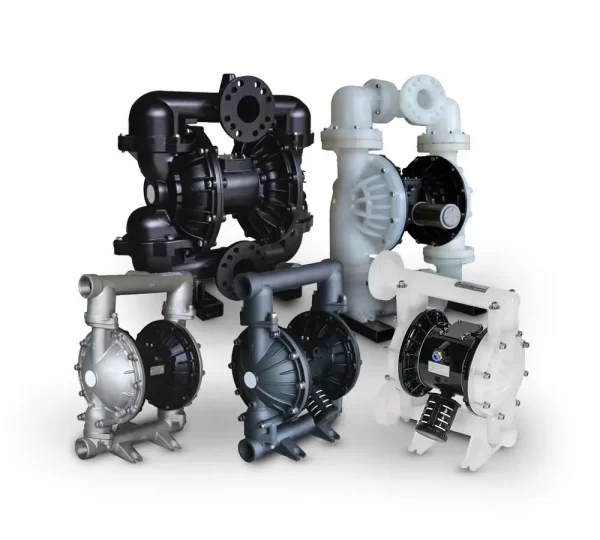
Viscosity is not only a motor-load issue. In an AODD pump, viscosity affects suction filling, check-valve response, discharge pulsation, hose losses, and transfer time. A liquid that looks pumpable in a bucket may move slowly through a long hose with small fittings.
Particle-containing liquid adds another layer. Soft suspended solids, metal fines, crystallized salts, anode slime, and sludge do not behave the same way. Some particles pass through. Some settle in the suction hose. Some lodge around valve balls. Some accelerate wear.
Use this quick decision map before selecting QA:
| Liquid condition | Selection risk | Practical check |
|---|---|---|
| Low-viscosity corrosive liquid | Material and elastomer mismatch. | Confirm chemical, concentration, temperature, and cleaning cycle. |
| High-viscosity liquid | Lower actual flow and poor suction filling. | Confirm viscosity at operating temperature and required transfer time. |
| Soft suspended solids | Valve-ball seating and line settling. | Confirm particle size, concentration, and whether solids settle quickly. |
| Crystals or hard particles | Abrasive wear and clogging around check valves. | Confirm filtration, flushing, and service interval expectations. |
| Wastewater with unknown content | Unstable selection because the liquid description is incomplete. | Ask for source process, solids, pH, temperature, and batch variability. |
If the plant cannot describe the solids, ask for a sample photo, settling behavior, or upstream screen information. A clear wastewater tank and a sludge sump can both be called wastewater, but they should not be quoted as the same pump duty.
Wastewater and Sludge-Bearing Transfer
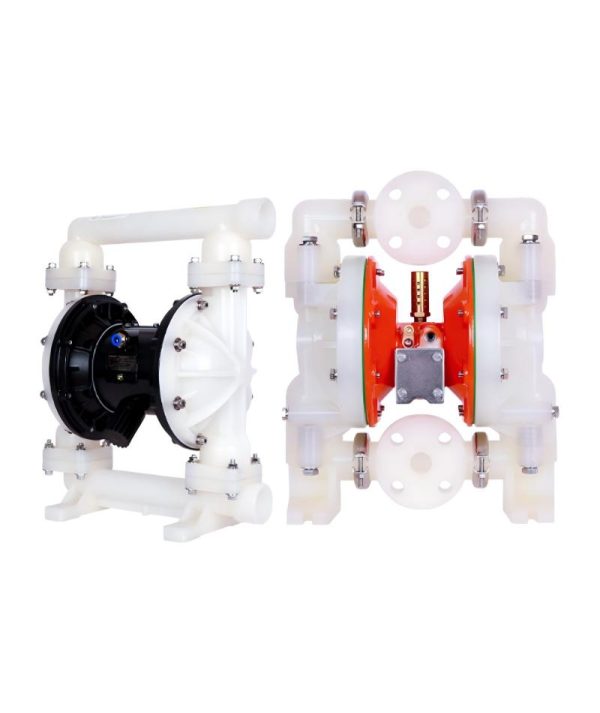
QA is often attractive in wastewater and environmental treatment because the liquid can be intermittent, corrosive, and dirty. Still, the plant should separate three tasks:
Clean or lightly contaminated transfer: This may need corrosion resistance, but not heavy solids handling.
Chemical wastewater transfer: This adds pH, oxidizer, reducing agent, solvent, or mixed-chemical compatibility questions.
Sludge-bearing movement: This adds settling, suction blockage, abrasion, and flushing requirements.
In PCB and electroplating wastewater, the pump may see rinse water, spent chemicals, reducing-agent tanks, pH adjustment chemicals, or solids from treatment steps. These lines may also use level switches, containment trays, and alarm logic. If the pump is part of a control loop, do not treat it like a hand-operated unloading pump. Define start/stop logic, low-level behavior, and what happens if discharge pressure rises.
Late internal link: If the downstream pipe or valve train closes too fast, the line may also face shock and unstable pressure. QEEHUA’s article on PCB wet process water hammer is written for broader pump systems, but the same thinking applies when long hoses, valves, and pulsating flow interact.
Air-Side Checks Before Startup
The air side is not an accessory detail. It is the power supply.
The U.S. Department of Energy emphasizes compressed-air system management because system condition affects performance and energy use. For a QA pump, that means the user should confirm actual air pressure at the pump while the pump runs, not only the compressor nameplate pressure. Long air lines, undersized regulators, wet air, clogged filters, and leaks can all reduce pump speed and make the pump seem undersized.
Safety also matters. OSHA’s compressed-air cleaning rule is not a pump rule, but it is a useful reminder that compressed air is a controlled utility, not a harmless convenience. Plant procedures should prevent operators from using air hoses casually around chemical equipment, and air piping should be secured so a loose hose does not become a hazard during maintenance.
Because AODD pumps create pulsating discharge, the air-side and liquid-side checks should be made together. If a flow meter, filter, pressure transmitter, or dosing point sits downstream, the plant may need a pulsation dampener or a different layout. KNF explains that diaphragm-pump strokes can generate pressure and flow fluctuations, while dampening can help control those variations and reduce stress on downstream flow-path components. In QA applications, that is most relevant when the discharge line feeds sensitive equipment rather than a simple receiving tank.
Before startup, confirm:
- Air pressure at the pump during operation.
- Regulator and filter condition.
- Air-line internal diameter and length.
- Drainage or moisture control in the air supply.
- Discharge valve position and pressure gauge behavior.
- Whether the receiving line needs pulsation control.
- Whether operators have a clean shutdown and flushing procedure.
If the QA pump feeds a chemical addition point or a process that reacts badly to uneven delivery, review the same flow-stability thinking used in QEEHUA’s article on chemical metering pump pulsation and dosing accuracy. The equipment is different, but the operating lesson is similar: do not ignore pressure fluctuation when the downstream process depends on steady feed behavior.
For QA series selection, send the liquid name, concentration, viscosity, particle condition, suction lift, discharge height, target flow, and available air pressure to info@qeehua.com.
FAQ
What is the QA series AODD pump best used for?
The QA series is best used for corrosive, viscous, particle-containing, intermittent, or container-transfer duties where an air-operated diaphragm pump fits the operating environment.
Can the QA series handle wastewater with solids?
It may be suitable for wastewater transfer with solids, but selection depends on particle size, solids concentration, settling behavior, chemical compatibility, suction condition, and required flow.
Does high viscosity reduce QA pump flow?
Yes. Higher viscosity can slow suction filling, increase line losses, reduce practical flow, and extend transfer time, so viscosity should be stated at operating temperature.
What air information is needed for QA pump selection?
State available air pressure at the pump, air-line size, regulator condition, expected duty cycle, and whether other equipment shares the same compressed-air header.
When does a QA pump need a pulsation dampener?
A dampener should be considered when pulsating discharge affects flow meters, pressure instruments, filters, hoses, dosing points, or process stability.
Sources
- QEEHUA QA Series product page, current WordPress product content.
- QEEHUA local product and application training files in the GEO workspace.
- OSHA, 29 CFR 1910.242(b).
- Department of Energy, Compressed Air Systems.
- KNF, What Are Pulsation Dampeners and How Do They Work?.
Self-Review Notes
Technical review result: The draft uses QEEHUA’s visible QA positioning but adds boundaries for viscosity, solids, air supply, discharge pulsation, and wastewater variability. It avoids claiming QA can handle every slurry or hazardous duty.
SEO/GEO review result: The article targets “QA series AODD pump” with a distinct long-tail intent around viscous and particle-containing liquids. It does not duplicate older generic diaphragm-pump posts. Internal links are placed near the opening, middle, and late technical sections, with only one product-page link.
Main revisions made after review: Replaced broad “safe and reliable for harsh liquids” phrasing with conditional selection checks, added air-side verification, and separated wastewater into clean transfer, chemical wastewater, and sludge-bearing movement.
Remaining business-risk note: QA-specific model ranges, maximum solids passage, viscosity limits, wetted materials, and air-consumption curves were not available in the checked source content. Add official QA specification data before publishing if the article needs numerical limits.
