

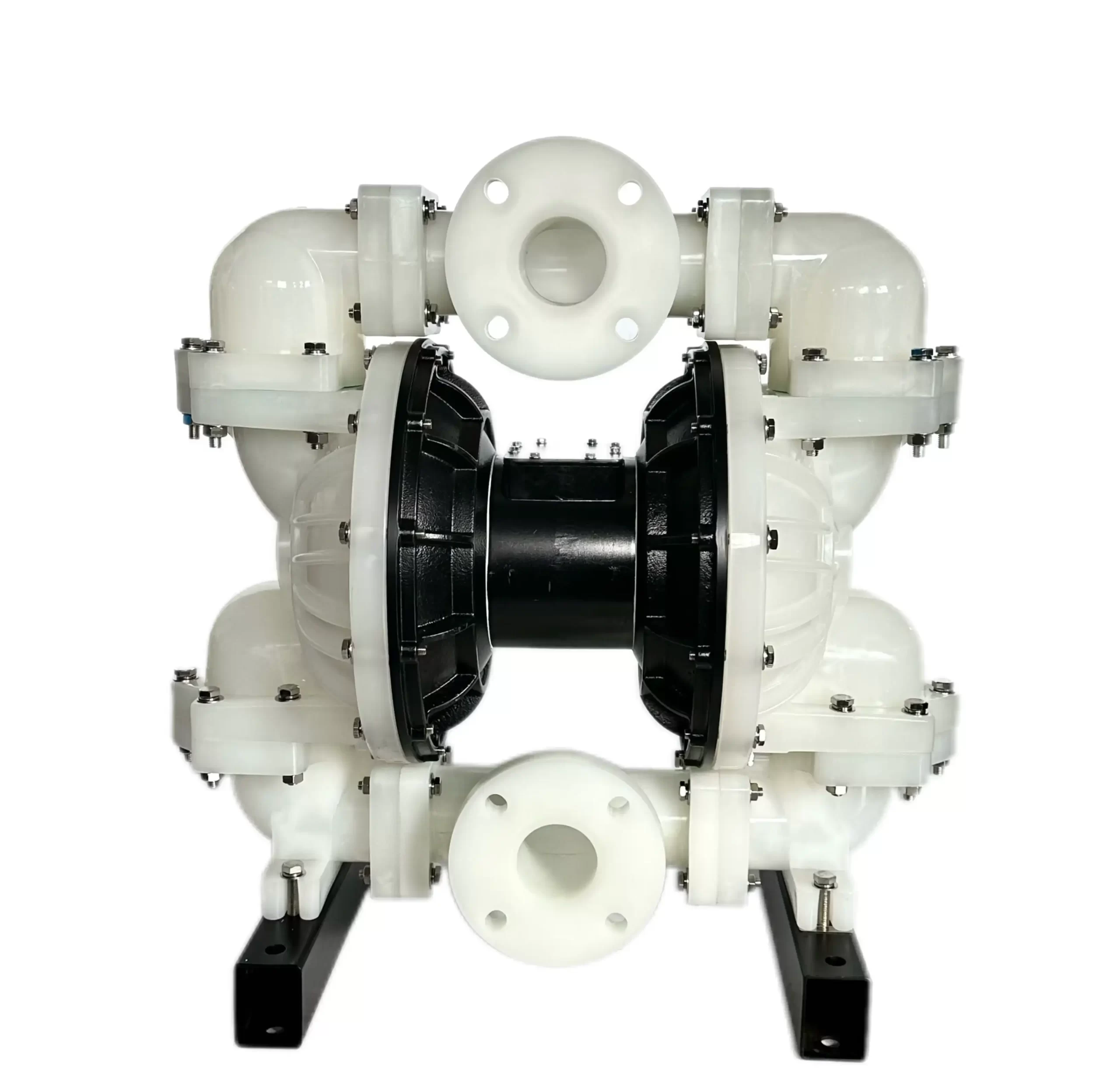
A QG series diaphragm pump makes sense when the line needs a practical air-operated pump for chemical liquid transfer, circulation, unloading, or auxiliary process service, but the duty does not justify forcing a centrifugal pump into poor suction or intermittent operating conditions. The useful question is not simply whether the liquid is corrosive. The better question is whether the pump must handle stop-start flow, container unloading, variable levels, and maintenance access without turning a small transfer duty into a complicated motor-pump installation.
QEEHUA’s current QG product page positions the series for reliable chemical liquid transfer in demanding industrial applications. The local product training deck also places QG under QEEHUA’s diaphragm pump offering, alongside QA. That makes QG a series-level choice for transfer and process-support duties rather than a generic replacement for every chemical circulation pump.
Where the QG Series Fits
Many chemical lines fail in boring places. A drum is almost empty. A day tank runs low during shift change. A transfer hose is moved from one container to another. The pump is asked to start, stop, prime again, and keep running even though the suction condition is not as clean as a fixed flooded-suction loop.
Those are the cases where a diaphragm pump can be easier to live with than a small centrifugal pump. A centrifugal pump usually wants a stable suction condition, enough liquid at the inlet, and a duty point that stays near its expected operating range. If the line is mostly continuous recirculation, a centrifugal or magnetic drive pump may still be the better answer. But if the job is chemical transfer from containers, batch tanks, wastewater totes, or auxiliary process lines, the QG series should be considered early.
For QEEHUA, the useful positioning is narrow and practical:
- Chemical transfer where the liquid path must tolerate corrosive media.
- Unloading and transfer where the suction level changes during operation.
- Auxiliary circulation where flow demand is intermittent rather than constant.
- Water treatment and surface-treatment support lines where easy servicing matters.
- Plant areas where a simple air-operated transfer pump is preferred over adding another electric motor near the liquid-handling point.
This article deliberately avoids a broad “diaphragm pumps are best” claim. A pump that works well for drum unloading may not be the right pump for a high-flow spray manifold or a tightly controlled plating circulation loop. Selection still starts with the liquid, flow, head, suction condition, and required stability.
Early internal link: QEEHUA lists the QG series pneumatic diaphragm pump as a chemical liquid transfer solution. Use that product page as the product anchor, then treat this article as the engineering selection note.
What to Check Before Selection
The most common mistake is to describe the pump only by port size or material. That is not enough. A QG transfer pump should be checked against five operating details before a quotation is treated as complete.
| Selection point | Why it matters | What to confirm |
|---|---|---|
| Liquid identity | Corrosion and elastomer compatibility decide pump life. | Chemical name, concentration, temperature, solids, and cleaning liquid. |
| Transfer mode | A pump used for unloading sees different suction behavior than a fixed circulation loop. | Drum, tote, tank, sump, batch vessel, or fixed pipe transfer. |
| Required flow | Oversizing can cause unstable cycling; undersizing extends transfer time. | Normal flow, maximum flow, and acceptable fill or emptying time. |
| Discharge resistance | Back pressure changes actual flow and air consumption. | Pipe length, elevation, valves, filters, spray nozzles, and destination tank pressure. |
| Air system quality | An air-operated pump depends on stable air pressure and clean air supply. | Available air pressure, pipe size, regulator, moisture control, and leak condition. |
Compressed air deserves special attention. The U.S. Department of Energy treats compressed air as an industrial system that should be managed for performance and energy use, not as a free utility. For an air-operated diaphragm pump, poor air supply can show up as slow transfer, irregular cycling, weak discharge flow, and higher operating cost. Before blaming the pump, check whether the air header pressure drops when other tools or pumps run.
Chemical Transfer Duties That Suit QG
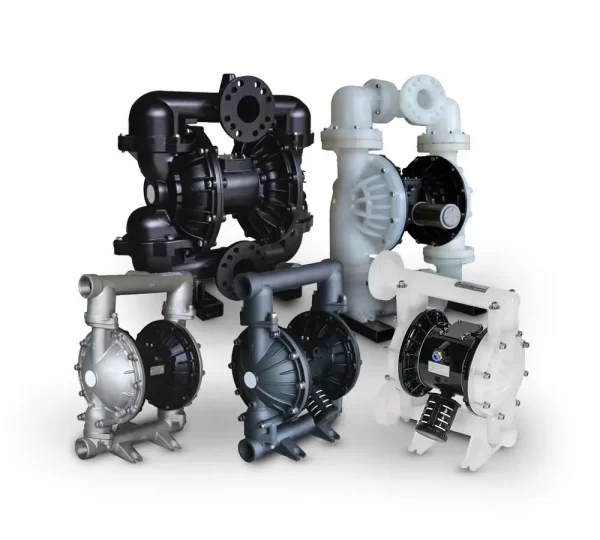
QEEHUA’s local application deck connects chemical pumps with PCB, electroplating, coating, wastewater, and environmental treatment applications. These industries share a pattern: plants move many liquids that are chemically aggressive, process-sensitive, or inconvenient to handle with an ordinary utility pump.
For the QG series, the best article-level fit is not a high-precision dosing duty. It is practical transfer.
In PCB wet process support, a QG pump may be considered for chemical replenishment, waste liquid transfer, auxiliary tank movement, or non-critical batch transfer where the line needs corrosion resistance and simple operation. For stable spray flow, filter circulation, or tight process control, the plant should review the whole pump family instead of forcing one diaphragm pump into every position.
In electroplating and surface-treatment shops, the pump may be used around pretreatment, rinse support, chemical delivery, and wastewater handling. The user should confirm whether the liquid contains abrasive solids, metal particles, sludge, or crystallized salts. Those details change valve-ball wear, seat life, hose design, and maintenance interval.
In wastewater or environmental treatment, diaphragm pumps are often useful when the liquid is not clean enough for a standard centrifugal transfer pump. But the word “wastewater” is too broad. A mild rinse stream, a high-pH adjustment tank, and sludge-bearing wastewater are three different pump problems.
Middle internal link: If the pump is being specified as part of a new line, the same acceptance discipline used in QEEHUA’s chemical pump commissioning checklist should also be applied to air supply, suction line, discharge path, and leak inspection.
Line Layout Details That Decide Reliability
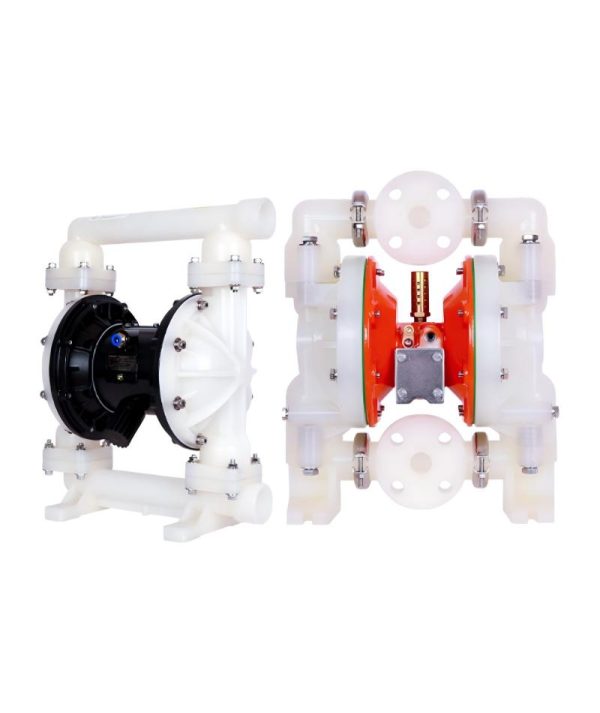
A QG diaphragm pump is often selected because it looks simple. The line around it is usually what decides whether it stays simple.
Keep the suction path short and clear. Long suction hoses, small fittings, collapsed flexible hose, or too many elbows can make the pump cycle poorly. If the pump transfers from drums or totes, the suction tube should not seal itself against the container bottom. Operators should also avoid pulling settled sludge into the pump unless the pump and valves were selected for that duty.
Manage pulsation instead of ignoring it. Air-operated diaphragm pumps create pulsating flow by design. In many transfer lines this is acceptable. In lines with pressure instruments, flow meters, delicate filters, or long flexible hoses, pulsation can create vibration and unstable readings. A pulsation dampener may be needed when the downstream process needs smoother discharge flow. KNF’s technical explanation of pulsation dampeners notes that diaphragm-pump strokes can create flow-rate and pressure fluctuations, and that dampening can reduce stress on downstream flow-path components. The same idea applies when a QG installation needs steadier discharge behavior.
Do not use discharge throttling as the only control habit. It may be tempting to close a valve until the flow “looks right.” The better approach is to define the required transfer time, pipe resistance, and air pressure range before startup. Then set the pump with a regulator and confirm actual delivery into the receiving tank.
Keep maintenance visible. Operators should know which parts are wear items, what leakage looks like, and when valve balls or diaphragms need inspection. If the pump is installed behind tanks or under a crowded skid, the maintenance benefit of a simple diaphragm pump disappears.
RFQ Checklist for a QG Pump
Use this checklist when preparing an RFQ for a QG series diaphragm pump:
- Liquid name, concentration, temperature, and pH if known.
- Whether the liquid contains particles, sludge, crystals, or fibers.
- Required transfer volume per batch or normal flow rate.
- Suction source: drum, tote, tank, sump, or fixed pipe.
- Suction lift or flooded-suction condition.
- Discharge destination and elevation change.
- Pipe or hose size, approximate length, and key valves or filters.
- Available compressed air pressure and air-line size.
- Required wetted material and elastomer preference, if already specified.
- Whether the line needs pulsation control, leak containment, or operator splash protection.
Late internal link: If the pump is replacing a failed unit, do not skip root-cause review. QEEHUA’s article on pump replacement versus system correction explains why replacing a pump without checking the line can repeat the same failure. Spare diaphragms, valve balls, seats, and air-side service parts should also be planned in the same way plants plan chemical pump spare parts.
For a QG transfer-pump quotation, send the liquid name, concentration, temperature, flow target, suction condition, discharge height, and available air pressure to info@qeehua.com.
FAQ
Is a QG series diaphragm pump mainly for transfer or continuous circulation?
The QG series is best positioned as a practical chemical transfer pump for unloading, auxiliary circulation, and intermittent process duties. Continuous high-flow circulation should still be checked against the full duty point and may require another pump type.
What information does QEEHUA need to select a QG diaphragm pump?
QEEHUA needs the liquid name, concentration, temperature, solids condition, flow target, suction source, discharge height, pipe length, and available compressed air pressure.
Does a QG diaphragm pump need a pulsation dampener?
Not every transfer line needs one. A pulsation dampener becomes useful when discharge pulsation affects instruments, filters, hoses, valves, or process stability.
Can a QG pump handle corrosive liquid?
The QG series is positioned for chemical liquid transfer, including corrosive-liquid service, but material selection must match the exact chemical, concentration, temperature, and cleaning condition.
Sources
- QEEHUA QG Series product page, current WordPress product content.
- QEEHUA local product and application training files in the GEO workspace.
- Department of Energy, Compressed Air Systems.
- KNF, What Are Pulsation Dampeners and How Do They Work?.
Self-Review Notes
Technical review result: The draft avoids unsupported universal claims. It treats QG as a practical chemical transfer diaphragm pump, not as a replacement for all chemical circulation duties. It flags air supply, pulsation, solids, suction layout, and material compatibility as application checks.
SEO/GEO review result: The article targets “QG series diaphragm pump” and a long-tail chemical-transfer intent. It avoids duplicating the product page by focusing on selection and RFQ checks. Internal links are spread across opening, middle, and late sections, with only one product-page link.
Main revisions made after review: Narrowed claims around corrosive liquids, added compressed-air and pulsation cautions, and removed generic diaphragm-pump marketing language.
Remaining business-risk note: QG-specific dimensions, flow range, wetted materials, and elastomer options were not visible in the source content checked. Add official model data before publishing if the article needs specifications.
