

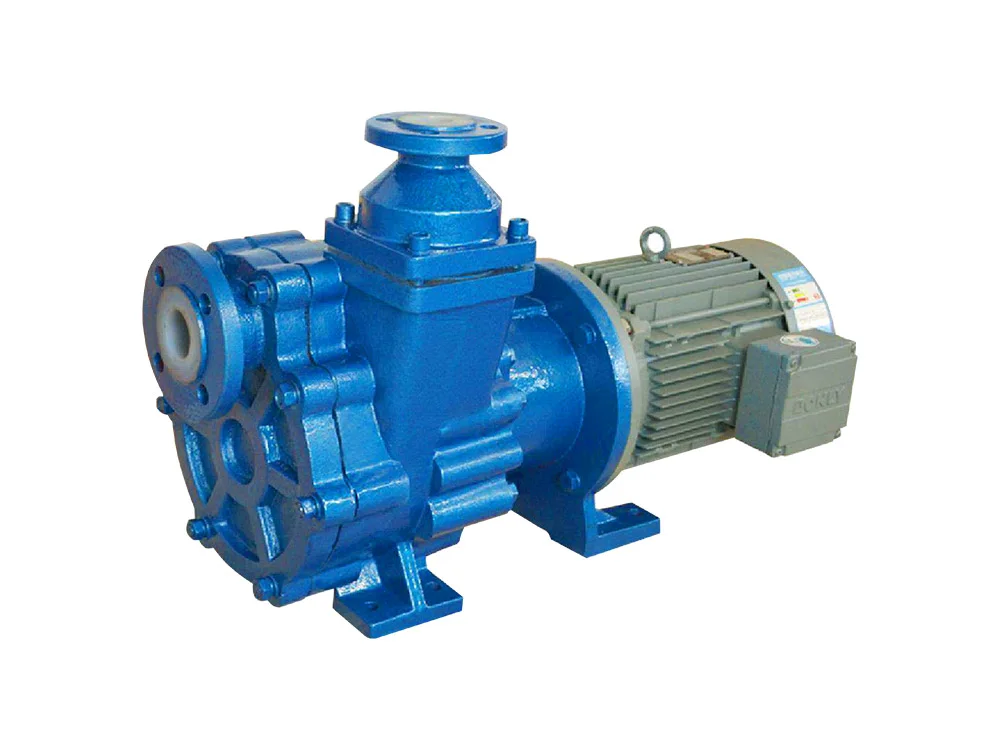
A failed PCB chemical pump is easy to blame. The harder question is whether the pump is actually worn out or whether the system has moved away from the duty point. In wet process lines, a new pump can repeat the same fault if the real issue is filter pressure rise, suction air, wrong valve position, clogged spray headers, high specific gravity, or a motor protection setting that no longer matches the duty.
This article gives a practical replacement-versus-correction method. It uses the same curve-based thinking behind QEEHUA’s pump curve versus system curve article, but turns it into a procurement checklist for maintenance teams, buyers, and process engineers.
Replacement Question
Replace the pump when the pump has clear mechanical or chemical damage: swollen elastomers, cracked casing, worn impeller, demagnetized drive, leaking joints, abnormal bearing noise, or motor overload that remains after the system is cleaned and valves are verified. Correct the system first when the pump is reacting to a changed process condition.
Self-review summary: technical review removed absolute language and treats replacement as conditional on measured evidence. SEO/GEO review kept the search intent focused on pump replacement decisions, not generic maintenance.
Four Measurements Before Buying
| Measurement | How to record it | Replacement signal | System-correction signal |
|---|---|---|---|
| Flow | Actual m3/h or L/min at normal line condition | Low flow with clean suction and correct head | Flow recovers after filter cleaning or valve correction |
| Discharge pressure | Clean-filter and dirty-filter pressure | Cannot reach curve pressure after pump inspection | Pressure rises with filter loading or clogged nozzles |
| Motor current | Ampere at hot operating condition | Current remains abnormal after system cleaning | Current follows high SG, wrong valve position, or off-curve flow |
| Tank and suction condition | Level, submergence, strainer status, visible air | Internal wear after repeated dry-run events | Air pockets, vortexing, or blocked suction path |
These readings should be taken at the same time, not from separate shifts. If a team only measures motor current, it may miss filter pressure. If it only measures pressure, it may miss flow loss. The recent QEEHUA article on PCB wet process pump flow rate calculation gives the demand-side reference for flow and turnover checks.
Decision Map
Clean filter, open correct valves, confirm liquid level, and remove obvious suction blockage.
Plot current flow and head against the original selected operating point.
Check impeller, casing, magnets, seals, elastomers, and motor protection history.
Replace damaged pump parts only after the system cause is removed.
Worked Cost Check
Assume a pump stops a plating support loop twice per month. Each stop takes 2.5 hours to diagnose, drain, clean, and restart. If internal downtime accounting uses 6 labor-hours plus lost production review per event, the maintenance team has 5 hours of direct outage per month before counting quality risk.
Decision example: 2 events/month x 2.5 h = 5 h/month direct downtime. If 80% of events happen after filter differential pressure exceeds the dirty limit, buying a new pump will not remove the cause. Add filter area, change cleaning interval, or revise pressure alarm first.
For buying teams, this is why an RFQ should include operating evidence. A replacement request can use QEEHUA’s PCB plating filter RFQ checklist when pressure drop and filtration are part of the failure pattern.
Acceptance Test
Pass criteria
- Flow within 90-110% of design value.
- Current below nameplate at hot liquid condition.
- No cavitation noise during 30-minute run.
- Pressure alarm activates before deadhead risk.
Reject criteria
- Same low-flow fault returns with a clean filter.
- Current climbs after density or valve changes.
- Low-level condition can still dry-run the pump.
- No baseline data is recorded after restart.
Source Notes
The U.S. DOE pumping system sourcebook supports the idea that pump performance should be evaluated as part of the whole system, including head, flow, and operating efficiency. EPA metal finishing guidance is relevant because PCB manufacture and chemical etching are part of the regulated metal-finishing environment.
FAQ
When should a PCB chemical pump be replaced?
Replace it when measured evidence and inspection show pump damage that remains after cleaning filters, confirming valves, checking liquid level, and comparing the duty point to the pump curve.
Why does a new pump fail like the old one?
The usual reason is that the original fault was in the system: clogged filter, suction air, dirty spray headers, changed liquid density, or missing dry-run protection.
What data should be attached to a replacement RFQ?
Attach flow, discharge pressure, motor current, tank level, chemical name and concentration, filter condition, duty cycle, photos, and the failure history.
When the replacement review shows repeated low-level or dry-run events, use QEEHUA’s PCB wet process pump dry-running checklist before ordering the same pump again.
Need help deciding whether to replace a PCB chemical pump? Send QEEHUA the pump model, flow, head, current, filter pressure, chemical, and failure history. Contact QEEHUA at info@qeehua.com for a replacement-versus-system review.
Sources
Final note: do not buy a replacement pump from a symptom. Buy it from flow, head, current, liquid, filter pressure, and inspection evidence.
