

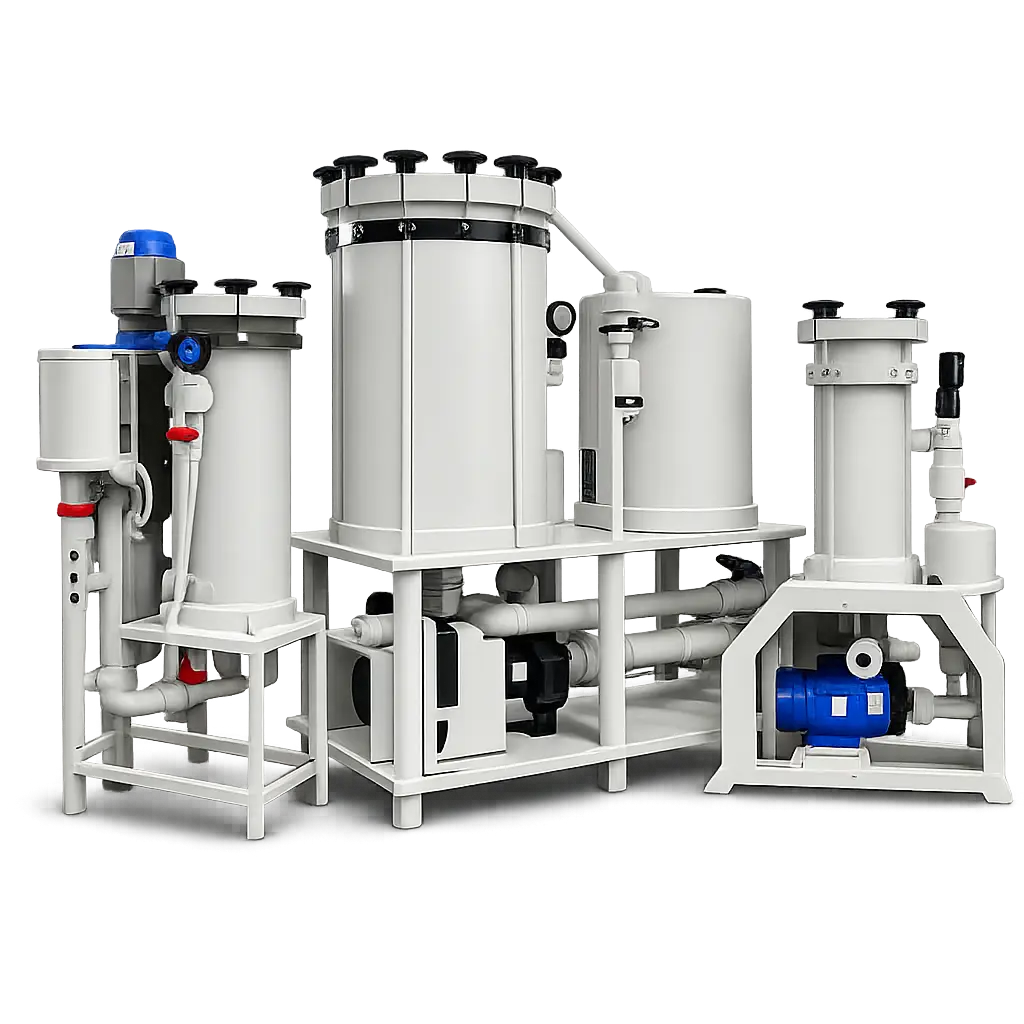
A PCB plating or etching line can look normal after a filter cartridge change and still lose circulation within minutes. The pump starts, the motor sounds healthy, but the pressure gauge hunts, the filter housing rattles, and the return flow turns weak or intermittent. In most cases, the first suspect should not be a larger pump. Check for trapped air in the filter housing, suction pocket, or high pipe point. A wet process filter loop needs a controlled venting sequence before full-speed operation, especially when the housing has been opened for cartridge replacement.
This article focuses on a narrow maintenance question: how to diagnose and prevent chemical filter air lock after cartridge replacement in PCB and electroplating wet process lines. It also shows where QEEHUA pump and filter selection fits the discussion without turning a venting issue into an unnecessary equipment replacement.
Why a small air pocket stops a wet process loop
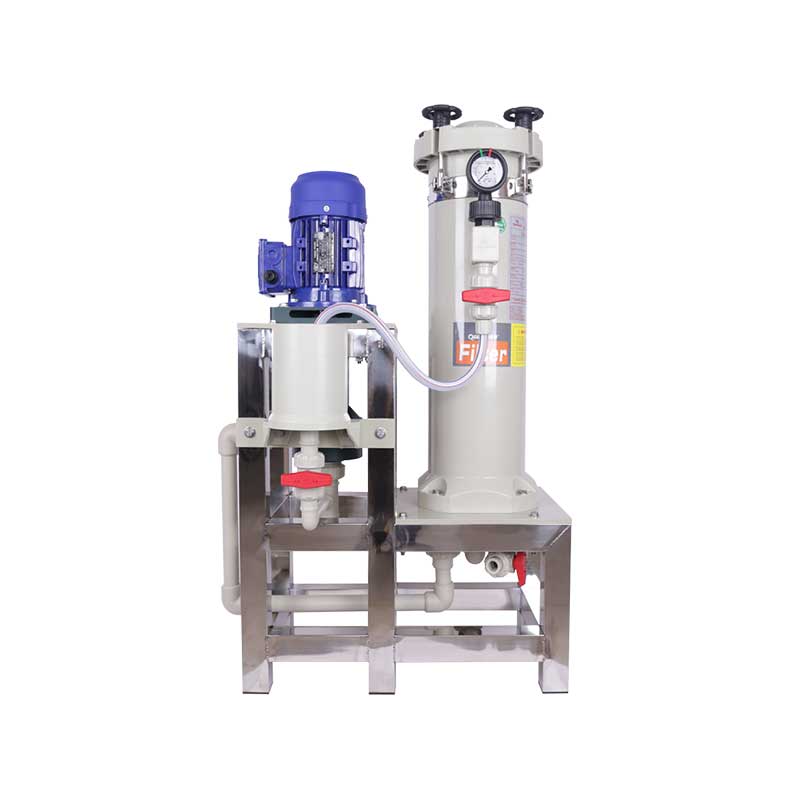
Centrifugal and magnetic drive pumps move liquid by keeping the impeller eye flooded. They are poor air movers. When air remains in the filter housing or enters the suction line, the pump may lose hydraulic grip. Flow falls, head falls, and the pump may heat up because the liquid that normally cools internal parts is no longer moving through the casing.
Engineering references describe the same pattern. Engineering ToolBox explains the basic centrifugal pump principle: the rotating impeller accelerates liquid and creates suction at the impeller eye (centrifugal pump fundamentals). The Hydraulic Institute also treats air entrainment, priming, cavitation, and system conditions as common pump troubleshooting topics in its public pump FAQ resource (Hydraulic Institute pump FAQs). If the impeller eye receives air instead of liquid, the expected pressure and flow response changes quickly.
In PCB wet process lines, the consequence is bigger than a noisy pump. A poorly vented filter loop can leave plating solution under-circulated, allow particles to remain in the bath, reduce spray uniformity, and confuse operators into opening valves or increasing speed when the real issue is air removal. For the broader acceptance checks around startup, QEEHUA also covers related field steps in its chemical pump commissioning checklist for PCB wet process lines.
First checks after a cartridge change
The fastest diagnostic is to separate an air-removal problem from a blocked filter, wrong valve position, or undersized pump. Do this before increasing pump speed or replacing the pump.
| Field symptom | Likely check | Practical action |
|---|---|---|
| Pressure gauge jumps or drops after startup | Air trapped in filter housing or gauge port | Stop, open the top vent carefully, refill slowly, and restart at low flow. |
| Return flow is weak but motor load is normal | Air pocket at suction, high pipe point, or filter lid | Confirm flooded suction, open high vents, and remove upward suction loops where possible. |
| Flow improves after venting, then fails again | Air leak on suction side or low tank level vortex | Inspect gasket seating, suction joints, liquid level, and anti-vortex baffle. |
| Filter pressure rises sharply after cartridge change | Wrong cartridge, blocked cartridge, or closed outlet valve | Check cartridge rating, outlet valve, differential pressure, and bypass status. |
| Pump casing becomes hot with little discharge | Low flow, air binding, or closed discharge path | Shut down and correct liquid supply before restarting to avoid seal or magnetic drive damage. |
Use the table as a field screen, not as a final failure label. A filter loop can have more than one fault. For example, a partially blocked cartridge may raise pressure, while a low tank level pulls air into the suction line. Treat the pump, filter, piping, valves, and tank level as one loop.
A venting sequence that prevents repeat failure
A reliable venting routine should be simple enough for operators to repeat after every cartridge change. It should also protect personnel from corrosive liquid release. Confirm the plant safety procedure, PPE, drainage path, and chemical compatibility before opening any vent or drain.
- Stop the pump and lock out the equipment according to the plant procedure.
- Close valves only as needed to isolate the filter. Avoid trapping pressure in the housing.
- Open the housing drain or safe depressurizing path before opening the lid.
- Replace cartridges with clean handling. Confirm the center rod, gasket, O-ring, and hold-down plate are seated correctly.
- Refill the housing slowly from the correct side. Keep the top vent open until liquid is continuous and bubble-free.
- Close the vent, start the pump at low flow if the system allows it, then briefly crack the high vent again to remove remaining air.
- Watch pressure, return flow, vibration, and tank level for several minutes before returning the line to normal duty.
- Record the pressure after venting. This becomes the baseline for the next cartridge change.
The order matters. If the pump starts against a housing that still contains air, the first few seconds can push the air pocket deeper into the discharge piping or back toward the suction path. That makes the next restart harder. The sequence should make air removal a required step, not an optional operator habit.
When the pump is not the real problem
Many flow complaints after maintenance are system problems. A larger pump may hide the symptom for a short time, but it can also overload cartridges, raise filter pressure, or create unstable flow through spray headers. Before changing the pump, check whether the line matches the expected turnover rate and dirty-filter pressure allowance. QEEHUA explains that sizing logic in its PCB wet process pump flow rate calculation article.
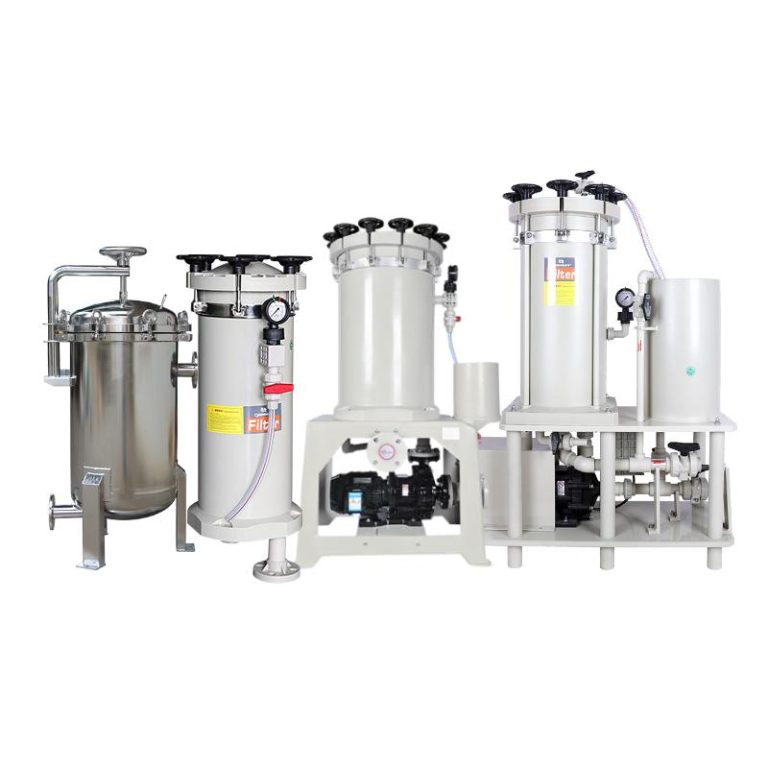
Also check whether the filtration package itself was specified with enough maintenance access. A filter that is hard to vent will create repeat downtime even if the pump is correctly sized. The RFQ should ask for vent location, drain location, cartridge access, pressure gauge position, material compatibility, and bypass arrangement. These items belong beside flow and micron rating in a PCB plating filter RFQ checklist.
RFQ and maintenance details to specify
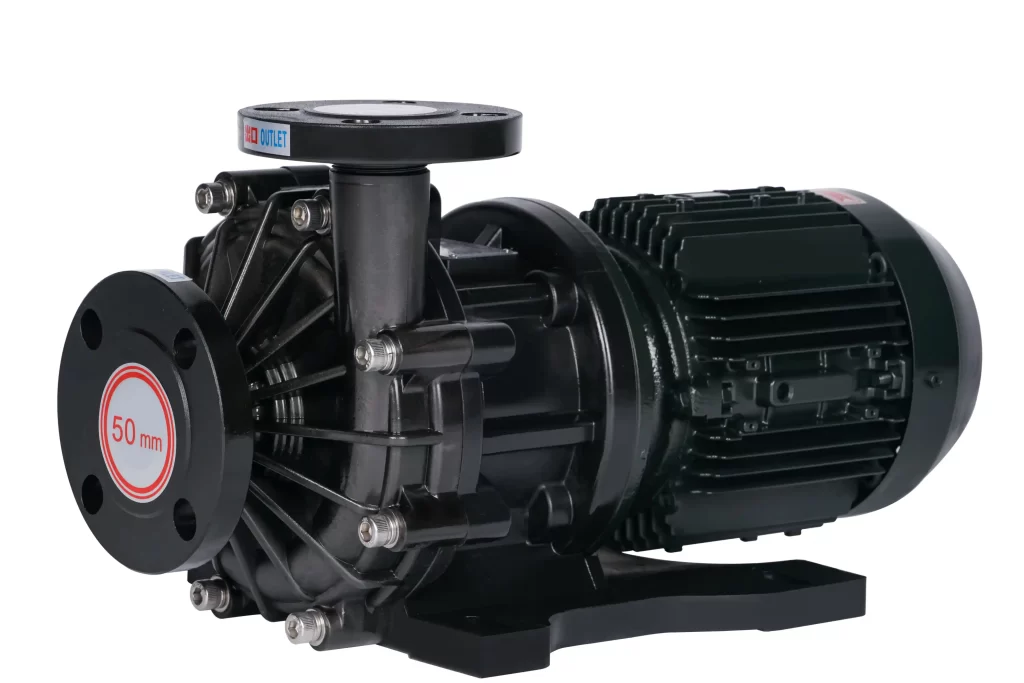
For a new PCB or electroplating filter loop, QEEHUA normally asks the buyer to confirm liquid, concentration, temperature, solid load, flow, head, filter type, cartridge rating, tank level range, pipe layout, and maintenance access. For air-lock prevention, add a few practical details that are often missing from RFQs:
- Top vent valve location and whether operators can reach it safely.
- Drain valve location and whether drained liquid returns to a safe tank or waste path.
- Pressure gauge position, range, and corrosion protection.
- Expected clean-cartridge and dirty-cartridge pressure range.
- Whether the suction line can remain flooded during maintenance.
- Whether the filter loop needs a bypass for cartridge change without stopping the whole wet line.
- Whether low-level protection, flow confirmation, and manual reset should be tied into the pump control panel.
One product-page reference is enough for this topic. If the line uses plating-bath filtration rather than only pump circulation, QEEHUA can review options such as the QHC chemical plating filter series with the pump duty point and maintenance layout. The equipment choice should follow the process, not the other way around.
For a recurring air-lock or post-maintenance flow problem, send QEEHUA the liquid, tank level range, filter model, cartridge rating, pump model, pipe sketch, and pressure readings before and after venting. Email info@qeehua.com with those details so the application team can review the loop instead of guessing from the pump nameplate alone.
FAQ
Why does a chemical filter lose flow after cartridge replacement?
The most common reasons are trapped air in the filter housing, an unseated cartridge or gasket, a closed or partly closed valve, a blocked cartridge, or air entering from a low tank level or suction leak. Start with venting and valve checks before changing the pump.
Should the pump run while the filter vent is open?
In many systems, operators fill and vent the housing before normal pump operation. A brief controlled vent during low-flow startup may remove remaining air, but the plant procedure must control splash, pressure, and chemical exposure.
Can air lock damage a magnetic drive chemical pump?
Yes. If air binding stops liquid circulation, the pump can lose cooling and lubrication flow. A magnetic drive pump may overheat if it runs with little or no liquid movement, so shutdown and correction are safer than repeated restart attempts.
Is a bigger pump a good fix for filter air lock?
Usually no. A larger pump may increase pressure and cartridge stress without removing the air pocket. Fix venting, suction layout, tank level, and cartridge installation before changing the pump size.
What should be recorded after venting a plating filter?
Record the clean-filter pressure, return flow condition, venting time, cartridge type, tank level, and any abnormal vibration or noise. These notes help maintenance teams identify whether the next flow loss is air, clogging, or a pump-duty issue.
Sources
The operational takeaway is simple: after a filter is opened, prove liquid continuity before asking the pump to prove performance. In wet process lines, good venting practice protects flow stability, filtration quality, and pump life at the same time.
