

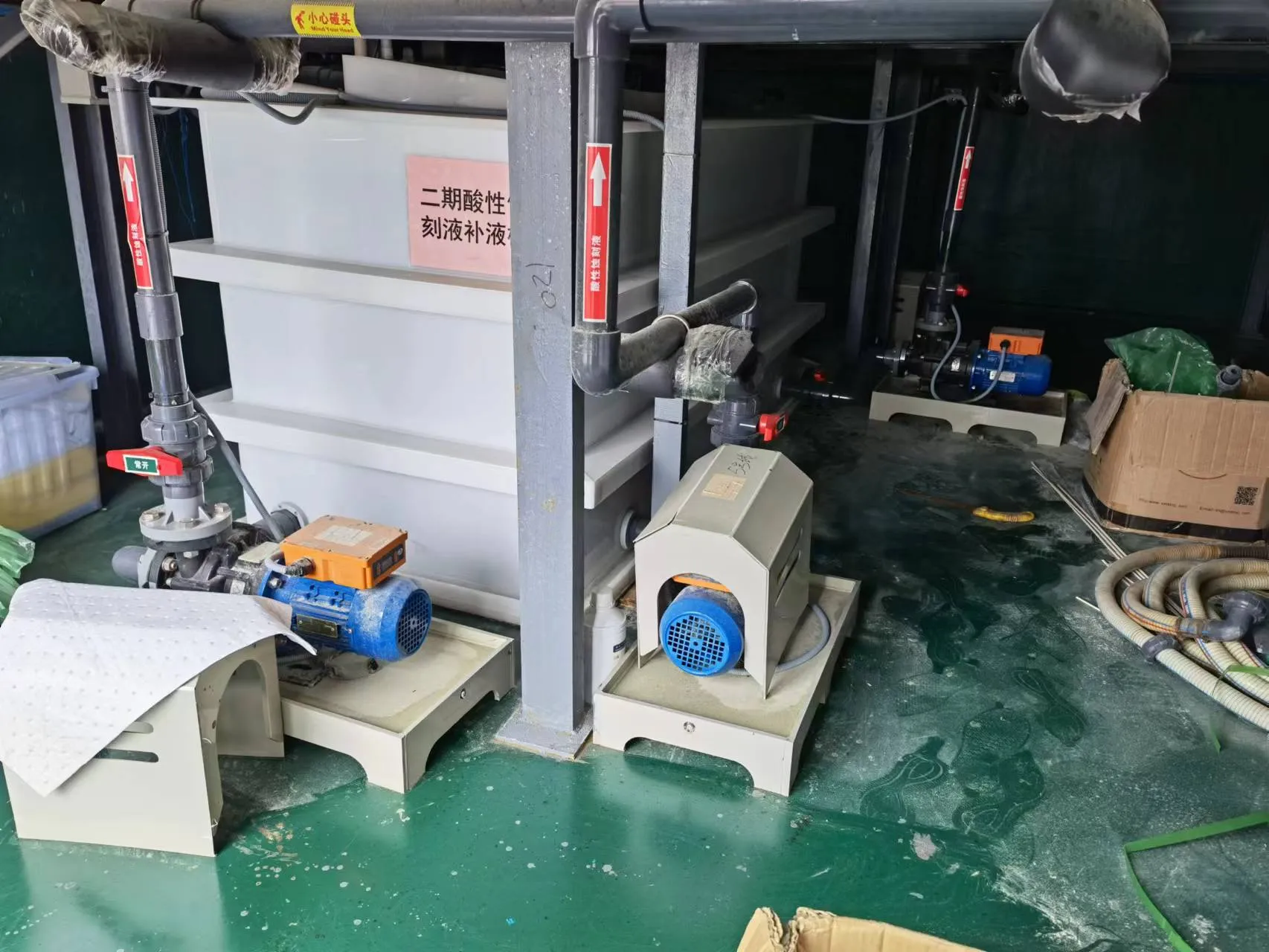
PCB wet process water hammer is a pressure shock created when chemical flow changes too quickly in a pump, valve, filter, spray header, or return line. In etching, developing, copper plating, ENIG, cleaning, and other wet-process loops, that shock can crack plastic fittings, collapse filter cartridges, disturb spray pressure, and send contaminated solution back toward the work zone. The fix is not simply a stronger pump; engineers should check pump sizing, discharge piping, valve sequence, bypass and relief paths, soft-start control, and filter pressure limits together. For the broader pump-and-filter selection context, QEEHUA has a separate guide on PCB wet process filtration.
This article focuses on a narrower but high-risk question: how should PCB equipment OEMs, maintenance teams, and plant managers prevent water hammer and pressure shock around chemical circulation pumps? The answer matters because a short pressure spike may not appear in normal operating flow data, but it can still damage nozzles, cartridge filters, pump casings, flanges, unions, and tank connections.
What Water Hammer Means in PCB Wet Process Lines
Water hammer is a hydraulic surge. It appears when moving liquid is forced to stop, reverse, or accelerate suddenly. In a PCB wet process line, the liquid may be etchant, developer, stripper, copper plating solution, cleaning solution, or rinse water. The risk becomes higher when long plastic pipelines, high-flow circulation pumps, fast-acting valves, undersized discharge lines, or clogged filters are combined in the same loop.
Unlike a steady high-pressure condition, water hammer is transient. A gauge may show normal pressure during stable circulation and still miss the short shock that occurs when a valve is snapped shut, a pump starts at full speed against a restricted line, a check valve slams, or a filter element suddenly blocks flow. That is why a troubleshooting team can replace a pump and still see repeated fitting failures if the piping sequence is unchanged.
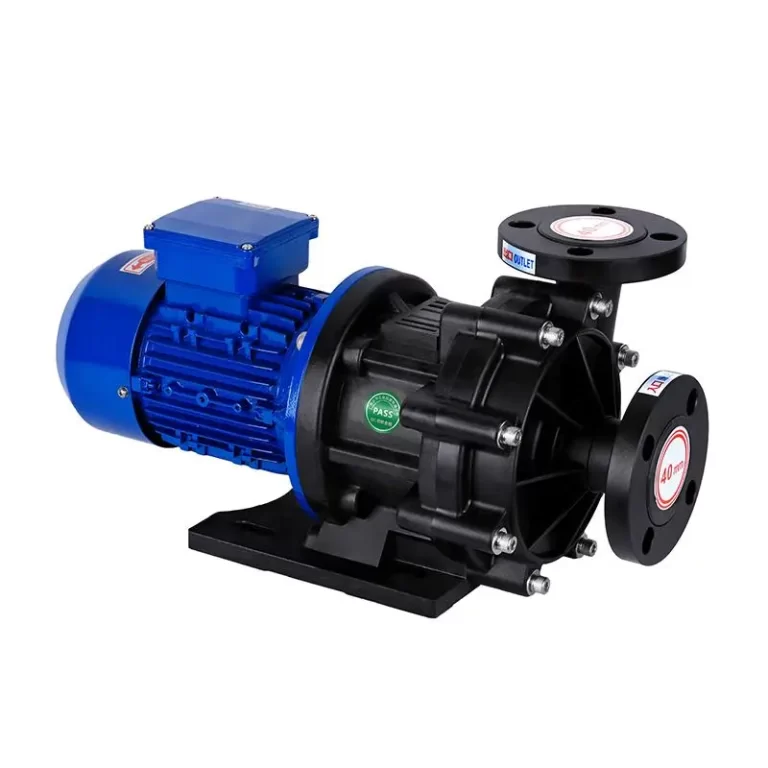
Local QEEHUA application materials identify several related PCB pain points: pump outlet lines without buffering, no relief valve after the pump, hard starting of larger pumps, uneven spray pressure in horizontal machines, and filter damage from excessive pressure. These are not isolated faults. They point to one system-level issue: pressure energy is being introduced faster than the chemical circuit can absorb or release it.
Symptoms, Root Causes, and Process Risk
Water hammer usually shows up as mechanical noise, repeated leaks, unstable spray pressure, or sudden pressure-gauge movement. In PCB production, the larger concern is process risk. If shock changes the flow through spray bars or filters, the line may produce uneven etching, developer residue, poor rinsing, pinholes, or particle contamination.
| Observed symptom | Likely hydraulic cause | Possible PCB process consequence | Immediate check |
|---|---|---|---|
| Pipe knock at pump startup or valve closing | Sudden flow acceleration or stoppage | Cracked PP/PVDF fittings, loosened unions, solution leakage | Review valve timing, soft-start settings, and discharge support |
| Filter pressure jumps then drops | Shock wave hitting cartridge or bag filter housing | Filter media deformation, particle bypass, unstable bath cleanliness | Inspect filter differential pressure, bypass valve, and relief path |
| Spray pressure differs left to right | Header imbalance, trapped air, undersized branch lines, shock after startup | Uneven etching, poor developing, local residue or over-etching | Check branch symmetry, nozzle clogging, pump rotation, and header venting |
| Repeated flange gasket failure | Thermal expansion plus pressure surge and pipe stress | Chemical leakage near conveyors or tanks | Check pipe supports, expansion joints, gasket material, and bolt pattern |
| Frequent pump or coupling vibration complaints | Cavitation, air entry, water hammer, or incorrect rotation | Micro-particles, line downtime, pump wear | Separate hydraulic shock checks from vibration and phase-sequence checks |
When the symptom is low flow or unstable flow, do not assume every case is water hammer. A pump running in reverse creates a different failure pattern; QEEHUA covers that scenario in its article on PCB etching pump phase-sequence problems. Cavitation, gas binding, clogged filters, and deadheading can also overlap with pressure-shock symptoms, so the diagnostic sequence matters.
System Checks Before Replacing the Pump
Before replacing a chemical pump, map the actual wet-process circuit. Mark the tank, suction line, pump, discharge valve, check valve, pressure gauge, filter, bypass, spray header, branch valves, return line, and any elevation changes. A water-hammer fix often becomes obvious when the team sees where flow is being trapped or stopped too quickly.
First, check the suction side. A restricted suction line, direct reducer, air leak, or poor tank liquid level can create unstable pump behavior that later appears as discharge shock. For self-priming centrifugal pumps, local QEEHUA source material notes that suction height must stay within the pump’s practical self-priming range, and in many PCB installations it is better to reduce suction lift rather than oversize the pump. For magnetic drive pumps, keep the pump chamber flooded before startup and avoid suction conditions that encourage air pockets.
Second, check discharge-side restriction. A pump started at full speed into a mostly closed discharge, a blinded filter, a blocked nozzle bank, or a fast-closing valve can generate a surge. That is also why high filter pressure should be treated as a hydraulic warning, not just a filter-maintenance task. QEEHUA’s guide to electroplating filter pressure that is too high is useful when the same filter housing or cartridge logic appears in PCB chemical loops.
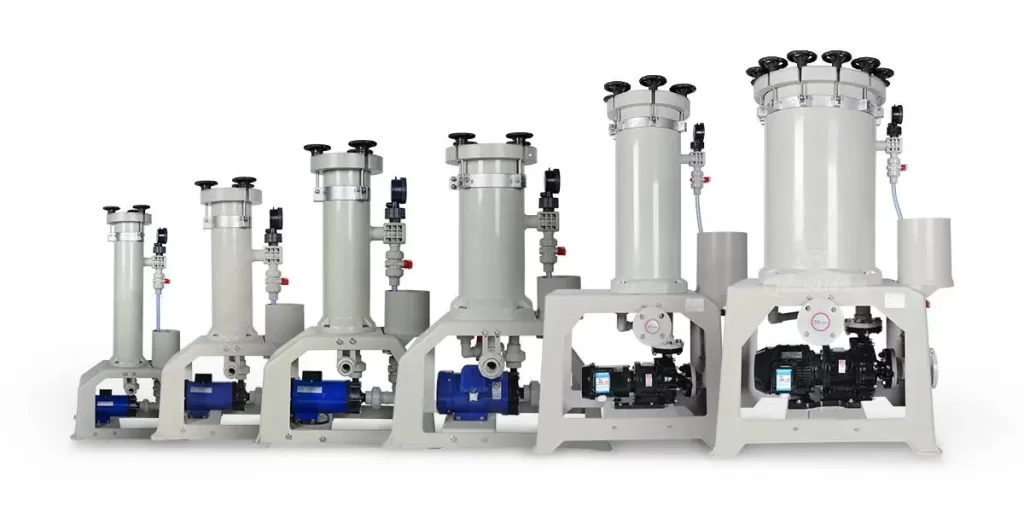
Third, review control sequence. Larger pumps should not be hard-started into sensitive spray or filtration loops if a variable frequency drive, soft starter, bypass opening sequence, or staged valve logic is available. In horizontal PCB machines, a slow ramp can prevent sudden spray header impact and reduce foam generation in some chemical tanks.
Fourth, separate deadheading from water hammer. Deadheading happens when the pump operates against a closed or severely restricted discharge. Water hammer is a pressure wave caused by sudden velocity change. They are different, but they can occur in the same bad startup sequence. For sealless pumps, the deadheading risk is serious enough to review QEEHUA’s separate article on magnetic drive pump deadheading.
Prevention Specifications for Buyers and OEMs
For new PCB equipment, water-hammer prevention should be written into the pump and piping specification. Buying a pump by flow and head alone leaves too many failure points open. The specification should describe how the system starts, stops, bypasses, vents, relieves pressure, supports piping, and protects filters.
| Specification item | Recommended direction | Why it matters |
|---|---|---|
| Pump startup | Use soft start, VFD ramp, or staged valve opening when the loop has filters, long pipe runs, or sensitive spray headers. | Reduces sudden acceleration and pressure impact. |
| Discharge buffer | Add a buffer bend, surge volume, or suitable pulsation/pressure dampening arrangement where line length and valve action create shock. | Gives pressure energy a path to dissipate before it reaches brittle fittings or filters. |
| Pressure relief | Install a compatible PVDF/PP/fluoroplastic relief or bypass path and route discharged chemical safely back to the correct tank. | Protects filters, pump casing, and nozzles from overpressure. |
| Valve selection | Avoid fast closure on main discharge lines; use controlled valve operation and confirm check valves do not slam. | Most water-hammer events begin with abrupt flow stoppage. |
| Filter protection | Fit pressure gauges before and after filters where appropriate, and set a maintenance limit for differential pressure. | Prevents cartridge collapse and particle bypass. |
| Pipe support | Support long PP/PVDF lines, add expansion compensation, and avoid forcing flanges into alignment. | Pressure shock plus pipe stress accelerates cracks and leaks. |
| Material compatibility | Match pump body, seals, gaskets, valves, and instruments to the actual chemical: acid, alkali, oxidizer, chloride, fluoride, or solvent exposure. | A hydraulically correct system still fails if the wetted material is wrong. |
In PCB wet-process equipment, the most practical design target is stable flow rather than maximum flow. A pump that is oversized for the header can force the operator to throttle the discharge, creating heat, noise, and surge risk. A pump that is undersized can encourage repeated valve adjustments and unstable spray pressure. The better approach is to select the pump near the expected operating point, confirm the filter pressure allowance, and leave a controlled bypass or relief path for off-design conditions.
Where QEEHUA Pumps and Filters Fit
QEEHUA’s local product materials divide the relevant equipment into magnetic drive pumps, mechanically sealed centrifugal pumps, vertical pumps, and chemical filters. For corrosive PCB wet-process circulation, plastic magnetic drive pumps are often selected when leakage containment is critical. For some transfer or filtration loops that may contain small non-magnetic solids, mechanically sealed centrifugal pumps or filter-pump assemblies may be a better match. For tanks with low liquid-level or intermittent exposure risk, vertical pump configuration may reduce shaft-seal concerns, but the discharge piping still needs surge control.
Material choice also affects water-hammer risk management. PP or FRPP may fit ordinary acid and alkali service within its temperature limits. PVDF is commonly selected for stronger acids, higher temperature ranges, and smoother wetted surfaces in processes prone to crystallization or plating adhesion. Fluoroplastic-lined or CFRETFE options are considered when the chemical is more aggressive. Seals and elastomers should be checked separately: EPDM and FKM do not serve the same chemical window.
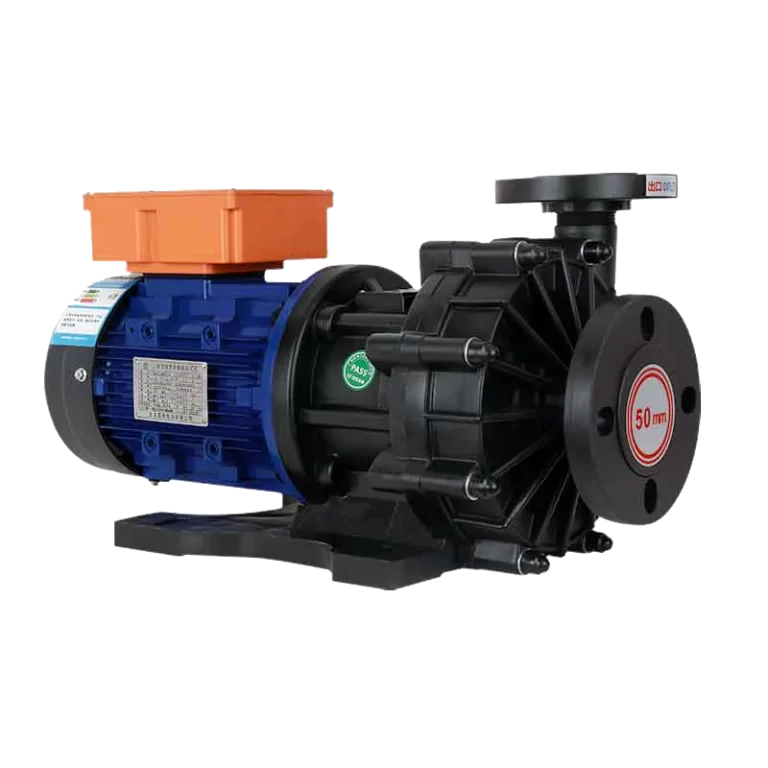
For maintenance teams, the fastest useful audit is a startup observation. Watch the pressure gauge, listen for pipe knock, check whether the discharge valve is already closed, confirm the filter is not near its pressure limit, and inspect supports near elbows and flanges. If a pump has been replaced twice but the same union cracks, the root cause is probably not pump brand alone; it is a system condition around the pump.
For OEM buyers, send QEEHUA the chemical name, concentration, temperature, specific gravity, required flow and head, suction condition, filter housing type, spray header layout, and valve sequence. That information allows pump, filter, material, and protection recommendations to be checked as one circuit rather than as separate components. For dry-run, overload, and phase-loss risk in horizontal pump installations, the QEEHUA pump protection device may also be part of the reliability package.
Need to check a PCB wet-process pump loop? Share your liquid, temperature, flow, head, filter model, valve layout, and failure symptom with QEEHUA. Email info@qeehua.com for a practical pump-and-filter selection review.
FAQ
What causes water hammer in a PCB wet process pump line?
Water hammer is caused by sudden liquid velocity change, usually from fast valve closing, hard pump startup, check-valve slam, blocked filters, trapped air, or a discharge line without a safe bypass or relief path.
Can water hammer damage a chemical filter?
Yes. A short pressure shock can deform filter cartridges, loosen seals, crack housings, or create particle bypass even when normal running pressure appears acceptable.
Is a magnetic drive pump enough to prevent water hammer?
No. A magnetic drive pump helps prevent shaft-seal leakage, but water hammer is a piping and control problem. The system still needs correct valve timing, pipe sizing, relief, support, and startup control.
What should an OEM specify to reduce pump pressure shock?
Specify the pump operating point, soft-start or VFD ramp, controlled discharge valve sequence, pressure relief or bypass path, filter pressure monitoring, compatible materials, and supported PP/PVDF piping.
When should a PCB plant contact the pump supplier?
Contact the supplier when leaks, pipe knock, filter collapse, unstable spray pressure, repeated gasket failure, or unexplained pump vibration continue after basic cleaning and valve checks.
