


Nickel anode slime is one of the most common hidden causes of pump clogging, filter blockage, and unstable circulation in nickel electroplating systems. Fine metallic residues, oxide fragments, bag fibers, and precipitated solids can collect in low-velocity areas, overload the filter, restrict suction, and jam tight internal clearances. The practical fix is to control anode residue at the source, stabilize filtration turnover, and match the pump, filter, and piping layout to the real solids load. For a broader background, see PCB Wet Process Filtration: How to Choose the Right Chemical Filter and Pump.
For plating operators, the issue is not only a dirty filter. Once the loop starts carrying more solids than it can remove, the line can show unstable flow, rising pressure, cloudy solution, rough deposit, and faster maintenance intervals. If you have already seen electroplating filter pressure running too high, nickel anode slime is often one of the physical causes behind that symptom.
What nickel anode slime does in a plating loop
Nickel anode slime is the insoluble residue that forms around anodes or inside anode bags during production. It can include metallic fines, nickel oxide, additive-related residue, and fibers released from worn bag material. When the bag is overloaded, torn, poorly fitted, or changed too late, these solids move downstream into the circulation loop.
Once that material leaves the anode area, it does not stay evenly suspended forever. Heavier particles settle in sumps, elbows, dead legs, and filter housings. Finer particles remain mobile and repeatedly pass through the pump and filter until they either accumulate or get trapped. This is why a plating line can show both gradual pressure rise and intermittent sudden flow loss.

Why pumps and filters plug up
The filter usually shows the first measurable symptom, but the pump suffers the hydraulic consequence. As nickel sludge loads the cartridge or bag, differential pressure increases and usable flow falls. If the filter is undersized, if turnover is too low, or if cartridge changes are delayed, the pump begins working against a dirtier and more restrictive loop.
At the same time, metallic fines can enter impeller passages, thrust areas, and narrow internal clearances. In magnetic drive pumps this matters because solids can increase wear, create drag, and raise the chance of seizure when combined with heat or poor flushing. If the line has already experienced metal-particle related pump jamming, nickel anode residue should be checked as a likely source rather than treated as a random contaminant event.
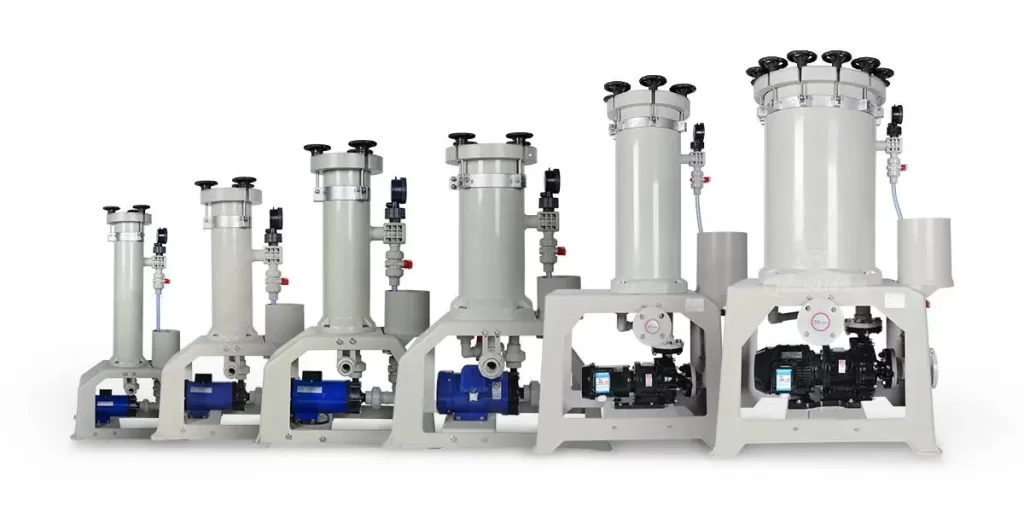
Another failure mode is bypass around a badly seated cartridge or damaged seal. In that case the filter pressure may rise, but fine solids still circulate and continue attacking the pump and plating quality. For broader equipment context, QEEHUA’s chemical filter systems are relevant when the problem is not just pump selection but total solids management in the loop.
Warning signs before production quality drops
Maintenance teams often get earlier warning than production, but only if the right signals are watched together. Typical signs include rising filter pressure, shorter cartridge life, unstable return flow, visible dark residue in the filter bowl or bag, abnormal noise from the pump, hotter running, and sludge accumulation in the sump after shutdown.
The plating process then begins to show secondary symptoms: rough nickel surface, pits, haze, poor brightness stability, particulate inclusions, and faster additive correction. If the same line repeatedly needs filtration intervention after anode-bag changes or after heavy production lots, the residue source is probably upstream of the filter rather than a simple cartridge-quality issue. A closely related QEEHUA guide is QEEHUA PUMP: Bag Filter Housing Material Selection.
Checks and fixes for maintenance teams
Start at the anode area. Check whether the bags are correctly fitted, overloaded, torn, or chemically embrittled. Inspect whether sludge is escaping from seams, ties, or unsupported areas. Review bag replacement frequency against actual sludge loading rather than calendar habit.
Then inspect the circulation hardware. Open the filter and confirm whether solids are trapped in the media, bypassing around seals, or collecting in the housing bottom. Flush low points, drain the sump, and inspect the pump internals if flow remains low after filter service. For compact electroplating loops, a sealed QHX magnetic drive pump series layout can reduce leakage risk, but it still needs solids control and correct filtration turnover to avoid internal wear.
| Observed symptom | Likely slime-related cause | What to check first | Corrective action |
|---|---|---|---|
| Pressure rises, flow falls | Filter media loaded with nickel residue | Pressure trend, cartridge condition, bypass sealing | Replace media, confirm seal seating, review turnover sizing |
| Pump noise or hotter running | Solids restriction or fines entering tight clearances | Suction screen, impeller area, drain residue | Flush loop, inspect pump internals, reduce solids carryover |
| Rough plated surface | Fine solids remain in circulation | Anode bag integrity, filter bypass, sump sludge | Improve source capture and isolate sludge before restart |
| Very short filter life | Bag failure or excessive anode residue generation | Bag material, fit, maintenance interval, production load | Upgrade bag control and match filtration to actual solids load |

Specification points for buyers and OEMs
When buyers or OEMs size a nickel plating loop, they should not define the pump from flow and head alone. The supplier should also review solids behavior, anode bag practice, filter precision, sump geometry, service interval, and whether the loop has enough access for flushing and sludge removal. A pump that looks correct on water can still be the wrong choice for a solids-heavy nickel bath.
Ask whether the line needs a larger filter housing, lower face velocity through the media, better sump cleaning access, or a more solids-tolerant hydraulic arrangement. For teams planning a retrofit or requesting a quotation, the QEEHUA contacts page and the email CTA below are the fastest path to a pump-and-filter review tied to the actual bath, rather than a generic catalog recommendation.
FAQ
Does nickel anode slime always mean the pump is failing?
No. The pump may still be mechanically sound, but it can lose performance because the loop is carrying too much solids load or the filter is becoming restrictive. The residue source should be checked before replacing the pump.
Can a better cartridge alone solve nickel sludge problems?
Not always. If anode bags are releasing residue, if sludge collects in the sump, or if solids bypass damaged seals, the cartridge change may only give temporary relief. Source control and flushing matter as much as filter rating.
What information should be shared with the pump supplier?
Share the bath chemistry, temperature, expected solids behavior, required flow, total head, filter type, cartridge precision, sump arrangement, anode-bag practice, and photos or drawings of the loop. That gives enough context to judge both pump and filtration risk. Before closing the loop, compare this with Pump Pressure and Head: Principles, Formulas, and QEEHUA Application Guide.
If your nickel plating line has recurring pressure rise, dark residue, or pump restriction after filter changes, QEEHUA can review the circulation loop, filter sizing, and pump selection. Email QEEHUA at info@qeehua.com with the bath type, temperature, target flow, filter model, and photos of the sump or filter housing.
