

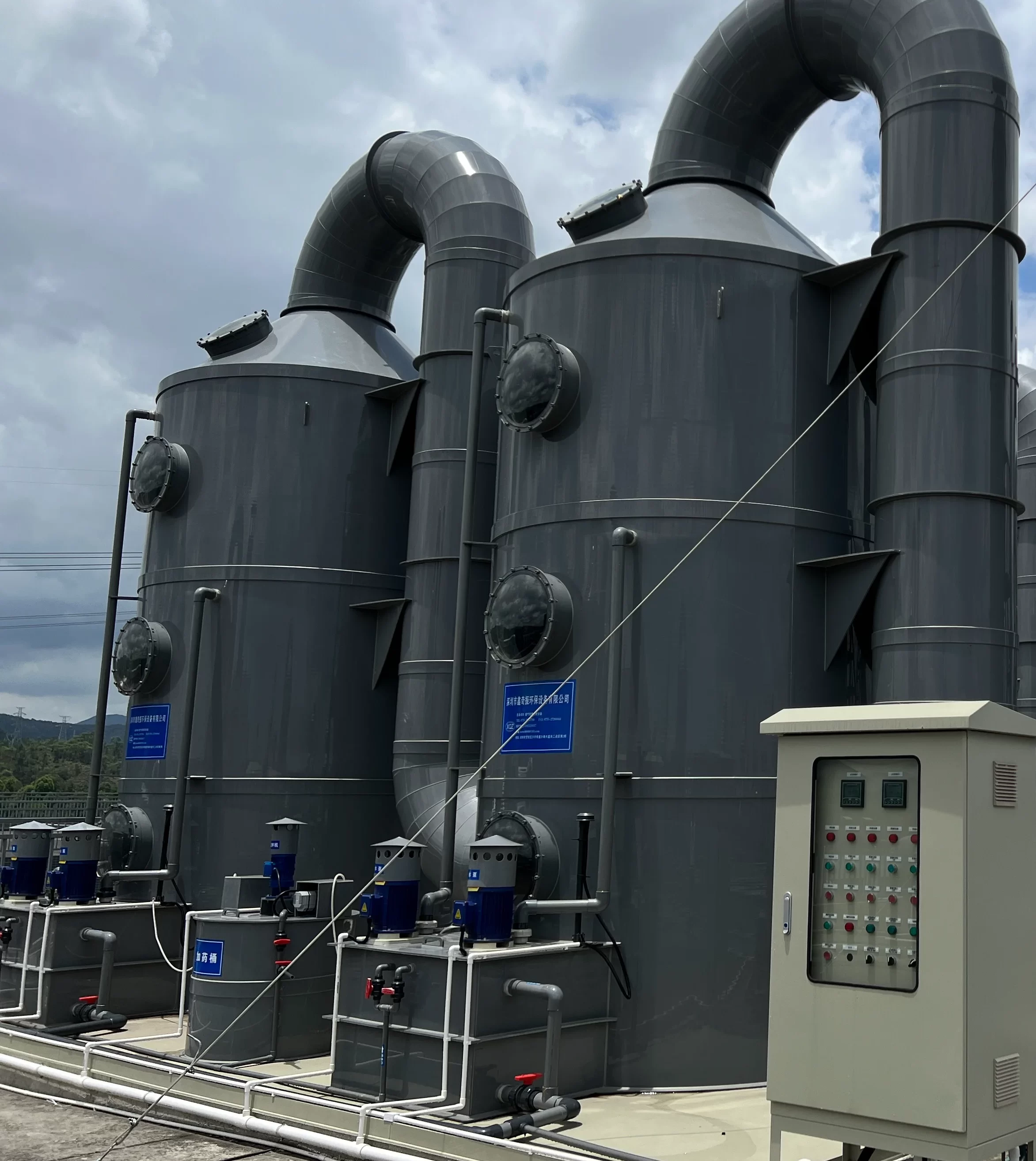
Scrubber pump cavitation happens when vapor bubbles form and collapse inside the pump because the suction side cannot deliver stable liquid to the impeller. In a wet scrubber, that can reduce spray flow, weaken gas-liquid contact, damage impellers or bearings, and put exhaust treatment performance at risk. If you are choosing a pump for a new tower, start with QEEHUA’s vertical chemical pump selection guidance for scrubbers; if an installed tower is already noisy or losing flow, diagnose suction conditions before replacing parts.
This article is for B2B equipment buyers, exhaust-treatment OEMs, maintenance engineers, and plant managers who need a practical way to tell whether a scrubber circulation pump is cavitating, why it is happening, and what specification details prevent the same fault from returning.
What Scrubber Pump Cavitation Means
A wet scrubber depends on continuous recirculation. The pump sends water, alkali, acid, or another treatment liquid to spray headers or packing zones so the exhaust stream contacts enough liquid surface. Cavitation interrupts that circulation. The pump may still run, but the liquid entering the impeller is mixed with vapor pockets or entrained air instead of a dense, continuous stream.
Inside the pump, those bubbles collapse as pressure rises across the impeller. The collapse can sound like gravel, crackling, or sharp vibration. Over time it can erode impeller surfaces, damage shaft support parts, overheat internal components, and cause a steady loss of flow. In a scrubber, the process consequence can be more serious than the pump repair: poor nozzle coverage, unstable pH control, higher outlet odor or acid mist risk, and unplanned shutdown of an environmental protection line.
Local QEEHUA application materials emphasize that scrubbers handle different liquid duties: circulating water, alkali neutralization liquid, acid absorption liquid, and solutions exposed to chlorides, fluorides, ammonia, sulfur compounds, chrome-containing mist, dust, or oil. That means cavitation troubleshooting must include both hydraulics and chemical compatibility. A pump that is hydraulically correct but built from the wrong material may still fail early in corrosive service.
Symptoms Before Pump Failure
The first warning is often not a broken pump. It may be a low spray pressure alarm, uneven nozzle pattern, falling circulation flow, unstable tower differential pressure, or treatment performance that drifts during peak exhaust load. Operators may compensate by opening valves, increasing speed, or adding liquid, but that can hide the suction problem until the pump is already damaged.
Listen and trend the system. Cavitation usually appears as intermittent noise, vibration, fluctuating discharge pressure, and flow that does not match motor speed. A blocked discharge nozzle can also reduce scrubber performance, but it usually raises discharge pressure. Cavitation more often creates unstable pressure and a pump that sounds overloaded even when the discharge valve is not closed.
Maintenance teams should also check whether symptoms happen only at certain tank levels, temperatures, or exhaust loads. If the pump is quiet when the sump is full but noisy when the tower liquid drops, the fault is probably suction submergence, vortexing, or air entrainment. If the fault appears after chemical concentration or temperature changes, vapor pressure, viscosity, density, or material swelling may be part of the problem.
Root Causes in Wet Scrubber Systems
The most common causes are suction restrictions and unstable liquid supply. A clogged suction strainer, undersized inlet pipe, too many elbows near the inlet, a partly closed valve, or a suction pipe that rises and traps air can reduce available suction pressure. QEEHUA’s local electroplating and PCB pain-point sheet repeatedly flags the same pattern: small suction piping, air pockets, blocked filters, poor venting, and low liquid level can all push a corrosion-resistant pump into unstable operation.
Scrubber sumps add their own risks. Return liquid can fall into the tank and entrain air. Foaming chemicals can carry bubbles into the suction zone. A vortex can form when the suction opening is too close to the liquid surface. Sludge, salts, scale, or precipitated reaction products can block strainers and nozzles. If the system has a long suction lift, the problem becomes worse because the pump has less pressure margin before vapor bubbles form.
Temperature also matters. Warmer liquid has higher vapor pressure, so the pump needs more suction margin. Chemical concentration changes can alter density and viscosity. Strong acids, alkali, oxidizing liquids, or chloride-containing solutions can also attack unsuitable pump materials, creating rough surfaces and clearance changes that make the hydraulic fault look like normal wear.
Finally, the pump may simply be operating away from its intended point. If a pump is oversized and throttled heavily, or if spray nozzles are partly plugged, the system curve changes. If operators speed up the pump to recover flow without removing the suction restriction, cavitation can intensify.
Diagnostic Sequence for Maintenance Teams
Start with the tower, not the pump. Confirm that spray headers are flowing, nozzles are not blocked, and the scrubber sump has enough liquid. Record suction pressure if available, discharge pressure, flow rate, motor current, liquid temperature, pH, and any recent chemical or production change. If your team needs a refresher on how pressure and head relate to pump operation, QEEHUA’s pump pressure and head guide is a useful reference.
Then inspect the suction side in order. Make sure the suction valve is fully open, the inlet strainer is clean, the pipe diameter is not smaller than the pump inlet, and the suction line does not climb upward into an air pocket. Check for loose flange gaskets, cracked plastic unions, or fittings that can pull air into the line without visibly leaking liquid. In scrubber sumps, confirm adequate submergence and add an anti-vortex baffle if the pump draws air as the liquid level drops.
Next, compare discharge pressure and flow. Low flow with high discharge pressure points toward blocked nozzles, clogged packing spray lines, or an over-throttled valve. Low flow with unstable pressure and noise points toward suction-side cavitation or air binding. Low flow with normal pressure may point toward impeller wear, wrong rotation, or a pump that no longer matches the system duty.
| Field Symptom | Likely Cause | Corrective Action |
|---|---|---|
| Gravel-like noise, vibration, unstable pressure | Cavitation from low suction pressure, air leak, vortex, high liquid temperature, or blocked strainer | Clean suction screen, raise liquid level, remove air pockets, correct pipe layout, reduce temperature where the process allows, and verify pump duty point. |
| Low spray flow with high discharge pressure | Blocked nozzles, scaling in spray headers, clogged packing distributor, or over-throttled outlet valve | Clean nozzles and headers, check pressure gauge accuracy, and reopen the system gradually after cleaning. |
| Pump loses prime after shutdown | Leaking foot/check valve, insufficient sump level, suction air leak, or poor self-priming layout | Repair valve sealing, reduce suction lift, verify pump type, and avoid layouts that exceed the pump’s self-priming capability. |
| Flow falls after chemical or temperature change | Changed vapor pressure, viscosity, density, corrosion, swelling, or precipitated solids | Review material compatibility, temperature range, chemical concentration, and solids control before changing pump size. |
| Frequent bearing, bushing, or impeller damage | Long-term cavitation, dry running, abrasive solids, or incompatible material | Correct the suction fault, add protection and monitoring, and select pump wetted materials for the actual scrubber liquid. |
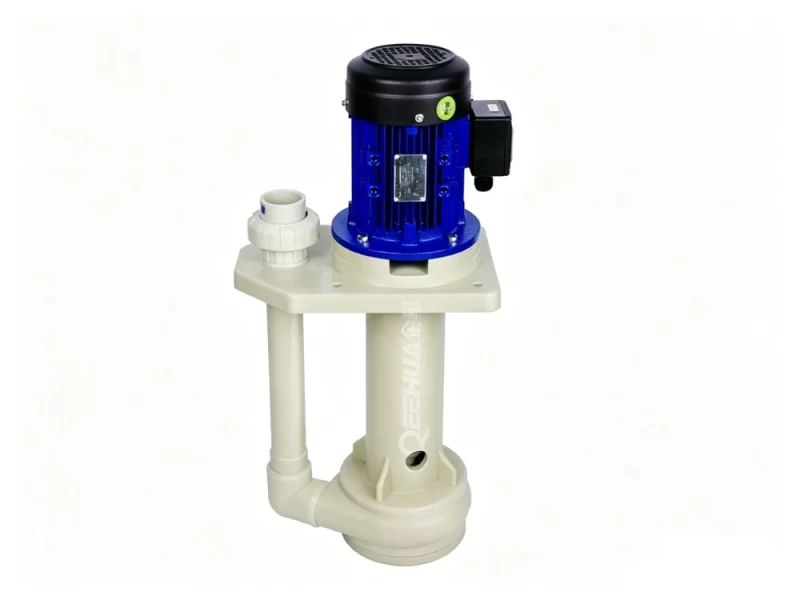
For scrubber sumps with the pump installed inside or near the tank, a corrosion-resistant vertical pump can simplify the suction condition because the impeller is closer to the liquid source. QEEHUA’s QHA in-tank vertical pump and QHD out-of-tank vertical pump pages are relevant references when comparing installation options.
Selection and Prevention Checklist
The safest way to prevent scrubber pump cavitation is to specify the pump and piping as one circulation system. Do not select only by nominal flow. Review tower height, spray pressure, pipe length, elbow count, suction layout, sump level range, liquid temperature, density, solids load, chemical concentration, and whether the pump will see continuous duty, intermittent duty, or frequent start-stop operation.
Material selection must be tied to the actual liquid. QEEHUA local product knowledge identifies PPH and FRPP for common acid and alkali duties, PVDF for stronger acid and higher chemical resistance, and stainless steel mainly for suitable alkaline environments rather than chloride-containing or strongly acidic scrubber liquids. In easy-crystallizing or scale-forming systems, smooth wetted surfaces, drainability, flushing access, and solids control are just as important as the material name.
- Keep suction piping at least the pump inlet size and avoid sudden reductions.
- Place the pump close to the sump or tank and minimize suction lift.
- Use anti-vortex plates or sufficient submergence when liquid level changes during operation.
- Vent high points and remove pipe sections that trap air.
- Clean strainers and spray nozzles before increasing pump speed.
- Verify pump flow against filter, nozzle, and tower requirements rather than running far from the duty point.
- Match pump material, seals, bushings, and elastomers to pH, oxidizers, chlorides, fluorides, temperature, and solids.
Protection devices help reduce the damage from dry running, overload, or phase loss, but they do not replace hydraulic correction. If a pump is cavitating because the sump draws air or the suction strainer is blocked, the control device may stop the pump before severe damage, but the process still needs a piping, level, or maintenance fix. For related operating-risk context, see QEEHUA’s article on magnetic drive pump deadheading.
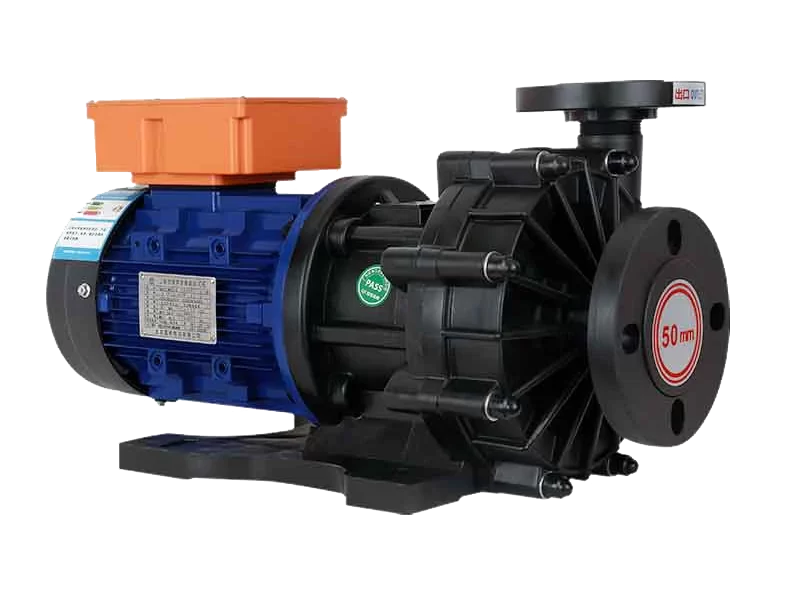
For new exhaust treatment equipment, OEMs should send the pump supplier the tower liquid, design flow, required spray pressure, sump arrangement, pipe sketch, nozzle count, chemical temperature, and whether the liquid contains solids or precipitates. For retrofit work, photos of the current suction piping and a short operating log often reveal the real cause faster than a pump nameplate alone. QEEHUA’s plastic vertical pump for chemical service page is a useful starting point when the duty involves corrosive scrubber liquids.
FAQ
What causes scrubber pump cavitation?
Scrubber pump cavitation is usually caused by low suction pressure, blocked strainers, undersized suction piping, air leaks, vortexing in the sump, high liquid temperature, or operation far from the pump duty point.
How do I know if a wet scrubber pump is cavitating?
Common signs include gravel-like noise, vibration, unstable discharge pressure, falling spray flow, pump overheating, and repeated impeller or bearing damage, especially when the sump level is low.
Can I fix cavitation by installing a larger pump?
Usually no. A larger pump can make cavitation worse if the suction side is restricted. First correct liquid level, suction pipe size, air leaks, strainer blockage, nozzle condition, and the operating point.
Which pump material is suitable for acid or alkali scrubber circulation?
The correct material depends on pH, concentration, oxidizers, chlorides, fluorides, temperature, and solids. PPH or FRPP may fit common acid and alkali liquids, while PVDF is often considered for stronger corrosion resistance.
What information should I send QEEHUA for scrubber pump selection?
Send the scrubber liquid name, concentration, temperature, flow, head or spray pressure, sump level range, pipe layout, nozzle count, solids load, and photos of the pump installation.
For teams that want a direct commercial route after reviewing the troubleshooting data, the QEEHUA contacts page can be used alongside the email link below for scrubber pump retrofit or OEM selection discussions.
