

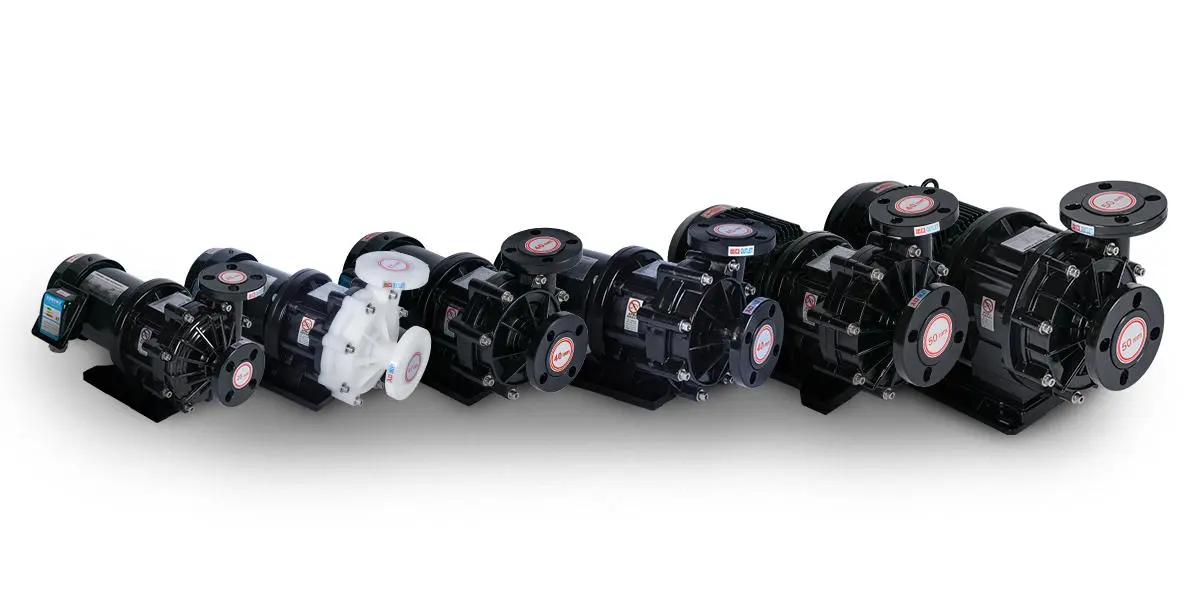
Vanadium electrolyte precipitation can turn a flow battery circulation pump problem into a stack-level reliability problem: solids or gel-like deposits restrict flow paths, raise differential pressure, disturb electrolyte distribution, and can push a pump toward low-flow heating, cavitation, or deadheading. For a VRFB OEM, EPC contractor, or plant maintenance team, the pump specification should therefore treat precipitation risk as a process condition, not only as a normal liquid-transfer duty.
This is a different question from simply asking whether a magnetic drive pump can move electrolyte. QEEHUA already covers broad electrolyte transport through its QHX Series magnetic pump guidance for energy-storage battery electrolyte. This article focuses on the narrower failure mode that buyers and engineers search for when the electrolyte is hot, concentrated, partially crystallized, or no longer moving through the battery stack at the expected rate.
Why Vanadium Precipitation Becomes a Pump Problem
In an all-vanadium redox flow battery, electrolyte is circulated between tanks and the stack so that electrochemical reactions can continue at a controlled rate. Research literature commonly discusses a practical operating window near moderate temperatures, because vanadium species can become unstable at temperature extremes. High-temperature positive electrolyte can form V2O5 precipitation, while low-temperature operation can increase viscosity and reduce ion transport. For the pump, those chemistry changes appear as a hydraulic problem: higher friction loss, poorer NPSH margin, uneven flow, and more solids passing through the wet end.
The QEEHUA local electrolyte circulation source material treats the pump as the “heart” of power circulation and highlights three buyer concerns that match this failure mode: acid/alkali corrosion resistance, leak-free circulation, and stable operation under high-flow or high-head conditions. It also notes that electrolyte density and temperature change pump performance, so a curve selected only for water can be misleading when the actual medium is a dense sulfuric-acid vanadium electrolyte.

For plant managers, precipitation is expensive because it does not stay isolated inside the battery stack. Deposits can collect in elbows, strainers, low-velocity pipe sections, pump chambers, and instrumentation ports. The first visible issue may be a pressure alarm or reduced flow, but the root cause may be thermal control, state-of-charge imbalance, electrolyte concentration, filter loading, or poor flushing after shutdown.
Symptoms in the Electrolyte Circulation Loop
A pump affected by vanadium precipitation rarely fails without warning. The early pattern is usually unstable flow at the same speed, a higher-than-normal discharge pressure, a falling flowmeter reading, or a pump that becomes noisier as the suction line loses margin. Maintenance teams may also see residue during strainer cleaning, rising motor load, or repeated filter clogging after hot-weather operation or extended high state of charge.
These symptoms matter because the pump can be damaged by the condition created by the deposit, not only by the deposit itself. A partly blocked discharge path can move the pump toward deadhead operation. A partly starved suction path can create vapor or gas pockets. If the pump is a magnetic-drive design, low-flow heat buildup around the containment shell and internal bearing set must be avoided. QEEHUA’s separate guide to magnetic drive pump deadheading is a useful companion when pressure is rising but flow is falling.
Pump Selection Checklist for VRFB Loops
The safest specification starts with the real electrolyte, not the nominal pump size. Ask the battery OEM or process owner for temperature range, specific gravity, viscosity range, solids tolerance expectations, minimum and maximum flow, allowable shear, tank level variation, pipe length, fittings, and the control method. Then select the pump around the worst credible operating case, not the cleanest commissioning condition.

| Specification Question | Why It Matters for Precipitation Risk | QEEHUA Selection Note |
|---|---|---|
| What is the real temperature window? | Vanadium electrolyte stability and viscosity change with temperature, affecting both precipitation risk and pump curve performance. | Confirm continuous and peak temperature before choosing PPH, PVDF, fluorine-lined, or other wetted materials. |
| What is the electrolyte specific gravity? | Higher density increases shaft power and can change motor load compared with water testing. | Use the actual medium density when checking motor power and operating margin. |
| Can solids or precipitate reach the pump? | Deposits can abrade bearings, restrict the impeller, and create internal heat during low-flow operation. | If solids are credible, add upstream screening or filtration and set a service rule for pressure rise. |
| Is zero leakage required? | Sulfuric-acid vanadium electrolyte leakage creates safety, corrosion, and contamination risk around containers and skids. | A sealless magnetic-drive pump or appropriate vertical circulation pump should be considered before mechanical-seal designs. |
| Will the pump run through startup, shutdown, or tank-level changes? | Low liquid level, gas binding, or valve misoperation can create dry-running or deadheading events. | Specify interlocks, flow/pressure monitoring, and dry-run protection where the operating sequence is not fully stable. |
For corrosive electrolyte service, QEEHUA’s plastic magnetic pump range gives engineers a starting point for non-metallic wet-end construction. For higher chemical severity, higher temperature, or stricter contamination control, the final material choice should be confirmed against the electrolyte formulation rather than selected from a generic acid-pump rule.
Troubleshooting Table for Engineers
When a circulation loop is already in service, troubleshoot in the order that separates electrolyte behavior from pump hardware. Replacing the pump before checking deposits, suction conditions, and control logic can hide the root cause for a short time and then repeat the same failure. A closely related QEEHUA guide is QEEHUA PUMP Leads the Way in Fluid Transfer for Flow Battery Industry.

| Observed Problem | Likely Process Cause | Pump/System Check | Corrective Action |
|---|---|---|---|
| Flow drops while discharge pressure rises | Precipitate, filter loading, closed valve, or blocked stack channel | Compare flowmeter, pressure gauge, and filter differential pressure | Stop before overheating, isolate the blockage, clean the loop, and verify electrolyte stability conditions. |
| Flow drops and suction pressure becomes unstable | Low tank level, gas entrainment, viscous/cold electrolyte, or suction strainer blockage | Inspect tank level, suction line, venting, and strainer condition | Restore NPSH margin, remove gas pockets, and prevent startup with an unprimed line. |
| Repeated bearing or internal wear | Fine solids or precipitated particles passing through the pump | Inspect internal bearing, shaft sleeve, and impeller clearances | Improve filtration, flushing, and shutdown cleaning; avoid running after solids are detected. |
| Motor overload after electrolyte concentration changes | Specific gravity or viscosity higher than the original pump selection basis | Recalculate shaft power with actual electrolyte data | Resize motor/pump or reduce hydraulic losses so the operating point stays inside the safe region. |
| Corrosion around pump base or skid | Leakage from joints, instruments, or seal areas during thermal cycling | Check flange bolts, unions, O-rings, and drain points | Use compatible elastomers, improve containment, and consider sealless construction for high-risk areas. |
Prevention Plan for OEMs and Plant Teams
For OEMs, the best time to prevent vanadium electrolyte pump clogging is during skid design. Keep suction piping short and adequately sized, avoid dead legs, provide clean drain/flush points, and place pressure and flow instruments where they can detect restriction before the pump is forced into a damaging condition. Where the loop uses variable speed, avoid controlling only to pressure; a blocked path can still create a pressure reading while the stack receives insufficient flow.
For plant maintenance teams, prevention is mostly about trend discipline. Record normal flow, suction pressure, discharge pressure, filter differential pressure, motor current, electrolyte temperature, and tank level during stable operation. When one value drifts, investigate before several values move together. A simple trend sheet is often enough to catch the transition from normal electrolyte circulation to restriction caused by precipitation or contamination.
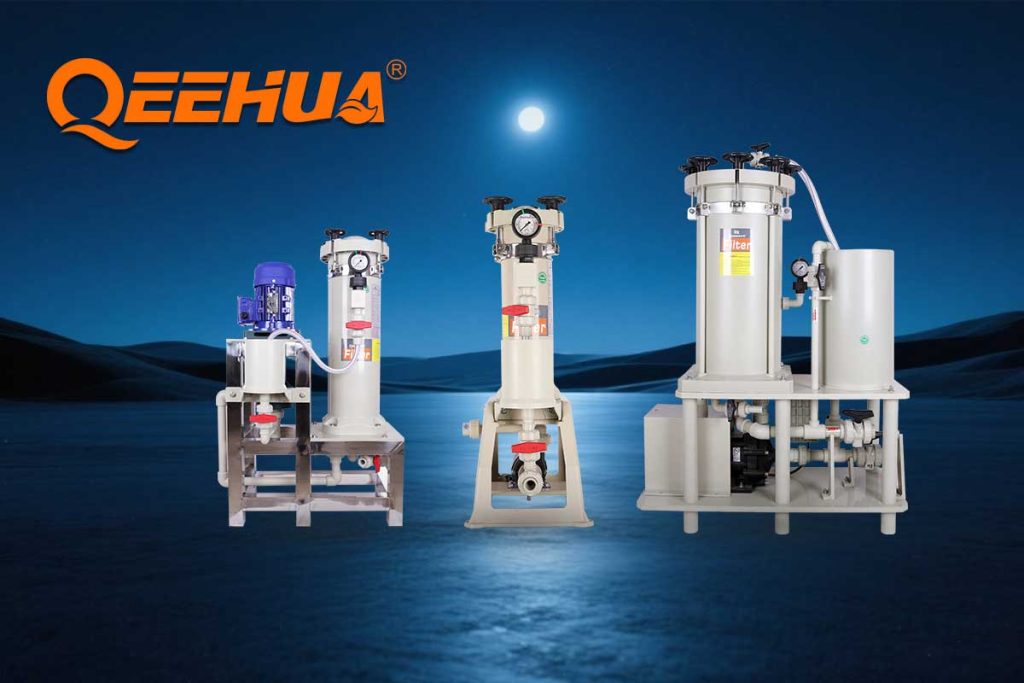
Use the broader QEEHUA article on selecting flow battery pumps and magnetic-drive pump advantages when you are still comparing pump families. Use this article when the project team already knows the application is VRFB electrolyte circulation and needs to protect the loop from precipitation, clogging, density shifts, and no-flow damage.
FAQ
What causes vanadium electrolyte precipitation in a flow battery?
Vanadium electrolyte can precipitate when chemistry, temperature, concentration, state of charge, or storage conditions move outside the stable operating range. High-temperature positive electrolyte is often associated with V2O5 precipitation risk.
How does precipitation damage an electrolyte circulation pump?
Precipitate can restrict passages, load filters, reduce flow, raise pressure, and allow fine solids to reach internal pump parts. The resulting low-flow or blocked-flow condition can overheat and wear the pump.
Is a magnetic drive pump suitable for vanadium electrolyte?
A correctly selected magnetic drive pump is often suitable because it avoids mechanical seal leakage and can use corrosion-resistant wetted materials. The final choice must match the electrolyte formulation, temperature, density, flow, head, and solids risk.
What should engineers check before replacing a clogged VRFB circulation pump?
Check electrolyte temperature history, filter differential pressure, suction condition, tank level, valve position, deposits in low-flow areas, and whether the original pump was selected using actual electrolyte density and viscosity. Before closing the loop, compare this with Exploring Flow Battery Technologies: The Rise of VRFB and ZNFB Systems and QEEHUA’s Role in Reliable Electrolyte Circulation.
How can OEMs reduce pump clogging risk in flow battery skids?
OEMs can reduce risk by avoiding dead legs, sizing suction piping conservatively, adding filtration and flush points, monitoring both pressure and flow, and using interlocks that stop the pump before dry-running or deadheading occurs.
