

Chemical metering pump pulsation causes dosing accuracy loss when each stroke sends liquid in pressure waves. The flow is not perfectly steady. In a B2B chemical line, this can make pH, ORP, conductivity, etching strength, inhibitor level, or cleaning chemical feed drift. The pump setting may look unchanged. The line still loses control. Teams should check suction conditions, back pressure, check valves, air release, dampening, line diameter, stroke setting, and chemical compatibility as one system.
Plants use chemical metering pumps in PCB wet process, wastewater treatment, plating, surface treatment, and chemical transfer skids. In these duties, pulsation is a process-control risk. It can reduce dosing repeatability. It can also shorten valve and diaphragm life, create noisy flowmeter signals, and push operators to overcorrect.
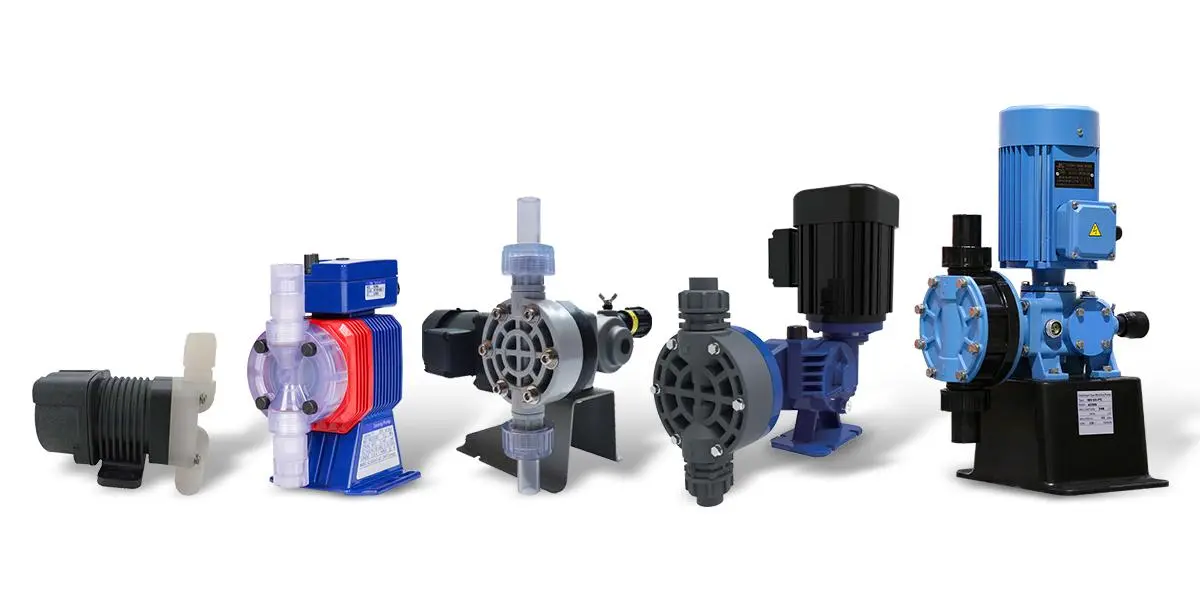
What Chemical Metering Pump Pulsation Means
Most metering pumps are positive-displacement pumps. They move a defined volume during each stroke. This helps controlled chemical injection. It also makes discharge flow naturally intermittent. During the discharge stroke, line pressure rises and liquid moves forward. During the suction stroke, forward flow drops. The downstream pipework then depends on line elasticity, valve behavior, and system pressure.
When Pulsation Becomes a Process Problem
A small amount of pulsation is normal. It becomes a problem when the dosing point cannot tolerate pressure and flow variation. The same risk applies to control sensors, static mixers, injectors, flowmeters, and downstream baths. In PCB developing, etching, stripping, electroplating, chemical copper, nickel, gold, and wastewater neutralization lines, the result may look like unstable concentration control. It may not look like a pump failure at first.
QEEHUA local product knowledge lists EZ series metering pumps, QG diaphragm pumps, QA diaphragm pumps, and related chemical pump products. Each product supports a different duty. The correct choice depends on the job. It may require precise low-flow dosing, chemical circulation, batch transfer, or corrosive-liquid handling.
Why Dosing Lines Lose Accuracy
Pulsation affects accuracy because the pump, pipe, liquid, valves, and control point do not respond at the same speed. A pump may pass calibration under one steady condition. The field installation may then add long discharge piping, variable back pressure, air pockets, narrow tubing, high-viscosity liquid, or a changing injection point. Each factor changes the effective stroke volume that reaches the process.
Common Root Causes
Common root causes include missing dampening, undersized dampening, unstable back pressure, trapped gas, dirty check valves, small suction lines, high stroke speed, and chemical attack on soft parts. A worn diaphragm may still move. A leaking check valve may still click. The pump can look active while the delivered chemical volume changes from stroke to stroke.
Material choice also matters in corrosive service. Check the pump head, diaphragm, valve ball, seat, O-ring, tubing, and fittings against the chemical. This is critical for acid, alkali, oxidizer, and plating additives. If the process needs transfer capacity instead of precise dosing, QEEHUA guidance on precision chemical dosing and metering pump solutions can support the wider review. The dosing pump still needs stable suction and discharge conditions.
| System issue | What happens in the dosing line | Likely process result | Corrective action |
|---|---|---|---|
| No pulsation dampener | Each pump stroke creates pressure peaks and low-flow gaps. | Flowmeter noise, unstable chemical injection, valve vibration. | Add a compatible dampener close to the pump discharge and size it for flow, pressure, and chemical. |
| Back pressure is too low or variable | The pump sees changing resistance at the injection point. | Overfeed, underfeed, or siphoning in low-pressure lines. | Use a back-pressure valve or injection valve suited to the operating pressure. |
| Air is trapped in the suction or pump head | Gas compresses during the stroke instead of moving liquid forward. | Intermittent feed, loss of prime, concentration drift. | Vent the pump head, correct suction piping slope, remove high points, and keep the suction flooded where possible. |
| Check valves are dirty or worn | Liquid leaks backward between strokes. | Calibration looks acceptable at first, then dosing becomes unstable. | Clean or replace valve balls, seats, springs, and O-rings with chemically compatible parts. |
| Line diameter is too small | Acceleration pressure rises during each stroke. | High pressure peaks, noisy piping, short diaphragm life. | Increase line size, shorten runs, reduce sharp elbows, and reassess dampener placement. |
Symptoms Maintenance Teams Can Check
Teams often misdiagnose pulsation as a controller problem. The first clue is usually an oscillating process value. Pump speed, stroke length, and tank level may look stable. Operators may still see pH hunting, ORP overshoot, inconsistent conductivity, unstable plating additives, or uneven etching chemistry.
Mechanical Warning Signs
Mechanical signs include a bouncing pressure gauge, pipe vibration, repeated check-valve noise, injection-line movement, rapid valve-seat wear, or a dampener that loses pre-charge. In some systems, the flowmeter reading jumps more than the real process flow. This often happens when the meter sits too close to the pump or before enough flow smoothing.
In PCB and electroplating lines, unstable dosing can also affect filtration. A concentration swing may release solids or accelerate sludge formation. Operators may blame the filter, even when the upstream chemical feed causes the issue. If particulate control also matters, pair the dosing review with PCB wet process filtration and chemical filter pump selection. Do not treat the pump as an isolated component.
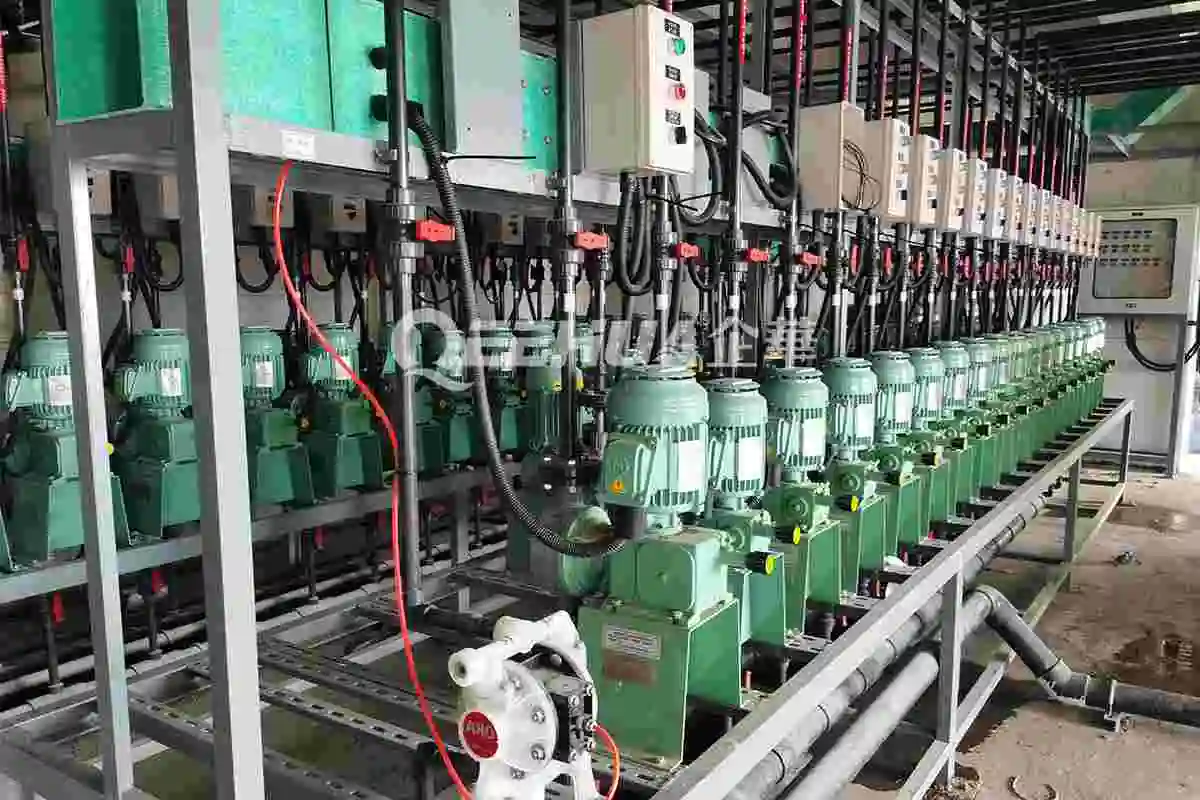
Practical Fixes for Stable Dosing
Start With the Suction Side
Start with the suction side. Keep the suction line short, flooded, airtight, and correctly sized. Avoid upward loops that trap gas. Use a foot valve or suction assembly only when it fits the liquid and maintenance routine. Some oxidizers and warm alkaline solutions can release gas. Add venting for those duties. Avoid layouts that let bubbles collect in the pump head.
Stabilize the Discharge Side
Next, stabilize the discharge side. Install a pulsation dampener near the pump outlet when the line is long. Also use one when the flowmeter is sensitive, the process cannot accept pressure swings, or the stroke speed is high. A back-pressure valve helps prevent siphoning. It also gives the pump a more predictable pressure. A relief valve protects the line if an injector, valve, or filter element blocks.
Then check operation. Very low stroke length can reduce repeatability on some pump types. Very high stroke speed can increase acceleration pressure and valve wear. After any change, calibrate the pump under actual line pressure, not only with water in a bucket. Record the setting, measured output, chemical, temperature, back pressure, and calibration period so the maintenance team can detect drift earlier.
For a new skid, review the pump outlet shock principles in PCB wet process water hammer prevention. Then review dampening, valves, piping, and filtration together. This is usually more reliable than buying a pump first and correcting line behavior later.
Specification Checks Before Buying or Replacing a Pump
Before replacing a metering pump, check whether the system is causing the pulsation problem. A new pump of the same type may repeat the fault. This can happen when suction lift is too high, discharge pressure varies, pipe size is too small, or the injection point creates unstable back pressure.
Data to Confirm Before Selection
Confirm the liquid name, concentration, temperature, viscosity, specific gravity, flow range, normal pressure, maximum pressure, suction condition, line length, valve layout, injection-point pressure, accuracy target, and wet-end material compatibility. PCB wet-process and electroplating plants need extra checks. Review acid mist, alkali exposure, cleanroom particle risk, nearby filtration, and leakage containment.
If the process uses a shared chemical loop, prevent dosing instability from causing cross-contamination. Keep each chemical path clearly identified. Add non-return protection where it makes sense. Use filtration to support the process, not to hide a dosing fault. For integrated pump and filter planning, review PCB chemical filter short circuit troubleshooting with the dosing and circulation duties together.
FAQ
Is pulsation normal in a chemical metering pump?
Yes. Reciprocating metering pumps naturally create pulsed flow. It becomes a problem when the pressure and flow variation affects dosing accuracy, sensors, valves, pipework, or the process result.
Does every dosing pump need a pulsation dampener?
Not every short, low-risk dosing line needs one. Use a dampener for long discharge runs, sensitive flowmeters, high stroke speeds, pressure-sensitive processes, and lines with vibration or pressure swings.
Can a back-pressure valve improve metering accuracy?
Yes. A back-pressure valve can make the pump work against a stable pressure and reduce siphoning or variable discharge conditions, which helps the actual delivered volume match calibration more closely.
Why does the pump run but chemical feed still drift?
The pump may still stroke. Air compression, leaking check valves, worn diaphragms, unstable back pressure, or restricted suction can still stop the expected volume from reaching the injection point.
What should be checked before replacing the metering pump?
Check suction layout, discharge pressure, pipe size, check valves, dampener condition, back-pressure control, chemical compatibility, real-pressure calibration, and pump flow range.
Chemical metering pump pulsation is manageable when the team designs the line as a complete dosing system. The practical goal is simple. Keep pressure stable enough. Keep stroke delivery repeatable. Choose compatible wet-end materials. Build a maintenance routine that catches air, valve wear, and calibration drift before they create process defects.
