

Durable diaphragm pumps handle corrosive waste and pulse flow requirements in modern industrial water treatment.
Article Navigation
Wastewater Treatment Challenges
Industrial wastewater often contains high concentrations of acids, bases, and suspended solids. Moving these fluids requires a pump that can handle abrasive particles without clogging. Diaphragm pumps are the primary choice for these applications due to their reciprocating action. They provide excellent suction lift and the ability to run dry without damage.
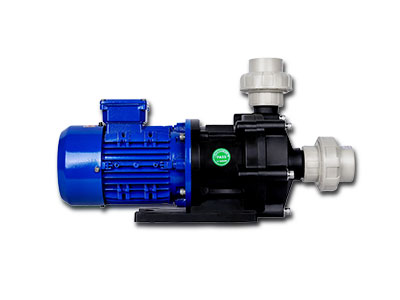
Environmental regulations demand 100% containment of toxic runoff. Traditional pumps with mechanical seals often fail in wastewater service because the grit in the water destroys the seal faces. Diaphragm pumps eliminate this failure point. We design our wastewater pumps to operate under heavy-duty cycles in mining and electroplating discharge lines.
Pneumatic vs. Electric Diaphragm Pumps
You must choose between pneumatic (AODD) and electric drive systems based on your facility’s infrastructure. Pneumatic diaphragm pumps are inherently explosion-proof because they run on compressed air. This makes them ideal for treating wastewater that might contain volatile organic compounds (VOCs). They also allow for easy flow adjustment by simply regulating the air pressure.
Electric diaphragm pumps offer higher energy efficiency for continuous operation. They provide a more consistent flow rate with less pulsation. However, for dosing applications where you need to add chemicals like NaOH or H2SO4 to neutralize pH, digital metering pumps are becoming the industry standard. These smart pumps replace traditional mechanical dosing systems with precise, PLC-controlled accuracy.
Solving Clogging and Pulse Issues
Pulse output is a natural characteristic of diaphragm pumps. While beneficial for some mixing applications, it can be problematic for customers requiring continuous, steady flow. We recommend installing a pulsation dampener on the discharge side to smooth out the flow. This protects your downstream valves and flow meters from “water hammer” effects.
Inquiry Tip: If your system requires zero-pulse flow for sensitive sensors, contact our engineering team for a customized manifold solution that balances output perfectly.
Material Selection for Aggressive Media
Chemical compatibility determines the lifespan of your pump. We offer a variety of body materials and diaphragm elastomers to suit your specific wastewater profile. Using the wrong material leads to diaphragm rupture within weeks.
| Component | Available Materials | Best For |
|---|---|---|
| Pump Body | PP, PVDF, Stainless Steel | Strong Acids, Corrosive Alkalies |
| Diaphragm | PTFE, Santoprene, Viton | High Temperature, Chemical Purity |
| Ball Valves | PTFE, Ceramic | Slurries, Abrasive Particles |
For semiconductor wastewater, we use premium grade Simona or Röchling PP sheets for tank construction. These materials provide superior flame retardancy (V0 grade) and chemical resistance. Our QEEHUA diaphragm pumps integrated with these tanks create a robust, long-lasting treatment station.
One-Stop System Integration
Buying a pump is only the first step. A complete wastewater system requires valves, flow meters, and pressure gauges. We supply ball valves for pipes ≤DN50 and butterfly valves for larger lines ≥DN50. All our fittings, including tees, reducers, and flanges, are manufactured to the same high standards as our pumps to ensure a leak-free system.
Upgrade Your Wastewater Efficiency
Our engineers provide free system design consultations for industrial water treatment plants.
