


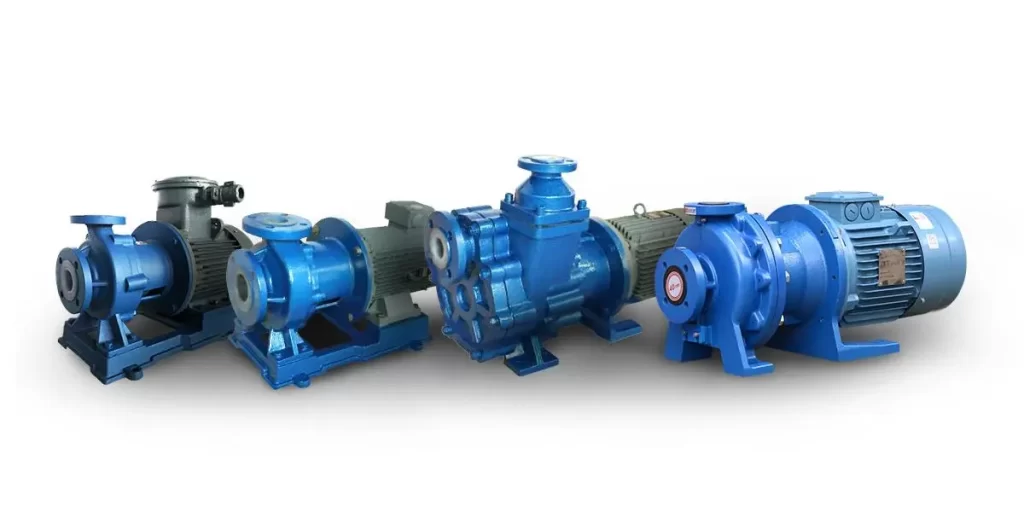
A plant should look at the QBF Series fluorine magnetic pump when the liquid is corrosive enough to justify fluorine-lined wetted parts, the duty is heavier than a compact pump can comfortably handle, and shaft-seal leakage would create a maintenance or safety problem. QBF is not simply a larger blue pump. It is a practical choice for corrosive circulation, transfer, surface treatment, PCB wet process, electroplating, and other aggressive-liquid services where the buyer needs both chemical resistance and the leakage-control benefit of a magnetic drive.
The common mistake is to specify “a magnetic pump” without separating three questions: Is the liquid compatible with the wetted material? Is the duty point inside the series range after filter pressure, piping loss, and specific gravity are included? Is the liquid clean enough for a sealless magnetic-drive pump? QEEHUA’s QBF Series fluorine magnetic pump should be reviewed through those questions before a model is selected.
Where QBF Series Fits
QBF is most relevant when a buyer is dealing with strong acid, strong alkali, oxidizing liquid, salt solution, or mixed chemical service where ordinary metallic or general plastic materials may not be acceptable. QEEHUA’s local product training material lists FEP, also called F46, as suitable for pH 0-14 chemical liquids with strong acid and alkali resistance, high insulation, and low liquid adhesion. The same material notes describe PFA as a fluoroplastic with stronger performance, often used in semiconductor-type service. These statements should still be checked against the exact chemical, concentration, temperature, solids content, and cleaning procedure.
External material guidance supports that direction. Daikin explains that fluoroplastics use strong carbon-fluorine bonds and are widely resistant to solvents, acids, and bases. Chemours also describes PFA grades for chemical fluid handling where high purity, chemical resistance, and stress-crack resistance matter. Those references do not replace a project compatibility check, but they explain why fluorine-lined pump construction is often considered for aggressive media.
From a pump-construction view, the magnetic drive removes the dynamic shaft seal that often becomes the leakage point in corrosive service. The Hydraulic Institute’s sealless rotodynamic pump standard covers magnetic drive and canned motor pumps for applications where leak-free pumping is required. That makes QBF most useful where leakage control is part of the process requirement, not just a nice feature.
QBF or QBFZ
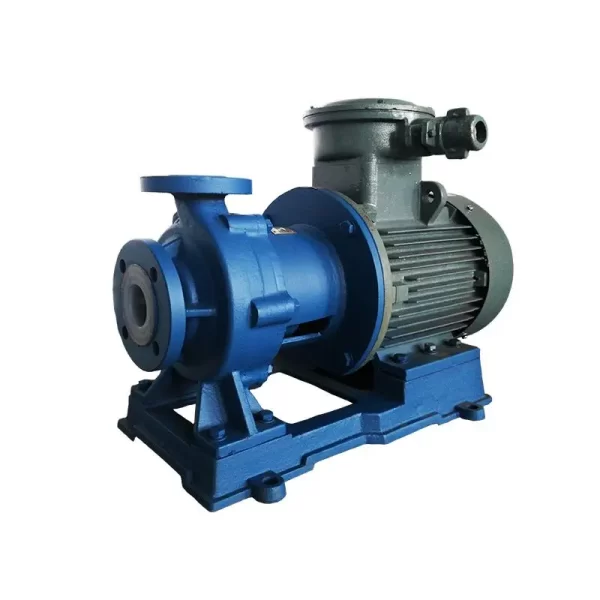
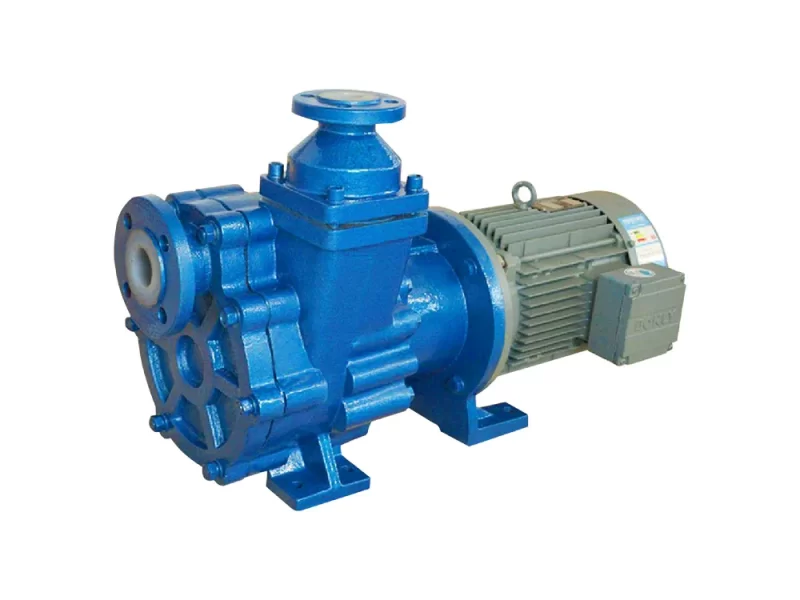
QBF and QBFZ should not be treated as interchangeable names. QEEHUA’s product pages position QBF as the heavier-duty fluorine magnetic pump for demanding corrosive circulation systems and larger transfer capacity. QBFZ is described as a compact fluorine magnetic pump for corrosive liquid transfer and circulation in a smaller power range. In practical RFQ language, QBF is the candidate when the line needs more flow, more continuous-duty margin, or a stronger industrial installation envelope. QBFZ is the candidate when the fluid compatibility is similar but the duty is smaller and the installation space or power range is more compact.
| Selection question | QBF Series direction | QBFZ Series direction |
|---|---|---|
| Duty size | Review when the corrosive circulation or transfer duty is too heavy for a compact pump. | Review when the application is smaller and does not need the larger QBF capacity range. |
| Installation style | Better fit for a more industrial, continuous service layout with room for a larger pump base. | Better fit when the line needs a compact fluorine magnetic pump arrangement. |
| Material reason | Use when fluorine-lined wetted parts are required for aggressive media and leakage control. | Use when F46 wetted material and magnetic-drive leakage reduction are needed in a smaller range. |
| Buyer risk | Undersizing can cause low flow, hot running, filter pressure problems, and repeated model changes. | Overspecifying can raise purchase cost and installation burden without solving the real system issue. |
Selection Checks Before RFQ
The first check is chemical compatibility. List the liquid name, concentration, temperature, impurities, cleaning liquid, and whether the service includes startup dilution or shutdown concentration. A pump that is compatible with the normal bath may still face risk during cleaning, flushing, or concentration drift.
The second check is the operating point. Do not send only the desired flow rate. Send the required flow, static lift, pipe length, pipe diameter, fittings, valve type, filter pressure, nozzle pressure, and the liquid’s specific gravity. If the line already has unstable flow, use a system-curve check before blaming the pump. QEEHUA’s article on pump curve versus system curve for chemical pump loops explains why the real operating point can move when filters load or valves are throttled.
The third check is solids. QEEHUA’s product training material warns that magnetic pumps are not recommended for liquids with small solid impurities, especially magnetic metal particles. That point matters in electroplating, etching, and recycling loops. If the liquid carries sludge, scale, anode residue, resin fragments, or metallic fines, the RFQ should include filtration details and maintenance history. QEEHUA’s existing guide on magnetic drive pump metal particles is a useful follow-up when the line has jamming or internal wear symptoms.
- Chemical name, concentration, temperature range, and cleaning liquid.
- Target flow, required discharge pressure or head, and actual piping layout.
- Filter housing, cartridge rating, normal pressure drop, and dirty-filter pressure.
- Liquid specific gravity, viscosity if abnormal, and whether crystals or solids appear.
- Tank level range, suction condition, flooded suction or lift, and dry-run protection plan.
- Required motor voltage, site environment, splash or acid mist exposure, and control interlocks.
What Can Still Go Wrong
A QBF Series pump can reduce shaft-seal leakage risk, but it cannot correct a bad system. Deadheading, dry running, blocked suction, wrong rotation, poor venting, and filter overload can still damage a magnetic drive pump. If operators close a discharge valve while the pump keeps running, liquid inside the casing can heat up quickly. QEEHUA’s article on magnetic drive pump deadheading covers the warning signs and protection logic for that situation.
Another common failure path is selecting by material only. A fluorine-lined pump may be the right material concept, but the final model still needs hydraulic margin. High specific gravity raises absorbed power. A dirty filter raises discharge pressure. A long pipe run adds friction loss. If those items are missing from the RFQ, the selected pump may run away from the intended duty point.
For corrosive wet lines, buyers should also think about containment and restart behavior. A sealless pump reduces one leakage path, but the skid still needs flange checks, drain routing, liquid-level protection, and response rules if a sensor trips. For PCB wet process lines, the recent QEEHUA note on chemical pump skid secondary containment gives a practical way to connect pump choice with leak volume, sensors, and shutdown logic.
RFQ Notes for Buyers
When a buyer asks whether QBF is “better” than QBFZ, the safer answer is: QBF is better only when the larger-duty requirement is real. If the line is compact, the flow is modest, and the system pressure is low, QBFZ may be the more practical fit. If the liquid is aggressive, the line runs continuously, the filter pressure changes during operation, and a smaller pump would operate near its limit, QBF deserves review.
For OEMs and maintenance teams, the decision should be documented in acceptance terms. Ask the supplier to confirm the selected model, wetted material, seal and O-ring material, bearing and shaft material, motor power, allowable temperature, recommended protection devices, and whether the selected point leaves margin for filter loading. That is more useful than asking for a quick price on “one fluorine magnetic pump.”
If the same plant also handles oxidizing chemicals, compare the RFQ data with QEEHUA’s chemical-specific guidance for sodium hypochlorite pump selection. It shows why venting, material checks, and flow-control details should travel with the pump inquiry rather than arrive after the quotation.
For QBF or QBFZ selection, send QEEHUA the liquid, temperature, concentration, flow, head, filter pressure, and site photos. Email info@qeehua.com for a QBF Series pump review.
FAQ
When should I choose QBF instead of QBFZ?
Choose QBF when the corrosive liquid duty is larger, more continuous, or needs more operating margin than a compact QBFZ installation. Choose QBFZ when the service still needs F46 fluorine wetted material and sealless operation but the flow and power range are smaller.
Can QBF handle strong acid and strong alkali?
QEEHUA’s local material guidance describes FEP/F46 as suitable for pH 0-14 chemical liquids, but every project still needs a compatibility check for chemical name, concentration, temperature, impurities, and cleaning liquid.
Is a QBF magnetic drive pump suitable for liquid with metal particles?
No, it should not be selected casually for liquids containing small solids, especially magnetic metal particles. The RFQ should include solids information, filtration details, and maintenance history before QEEHUA confirms a pump choice.
What data does QEEHUA need before selecting a QBF model?
QEEHUA needs liquid name, concentration, temperature, target flow, head or pressure, piping layout, filter pressure, specific gravity, solids risk, suction condition, motor requirements, and protection logic.
Sources
Hydraulic Institute: ANSI/HI sealless rotodynamic pump standard overview; Daikin: fluoroplastic chemical resistance overview; Teflon: PFA resin properties for chemical fluid handling.
