

Sodium hypochlorite is common in PCB factories for wastewater oxidation, scrubber dosing, odor control, and occasional cleaning service, but it is not a normal neutral water duty. It is alkaline, oxidizing, light sensitive, and able to release chlorine when exposed to acid conditions. A pump that works well on rinse water can lose prime, attack seals, corrode metal parts, or create a gas pocket when moved into hypochlorite service.
For QEEHUA selection work, the useful question is not simply whether a pump can move bleach. The better question is whether the pump, piping, venting, control logic, and maintenance plan can keep a 5-15% sodium hypochlorite line stable under real plant conditions. If the line includes PCB wastewater treatment, exhaust scrubber chemical feed, or oxidizing transfer near acid tanks, the pump specification should include concentration, pH, temperature, suction condition, venting method, and interlock logic from the start.
Why hypochlorite pumps fail differently
Hypochlorite service creates three pump problems at the same time: oxidizing attack, gas release, and process safety risk. The International Chemical Safety Cards note that sodium hypochlorite can decompose on heating, on contact with acids, and under light, producing toxic and corrosive gases including chlorine. They also list common industrial solutions above 10% active chlorine as corrosive, with density around 1.20-1.25 g/ml at 20 C for 14% solution.
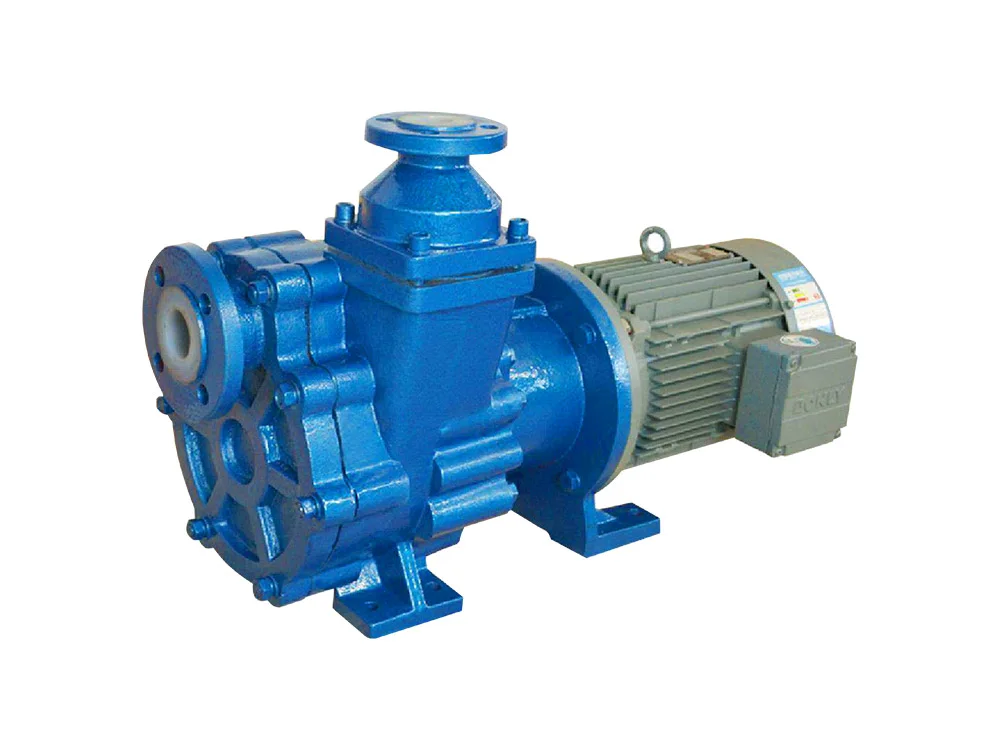
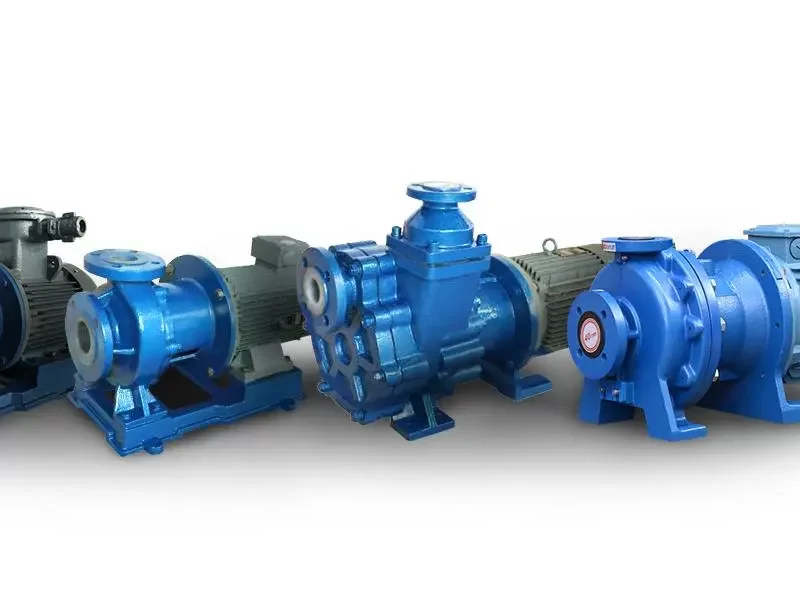
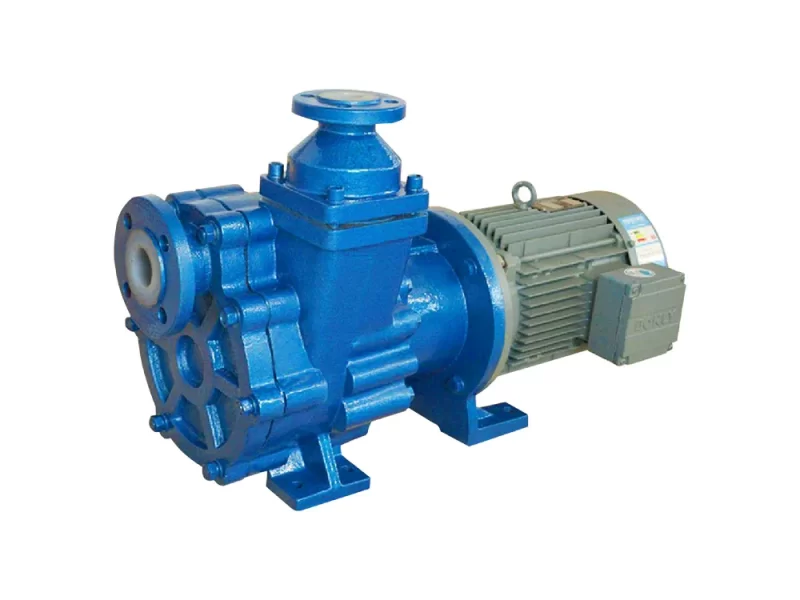
That matters because a pump is not isolated from the process. Acid mist from nearby etching tanks, a leaking check valve, a warm storage area, or a deadheaded discharge can change the chemical condition seen at the pump. For general sealless chemical transfer, QEEHUA normally starts with a magnetic drive pump selection review, then narrows the design by chemical concentration, solids, temperature, pressure, and available suction head.
Selection rule: if the duty can release gas, attack metals, or sit near acid tanks, do not treat sodium hypochlorite as a simple water-like liquid. Specify it as an oxidizing alkaline chemical with concentration, temperature, venting, and safety interlocks.
Quantified Design Window
The fastest way to prevent vague RFQ answers is to give the supplier numbers. For most PCB wastewater and scrubber support systems, the pump review should start with these values rather than a product name alone.
| Design item | Quantified value to collect | Why it changes pump selection | Red flag |
|---|---|---|---|
| Available chlorine or NaOCl concentration | 5%, 8.25%, 10%, 12.5%, or 15% | Higher concentration increases oxidizing stress and decomposition concern. | Supplier only receives the word bleach. |
| Liquid temperature | Normal, maximum, and storage temperature in C | Warm liquid can accelerate strength loss and gas release. | Pump is selected at 20 C but tank reaches 35-40 C. |
| Specific gravity | Use 1.10 for dilute service and up to 1.25 for stronger solution checks | Motor power and actual operating point change with density. | Motor is sized as if liquid is water. |
| Suction condition | Flooded suction, lift, tank level range, pipe length, strainer loss | Gas pockets and low NPSH margin can cause unstable flow. | Long horizontal suction line with no high-point vent. |
| Duty cycle | Continuous transfer, batch transfer, or dosing recirculation | Deadhead time, heat rise, and gas accumulation differ by duty. | Pump cycles against a closed valve. |
| Control response | Flow alarm delay, pressure high trip, tank low-low trip, leak alarm | Hypochlorite faults should be stopped before dry-run or release. | No shutdown until an operator sees the issue. |
Material and Seal Selection
For clean sodium hypochlorite transfer, a plastic wetted path is normally preferred over exposed metal wetted parts. PVDF is commonly selected for oxidizing chemicals, while PP can be considered for some lower-temperature and lower-concentration services when the chemical compatibility review supports it. The exact decision depends on concentration, temperature, impurities, and whether the pump will see mixed chemicals during cleaning or upset conditions.
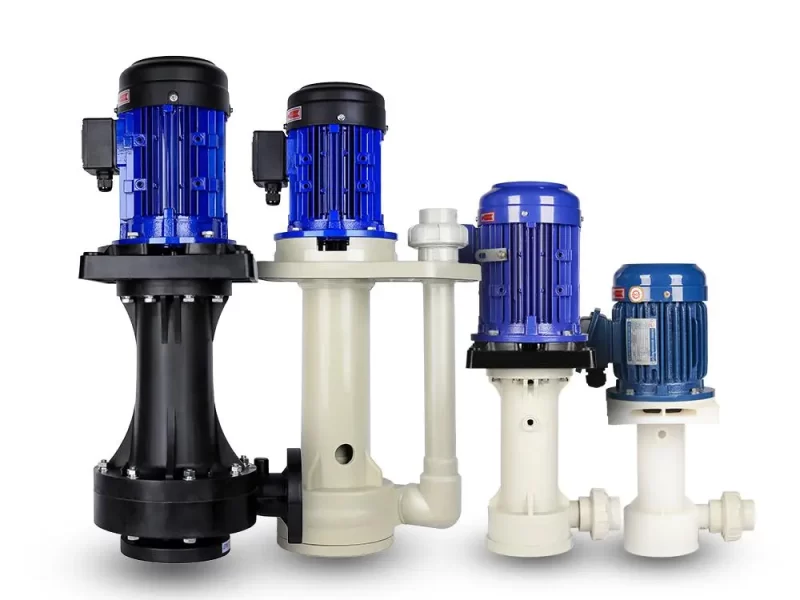
For clean transfer, a sealless magnetic pump such as the QEEHUA QBF fluorine magnetic pump series may reduce external leakage points. For sump or scrubber collection tanks, a plastic vertical pump may be a better layout choice because it keeps the motor above the liquid and avoids a long flooded seal chamber. The decision should be based on installation geometry, not only the chemical name.
When a magnetic drive pump fits
- Clean or filtered hypochlorite solution.
- Flooded suction or stable positive inlet pressure.
- Leakage avoidance is more important than solids tolerance.
- Flow and pressure can be monitored to prevent dry running.
When a vertical pump fits
- Open scrubber sump or wastewater holding tank.
- Variable liquid level but enough submergence can be maintained.
- Motor must stay outside the corrosive liquid zone.
- Tank geometry supports inspection and removal.
Venting and Flow Control Checks
Gas handling is where many hypochlorite systems become unstable. A magnetic drive centrifugal pump does not like dry running, and gas accumulation near the impeller can reduce flow before the motor current looks abnormal. If the pump is connected to a day tank, scrubber loop, or wastewater oxidation line, the design should avoid high-point traps and should provide a way to purge gas safely.
Keep the suction line short, flooded where possible, and rising continuously to the pump without a hidden gas pocket.
Add a controlled vent or commissioning purge point at the highest practical point, routed to a safe area.
Use a flow switch or transmitter and alarm if measured flow stays below 80-90% of expected value after startup.
Use discharge pressure high-high shutdown if a blocked valve or clogged injector can deadhead the pump.
Stop the pump on low-low level before vortexing or air ingestion starts.
Use check valves and process separation so acid cannot backflow into hypochlorite piping.
If the same system already uses tank level, pressure, flow, or VFD signals, align the hypochlorite pump with the existing PCB pump interlock logic. A practical startup rule is to allow 5-10 seconds for normal flow stabilization, then alarm if flow remains below the expected band and trip if the condition persists for another 10-20 seconds. The exact delay should match pipe volume and process risk.
Worked Sizing Example
Assume a PCB wastewater area needs to transfer 12.5% sodium hypochlorite from a day tank to an oxidation point. The target flow is 2.5 m3/h, the static lift is 8 m, piping and fittings add 5 m, and the injector or downstream equipment requires 7 m equivalent pressure. The basic total dynamic head target is:
TDH = 8 m static + 5 m pipe loss + 7 m downstream requirement = 20 m.
Then check the pump curve at 2.5 m3/h and 20 m head using a liquid density factor of about 1.20 if the solution is close to 12-14%. Add a margin only after checking the curve; oversizing can push the operating point away from the efficient range and increase heat, noise, and recirculation risk.
If the duty is continuous and the pump curve shows a 0.75 kW motor on water, the heavier liquid may justify moving to the next motor size after supplier confirmation. If the line can clog or deadhead, the protection package matters as much as the pump size. For pump-curve logic, internally link the review to the existing pump curve versus system curve method rather than selecting only by nominal flow.
Commissioning Checklist
Commissioning should prove that the chemical, the pump, and the controls behave together. Do not stop after checking that liquid comes out of the discharge pipe. Run the system long enough to see whether gas accumulates, whether flow drifts, and whether the pump trips correctly when a simulated fault occurs.
| Check | Acceptance target | Record value | Action if failed |
|---|---|---|---|
| Startup flow | Within 90-110% of design flow after stabilization | m3/h or L/min | Vent suction, check valve position, verify curve point. |
| 30-minute observation | No visible gas lock, no leak, no abnormal vibration | Pass or fail | Add venting, reduce heat source, review suction layout. |
| Discharge pressure | Within expected curve band | bar or m head | Check blockage, injector, valve, or pipe loss estimate. |
| Low-level trip | Pump stops before air ingestion | Level in mm | Raise low-low setpoint or revise tank nozzle position. |
| Flow alarm delay | Alarm after confirmed low flow, not on normal startup surge | seconds | Adjust delay and proof signal location. |
| Material inspection | No whitening, swelling, cracking, or seal attack after initial run | Observation | Recheck chemical concentration and elastomer choice. |
RFQ fields QEEHUA should receive
- Sodium hypochlorite concentration, normal temperature, and maximum temperature.
- Flow rate, total head, pipe diameter, suction condition, and run schedule.
- Whether the line is clean transfer, scrubber circulation, wastewater dosing, or chemical unloading.
- Nearby chemicals, especially acids, ammonia-containing cleaners, reducing agents, or metal contamination.
- Required controls: level, flow, pressure, leak detection, VFD, or dry-run protection.
- Preferred pump style: magnetic drive, vertical pump, or diaphragm pump.
Safety and Source Notes
Published safety references support the design caution. ICSC cards for sodium hypochlorite state that solutions should be stored cool, in the dark, separated from acids, and in original containers; they also note that stronger common solutions can be 10-15% and about pH 13. NIOSH lists chlorine exposure limits and an IDLH value of 10 ppm for chlorine, which is relevant because acid contact or decomposition can create chlorine gas risk. EPA metal finishing guidance is also relevant to PCB and metal finishing wastewater because it explicitly includes printed circuit board manufacture among covered operations.
These sources do not replace a site safety review, but they explain why the pump specification should include secondary containment, ventilation, compatible non-metallic wetted parts, and interlocks. For scrubber tanks or open sumps, also compare the layout with QEEHUA’s plastic vertical pump for chemical service and the related scrubber pump cavitation checklist.
FAQ
Can a magnetic drive pump handle sodium hypochlorite?
Yes, if the liquid is clean, the wetted materials are compatible, and the pump is protected against dry running, deadheading, and gas lock. PVDF or fluoroplastic wetted parts are commonly reviewed for oxidizing chemical service, but concentration and temperature must be confirmed.
Why does a sodium hypochlorite pump lose flow after startup?
Common causes include gas accumulation in the suction line, low tank level, a blocked strainer, warm chemical decomposition, a closed discharge valve, or an operating point far from the pump curve. A 30-minute commissioning run should record flow, pressure, and visible gas behavior.
Should sodium hypochlorite pumps use metal wetted parts?
Exposed common metals are usually avoided because sodium hypochlorite is corrosive and oxidizing. Plastic wetted parts such as PVDF or suitable fluoroplastic designs are usually reviewed first, while the final choice depends on concentration, temperature, pressure, and contamination risk.
What data should be sent before buying a hypochlorite transfer pump?
Send concentration, temperature, specific gravity if known, flow, total head, suction layout, pipe length, duty cycle, tank level range, nearby chemicals, and required alarms. Without those values, the pump may be selected only by nominal flow and miss gas, material, or control risks.
Need a hypochlorite pump review for PCB wastewater, scrubber, or chemical transfer service? Send QEEHUA the concentration, temperature, flow, head, suction sketch, and control requirements. Contact QEEHUA at info@qeehua.com for a material and pump-curve check.
Sources
- ICSC 0482: Sodium hypochlorite solution, active chlorine below 10%
- ICSC 1119: Sodium hypochlorite solution, active chlorine above 10%
- NIOSH Pocket Guide: Chlorine
- EPA Metal Finishing Effluent Guidelines
Final note: a good sodium hypochlorite pump specification is numeric. Concentration, pH, density, temperature, TDH, flow, suction level, venting, and alarm setpoints should all be visible before the pump model is finalized.
