


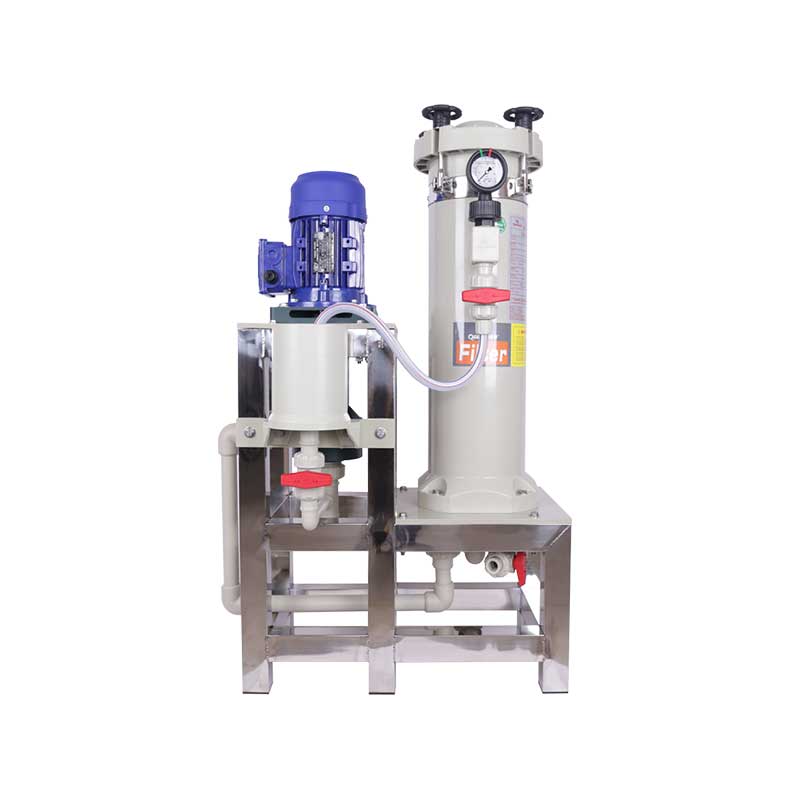
A QHF Series activated carbon filter paper type filter is useful when a plating bath needs two jobs at the same time: particle filtration and controlled removal of organic contamination. In nickel, copper, precious-metal, and PCB wet process lines, the real question is not only whether the filter can catch solids. The harder question is whether the filtration loop can remove decomposed brighteners, oil drag-in, color bodies, and fine suspended matter without disturbing the bath more than necessary.
QEEHUA positions the QHF Series Activated Carbon Filter Paper Type Filter for applications that need fine filtration plus organic impurity adsorption. That makes the series different from a simple cartridge housing or a pump-only correction. Existing QEEHUA guides on plating filter RFQ data explain the general loop. This article narrows the discussion to QHF and the decisions a plating engineer should make before specifying it.
Why QHF is different from a normal filter
A normal precision filter mainly controls suspended solids. It may protect nozzles, remove visible particles, and reduce rough plating caused by dirt. QHF adds another layer of intent. It combines filter paper with activated carbon treatment, so the filter train can address some organic contamination while still performing a filtration duty.
That difference matters in plating because many bath problems do not look like a simple dirt load. A line may show dull deposit, discoloration, pitting tendency, poor brightness control, oily film, or frequent additive correction. Technical references on plating solution purification describe organic contamination as a common result of additive breakdown, oils, and drag-in; activated carbon treatment is used because carbon adsorbs many organic contaminants. SERFILCO’s carbon treatment guide for plating solutions describes brightener breakdown products and drag-in as important sources of organic load.
QHF should therefore be treated as a bath-condition tool, not just a hardware item. It is most useful when the process team has evidence that both filtration and carbon treatment are part of the corrective plan. It should not be used as a blind cure for every plating defect. Poor current distribution, wrong chemistry control, air entrainment, unsuitable pump flow, and dirty tanks can create similar symptoms.
Practical judgment: If the bath problem disappears after fresh carbon treatment but returns after production load increases, the line may need a planned purification loop rather than occasional emergency treatment. QHF fits that discussion.
When a plating line should consider QHF
The strongest case for QHF appears when the bath has recurring organic load and the maintenance team wants a more controlled way to combine filtration and carbon contact. This can happen in nickel plating, copper plating, precious-metal plating, some PCB wet process stages, and mixed surface treatment lines where additives, wetting agents, oils, or organic residues accumulate.
The fit is weaker when the only problem is coarse debris, heavy sludge, or a dirty pipe network. In those cases, the first correction may be tank cleaning, bag filtration, cartridge change, pump inspection, or better pre-filtration. Activated carbon paper is not a substitute for removing a heavy solid load from the system.
Pentair’s electroplating carbon cartridge information notes the importance of clean carbon construction and post-filtration to reduce carbon fines in plating baths. That point is relevant to any carbon-based purification plan: the system must remove the target contamination without introducing a new fine-particle problem. See Pentair’s activated carbon cartridge notes for electroplating solutions for a related industry example.
Selection checks before the RFQ
The buyer should not specify QHF with only a tank volume and a vague request for better filtration. The useful RFQ starts from bath symptoms, liquid chemistry, operating temperature, expected flow, filter area, replacement interval, pump fit, and the reason carbon treatment is needed. QEEHUA can then discuss whether QHF, QL, QHC, QHU, or another filter arrangement is the better match.
| RFQ check | Why it matters for QHF | What to send to QEEHUA |
|---|---|---|
| Bath type and chemistry | Carbon treatment and construction materials must fit acid, alkaline, or mixed solution conditions. | Bath name, main chemicals, concentration range, pH, temperature, and any oxidizers or solvents. |
| Problem pattern | QHF is stronger when organics and fine particles are part of the same problem. | Dullness, pitting, color drift, oily film, roughness, sludge, pressure rise, or cartridge life records. |
| Required circulation flow | Too little flow gives slow cleanup. Too much flow can create pressure drop and short media life. | Tank volume, desired turnover, existing pump curve, pipe size, and target operating pressure. |
| Media change plan | Activated carbon paper is a consumable. The change interval decides downtime and cost. | Production hours per day, contamination load, planned maintenance window, and spare media plan. |
| Carbon-fine control | Carbon treatment must not release fines that create new defects. | Downstream quality requirement, final filtration need, and inspection method after media change. |
For pump matching, avoid sizing the pump from clean-filter pressure only. Filter pressure rises as media loads. The line also has elbows, valves, pipe loss, elevation, and return restrictions. QEEHUA’s pump curve versus system curve guide is a useful companion when the QHF loop will run with a dedicated pump.

Maintenance points that decide the result
Many QHF failures in the field would not be product failures. They would be maintenance mismatches. Activated carbon paper can only work if the bath keeps moving through clean media at the intended pressure and contact condition. If the operator delays media replacement until pressure is too high, the process may see flow loss before it sees purification benefit.
Build the maintenance plan around three records. First, track inlet and outlet pressure so the team knows when the filter is loading. Second, record the bath symptom before and after media change. Third, inspect whether carbon fines, paper damage, bypass leakage, or poor sealing appear after service. These records help separate a chemistry problem from a filter operation problem.
Continuous and batch carbon treatment have different operating habits. A continuous loop tries to hold contamination down during production. A batch treatment may be used after the bath is already outside the desired condition. A published technical paper on continuous carbon filtration of nickel plating baths describes the purpose as controlling both particles and organic contamination to support consistent deposit quality. The exact method still depends on the bath supplier’s chemistry guidance and the factory’s quality standard.
Before restarting after a media change, check:
- Filter lid, gasket, and clamp are seated evenly.
- Air is vented before full-flow operation.
- Pressure starts in the expected clean-media range.
- No carbon fines or paper fragments appear downstream.
- The pump current and flow sound normal after the filter is back online.
How QHF fits beside QL, QHC, and QHU
QHF is not the only filter series in the QEEHUA chemical filter range. That is why the series-level decision matters. QL is a compact precision filter for fine filtration in existing circulation systems. QHC is a chemical plating filter machine. QHU is a stainless steel cartridge filter for conditions where stainless construction is appropriate. QHF is the series to discuss when activated carbon filter paper treatment is part of the purification strategy.
This comparison is not a ranking. The correct choice depends on liquid compatibility, contamination type, pressure, temperature, media replacement method, and whether the system needs a complete filter machine or only a filter housing. A PCB line with fine particles but no confirmed organic load may not need QHF. A nickel bath with repeated organic contamination symptoms may justify it.

Questions to settle before purchase
A good QHF discussion starts with process evidence. Ask whether the line needs carbon treatment continuously or only during corrective maintenance. Ask whether the bath supplier allows activated carbon treatment under the current additive system. Ask whether the plant can change media without contaminating the clean side. Ask whether the existing pump can handle the pressure rise across dirty media.
For a new line, define acceptance criteria before shipment. The buyer can specify clean-media pressure, maximum operating pressure, recommended venting practice, spare media quantity, gasket material, and the inspection method after the first production week. For an existing line retrofit, send QEEHUA photos of the current filter loop, pump nameplate, piping route, pressure gauge readings, and the defect history. For lines that still need the broader pump-and-filter calculation, use QEEHUA’s PCB wet process filtration guide as the companion check.
For QHF Series sizing support, send bath chemistry, tank volume, target flow, current filter pressure, and contamination symptoms to info@qeehua.com. QEEHUA can help compare QHF with QL, QHC, and QHU before the filter is specified.
FAQ
When should a plating line choose QHF instead of a normal cartridge filter?
Choose QHF when the bath needs both fine filtration and activated carbon treatment for organic contamination. If the problem is only coarse debris or heavy sludge, another filter arrangement may be more practical.
Can QHF remove all plating defects caused by organic contamination?
No. QHF can help with organic load and fine contamination, but plating defects may also come from chemistry imbalance, current distribution, poor rinsing, tank dirt, air entrainment, or wrong pump flow.
What RFQ data is most important for QHF Series selection?
Send bath chemistry, pH, temperature, tank volume, desired circulation flow, existing pump data, pressure readings, contamination symptoms, and the expected media replacement interval.
Does activated carbon paper require downstream checking?
Yes. After media change, operators should check for bypass leakage, carbon fines, damaged paper, abnormal pressure, and downstream particle problems before returning the bath to full production.
Sources
- SERFILCO: carbon treatment methods for plating solutions.
- Pentair: activated carbon cartridges designed for electroplating solution service.
- P2 InfoHouse: continuous carbon filtration of nickel plating baths.
