Related PCB and Wet-Process Troubleshooting Guides
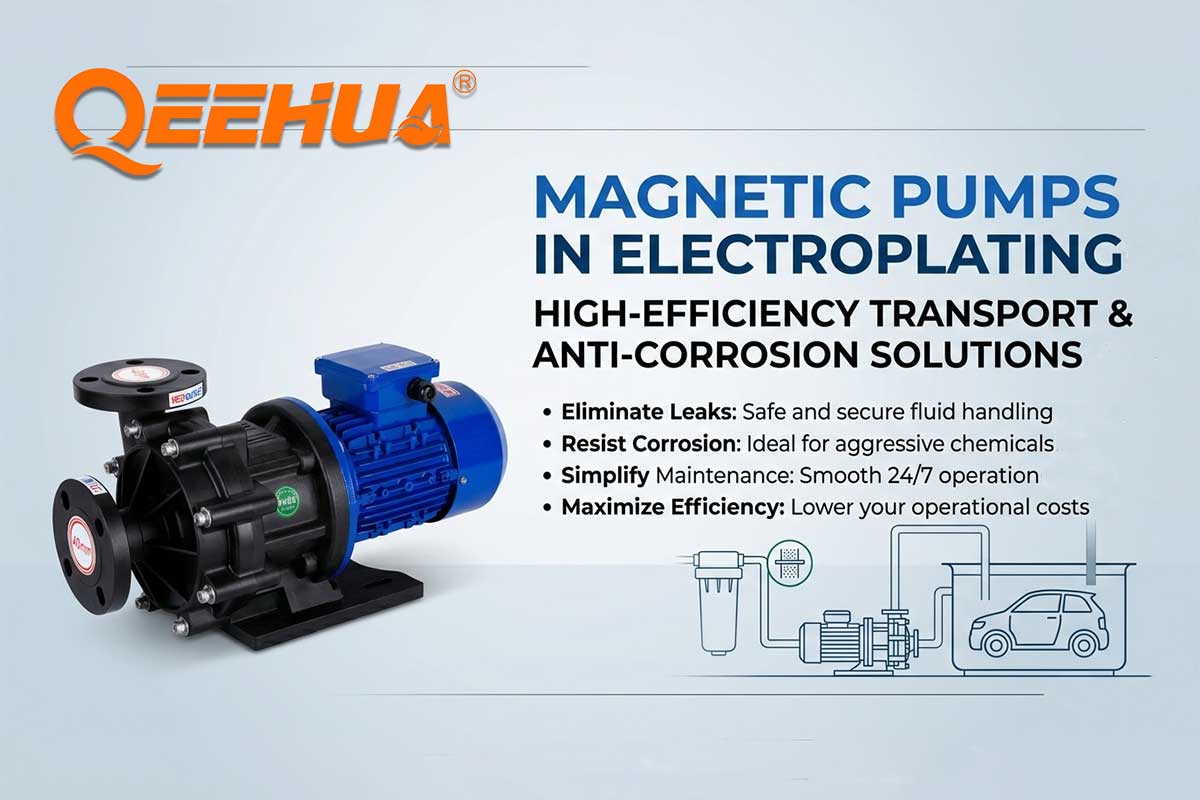
This core magnetic drive pump guide covers the broad selection logic. If your actual project is a PCB or wet-process circulation line, the following field cases are more specific and should be reviewed alongside the main selection criteria.
- PCB pump check valve failure focuses on backflow, reverse rotation, and discharge-side protection after shutdown.
- PCB pump motor protection explains what to verify when acid mist, splash, and enclosure rating become the real reliability limit.
- PCB alkaline developer and stripping pump selection narrows the material, seal, and flow-stability checks for alkaline wet-process duty.
- This complete magnetic drive pump selection guide is also useful when you need a more structured parameter checklist for corrosive chemical media.
| Feature | Magnetic Drive Pump (Sealless) | Mechanical Seal Pump |
|---|---|---|
| Leakage Risk |
✔ Zero Leakage Completely hermetic design |
✘ Potential Leakage Seal wear leads to fluid escape |
| Safety | Highest - Ideal for hazardous & corrosive fluids | Moderate - Requires regular monitoring |
| Maintenance |
Low Maintenance No seals to replace, fewer wear parts |
High Maintenance Regular seal replacement needed |
| Power Loss | Moderate (due to eddy currents in metallic shells) | Low (direct shaft drive) |
| Initial Cost | Higher upfront investment | Lower initial purchase price |
| Best For | Toxic, Flammable, or Expensive Liquids | Water, Non-hazardous Fluids, High Pressure |
* Note: Magnetic drive pumps are the preferred choice for chemical safety and environmental compliance.
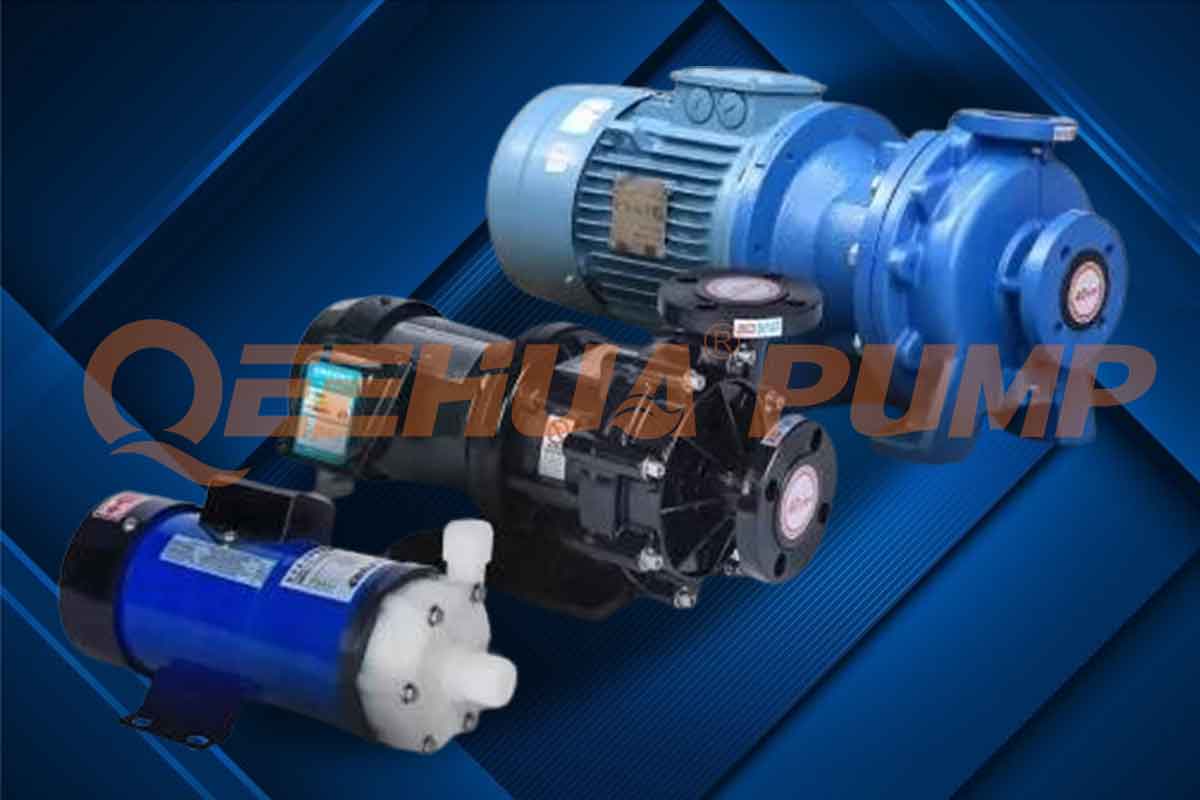
Magnetic Drive Pumps
Magnetic drive pumps, also known as magnetically coupled pumps, transfer power through a magnetic field to achieve contactless synchronous transmission of the shaft power. The main components include an outer magnetic rotor, inner magnetic rotor, synchronous or asynchronous design, and a fully sealed isolation sleeve. The main advantages are:
- Zero Leakage Design: Power is transmitted through the magnetic field and thin-walled isolation sleeve, fundamentally eliminating leakage pathways through the shaft seal, achieving complete sealing.
- Overload protection: QEEHUA PUMP’s proprietary “triple protection device” effectively prevents damage to the pump due to overload, improving system stability.
- High Requirements for Materials: It has high requirements for magnetic materials and magnetic circuit design, but the technology requirements are relatively low.
- Convenient Maintenance and Inspection: Due to the lack of mechanical seals, maintenance and inspection work is reduced.
Working Principle of Magnetic Drive Pumps
Magnetic drive pumps use a drive magnet and an inner magnet connected to the impeller to move the fluid through a sealless containment. Its operating principle is to rotate the liquid impeller through a balanced magnetic field, avoiding the direct drive connection found in conventional centrifugal pumps, thereby reducing the possibility of failures.
Centrifugal pumps use centrifugal force to move the fluid. The fluid enters the impeller through the inlet. Then, the fluid is captured by the impeller blades as the impeller rotates. The blades mechanically rotate the fluid, “flinging” it to the outside of the impeller and toward the discharge port of the pump liquid end. This mechanical movement of the fluid generates the pump’s discharge pressure. Variables such as the inlet fluid supply pressure, impeller diameter, motor horsepower, and the relationship between the enclosed and open faces affect the pump’s flow rate and pressure.
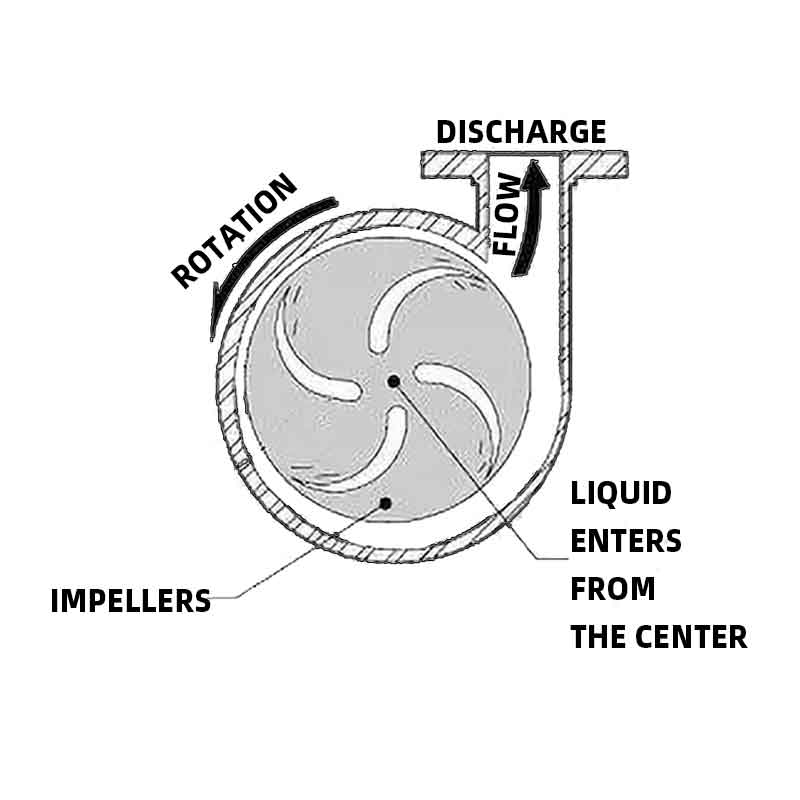
Figure-1 Pump Fluid Side
Magnetic drive pumps use a balanced magnetic field to generate rotation of the fluid impeller. Unlike conventional centrifugal pumps that have a direct drive connection between the impeller and motor, magnetic drive pumps eliminate the direct drive mechanism and substitute a magnetic field instead. A drive magnet is mounted to the end of the pump shaft and aligned with the outer side of the back cover. An impeller is connected to a smaller magnetic assembly and mounted on an inner shaft and bushing assembly. (All liquid end components are isolated within the pump liquid head, requiring no mechanical seals.) The smaller magnetic assembly is mounted within the magnetic field center of the drive magnet. Although these two magnetic assemblies are separated by the back cover, the magnetic fields are aligned. When the pump motor starts, the drive magnet begins to rotate. As the drive magnet rotates, its rotating magnetic field acts upon the inner impeller magnet. As the two magnets begin rotating together, the impeller begins turning and discharging the fluid.
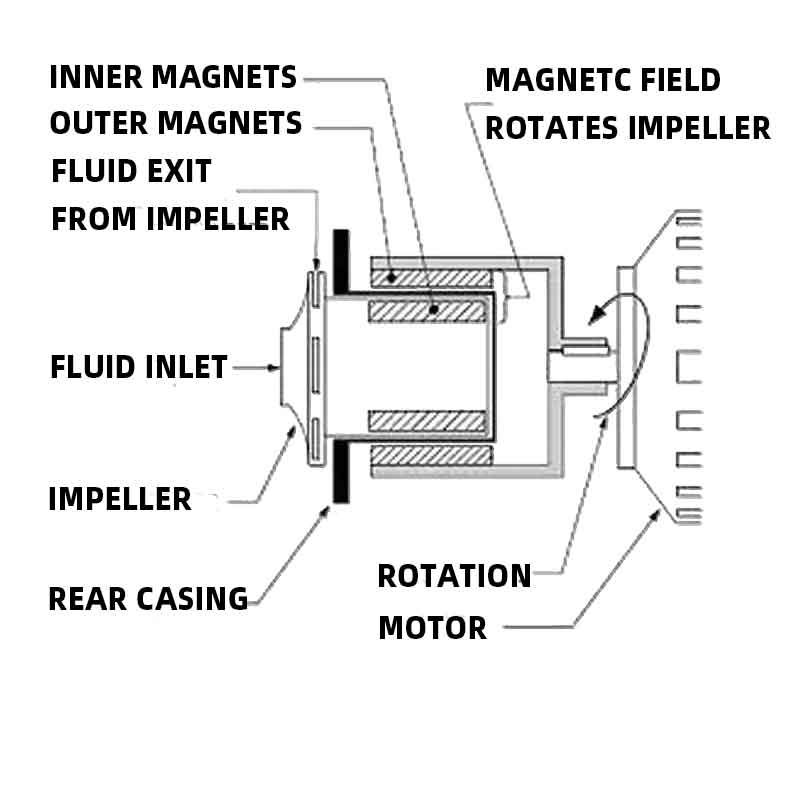
Figure-2 Magnetic drive pump working principle
Applications and Advantages of Magnetic Drive Pumps
Magnetic drive pumps have wide applications including chemical processing, pharmaceutical manufacturing, water treatment, semiconductor manufacturing, electroplating industries, and spray coating industries. The main advantages are:
- Increased Productivity The innovative design of magnetic drive pumps eliminates the need for mechanical seals, providing a leak-tight containment and lowering costs and labor over the entire lifespan of use.
- Safety Improvements
Magnetic drive pumps significantly reduce leakage, lowering the risk of worker exposure to hazardous materials and improving overall facility safety. - Pollution Prevention Through their leakproof design, magnetic drive pumps reduce harmful emissions, allowing companies to comply with health and safety standards.
- Corrosion Resistance
Magnetic drive pumps demonstrate superior ability to handle highly corrosive and hazardous liquids suitable for high corrosion environments. - Simplified Selection The design of magnetic drive pumps simplifies the pump selection process, making it easier to choose a pump suited for the intended application.
Frequently Asked Questions (FAQ)
Q1: How does a magnetic drive pump work, and what are its main advantages?
A magnetic drive pump utilizes a magnetic coupling to transmit torque without any physical contact between the motor and the impeller. Understanding the magnetic drive pump working principle is essential for industries requiring 100% leak-free operation. By eliminating traditional mechanical seals, these pumps offer superior safety when handling corrosive or hazardous chemicals, significantly reducing the risk of environmental contamination.
Q2: What should I do if my magnetic pump experiences vibration or abnormal noise?
While magnetic pumps are known for their reliability, issues like cavitation or dry running can cause problems. If you encounter reduced flow or unusual sounds, we recommend consulting our magnetic pump troubleshooting guide. Commonly, checking for blockages in the impeller or ensuring the containment shell isn't overheating can help you resolve most issues and extend the service life of your equipment.
Q3: How do I select the right magnetic drive pump for highly corrosive fluids?
Selecting the ideal pump involves matching the material (such as PVDF, ETFE, or Stainless Steel) to the chemical's properties. Our complete magnetic pump guide provides a detailed breakdown of chemical compatibility and temperature limits. For specific applications like sulfuric acid or nitric acid transfer, choosing the right material ensures the longevity of the magnetic rotor and internal components.
Q4: Why is a sealless design critical for hazardous fluid handling?
The sealless design is the gold standard for safety in modern chemical plants. These high-efficiency magnetic pumps are widely used in electroplating, wastewater treatment, and battery manufacturing. By removing the shaft seal—the most common point of failure—the magnetic drive system ensures zero leakage, protecting both your operators and the surrounding environment from hazardous exposure.
QEEHUA magnetic drive pumps feature a rational structural design and advanced injection molding technology. They possess extremely strong corrosion resistance. Our comprehensive portfolio of QEEHUA magnetic drive pumps are suitable for nearly all corrosive chemicals and can meet the needs of high flow rates or pressure requirements.
Customers can select the appropriate pump according to their specific application. They can be used in various industrial processes such as semiconductor, PCB, etching, electroplating, surface treatment, chemical and pharmaceutical manufacturing, and wastewater treatment.
Please leave a message about your needs
QEEHUA PUMP: A Reliable Manufacturer of Chemical Pumps
QEEHUA PUMP is a leading and reliable manufacturer of chemical pumps and chemical pump filters. Core products include magnetic drive pumps, mechanical seal centrifugal pumps, vertical pumps, and chemical pump filters. Key features include:
- Comprehensive Certification: ISO9001, ISO14001, CE, SGS and other certifications to ensure product quality and manufacturing process reliability.
- Global Service: Highly qualified pre-sales and after-sales engineering teams serving over 10,000 customers in more than 30 countries worldwide.
- Wide Applications: Products used in PCB, electroplating, coatings, surface treatment, semiconductor, chemical and pharmaceutical, exhaust industries.