

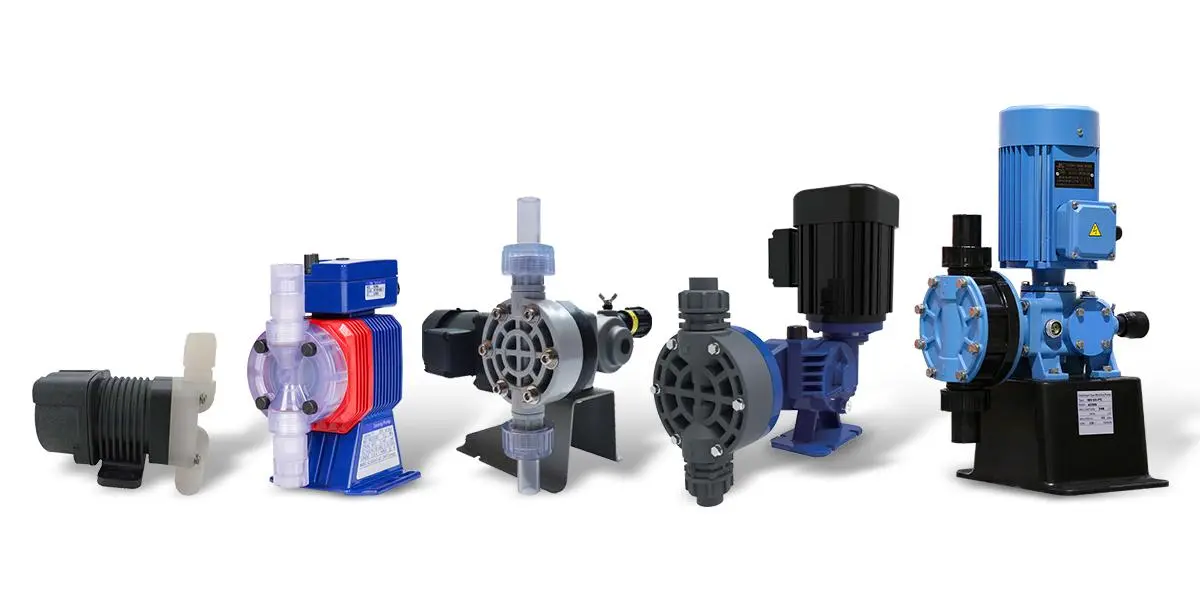
In PCB wastewater treatment, teams often blame poor hexavalent chromium reduction on ORP settings or reagent strength alone. In practice, the dosing pump is often part of the failure chain. If the pump cannot feed a stable reducing-agent dose, the reduction tank drifts, operators overcorrect by hand, reagent use climbs, and the downstream precipitation step becomes harder to control. For this duty, the best pump is usually not the biggest chemical pump on the skid. It is the pump that can hold a repeatable feed rate at the real ORP control range, chemical concentration, suction condition, and maintenance standard of the plant.
If the reducing agent is a clean sodium metabisulfite or bisulfite solution and the line needs small, repeatable feed corrections, a chemical metering pump is often the first fit. If the reagent day tank carries solids, crystallized residue, or unstable suction conditions, a small metering head can become the wrong starting point even when the nominal flow looks correct. That is why this selection decision should begin with the chemistry and feed arrangement, then move to the pump.
Practical selection rule: do not select the pump only from the wastewater flow rate. Start with the reducing-agent concentration, the control philosophy, the target ORP band or reduction endpoint, the required feed turndown, and whether the reagent stays clean in the day tank.
Where Chromium-Reduction Dosing Is Usually Misjudged
A reduction stage behaves differently from simple bulk chemical transfer. The wastewater flow may be stable enough, but the reducing-agent demand can still swing because chromium loading changes, equalization is imperfect, pH correction shifts the reaction path, or operators batch-feed upstream tanks. The result is a dosing duty that may spend most of the day at a low feed rate and then need fast correction for a short period.
That operating pattern is where a pump can look correct on paper and still create process trouble. A pump with poor low-end repeatability may hunt around the ORP setpoint. A pump with too much pulsation may give noisy analyzer feedback. A suction arrangement that allows air entry can make the feed look like a control problem when the real issue is inconsistent chemical delivery. QEEHUA’s article on chemical metering pump pulsation and dosing accuracy is relevant here because ORP control suffers quickly when the delivered feed is less stable than the controller assumes.
Start with the Reducing Chemical and Feed Arrangement
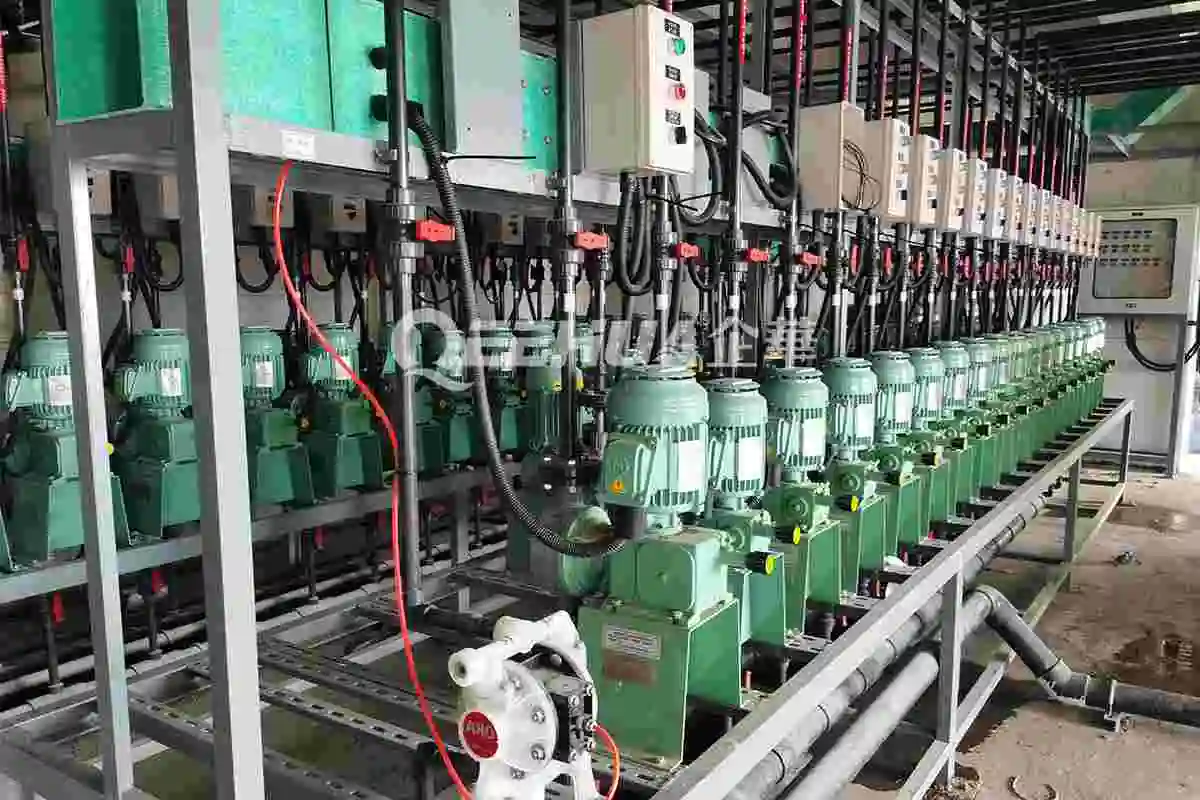
Before the pump is chosen, confirm which reducing agent the plant actually uses. Some lines use sodium metabisulfite or bisulfite solutions for controlled reduction feed. Other systems may use ferrous sulfate or another reducing chemistry. The pump decision changes with that choice. A clear reducing solution with predictable concentration supports one kind of pump selection. A dirty, settling, or slurry-like reagent tank supports another.
The reduction stage also needs a defined control method. In many wastewater systems, ORP is used as a process signal for oxidation-reduction control. Yokogawa’s reduction-monitoring note for chromium wastewater describes the common two-step sequence of reducing Cr(VI) to Cr(III) and then precipitating chromium hydroxide. The pump must therefore match not only the chemical but also the control response speed and stability expected by the ORP loop.
Feed arrangement matters just as much. If the plant uses a small day tank with a short suction line and clean reagent, a compact metering pump can be appropriate. If the day tank sits far from the skid, if suction lift is inconsistent, or if the solution tends to leave salt residue at valves and strainers, the suction side becomes part of the pump-selection question. A feed pump that repeatedly loses prime does not create a chemical problem only. It creates a compliance and operating-cost problem.
This is also where buyer habits can distort the decision. Some teams try to standardize every wastewater chemical feed point around one pump family. That can work for inventory simplicity, but it can also create a poor match between low-flow chromium reduction and other duties such as caustic neutralization. QEEHUA’s recent article on sodium hydroxide dosing pump selection for PCB wastewater shows why one dosing-pump specification does not fit every reagent just because both are in the same treatment room.
What Pump Type Usually Fits This Duty
For a clean sodium metabisulfite or bisulfite solution, the first question is usually whether the line needs precise, continuous feed trimming or broader transfer with less precise rate control. If ORP correction depends on small feed adjustments, a metering pump is often the practical choice because it can be set for controlled low-flow delivery and integrated cleanly into an instrumented dosing loop.
If the plant needs higher-volume feed with less precision, or if the chemical storage arrangement is rough on a small metering head, a different arrangement may fit better. In some layouts, a diaphragm pump can handle the transfer side more robustly while the final controlled injection point uses a more precise feed device. The wrong move is to force a precision metering head into a dirty, poorly maintained suction condition and then call the resulting instability a controller problem.
| Site condition | What it usually means for pump selection | What often goes wrong |
|---|---|---|
| Clean reducing solution, short suction line, low feed rate, tight ORP control | A chemical metering pump is often the first-fit option. | Buyers oversize the pump and lose low-end controllability. |
| Dirty day tank, salt residue, poor suction, long line, frequent maintenance lapses | Do not assume a small metering head should handle the whole duty by itself. | The pump loses prime, check valves foul, and feed becomes erratic. |
| Fast wastewater-load swings with operator intervention | Choose for turndown and repeatability, not only maximum hourly capacity. | Control hunts because the real operating point is near the unstable low end. |
| Shared chemical room with multiple dosing duties | Standardization is useful only if the real reagent behavior still matches. | One pump family is forced into every duty and underperforms on chromium reduction. |
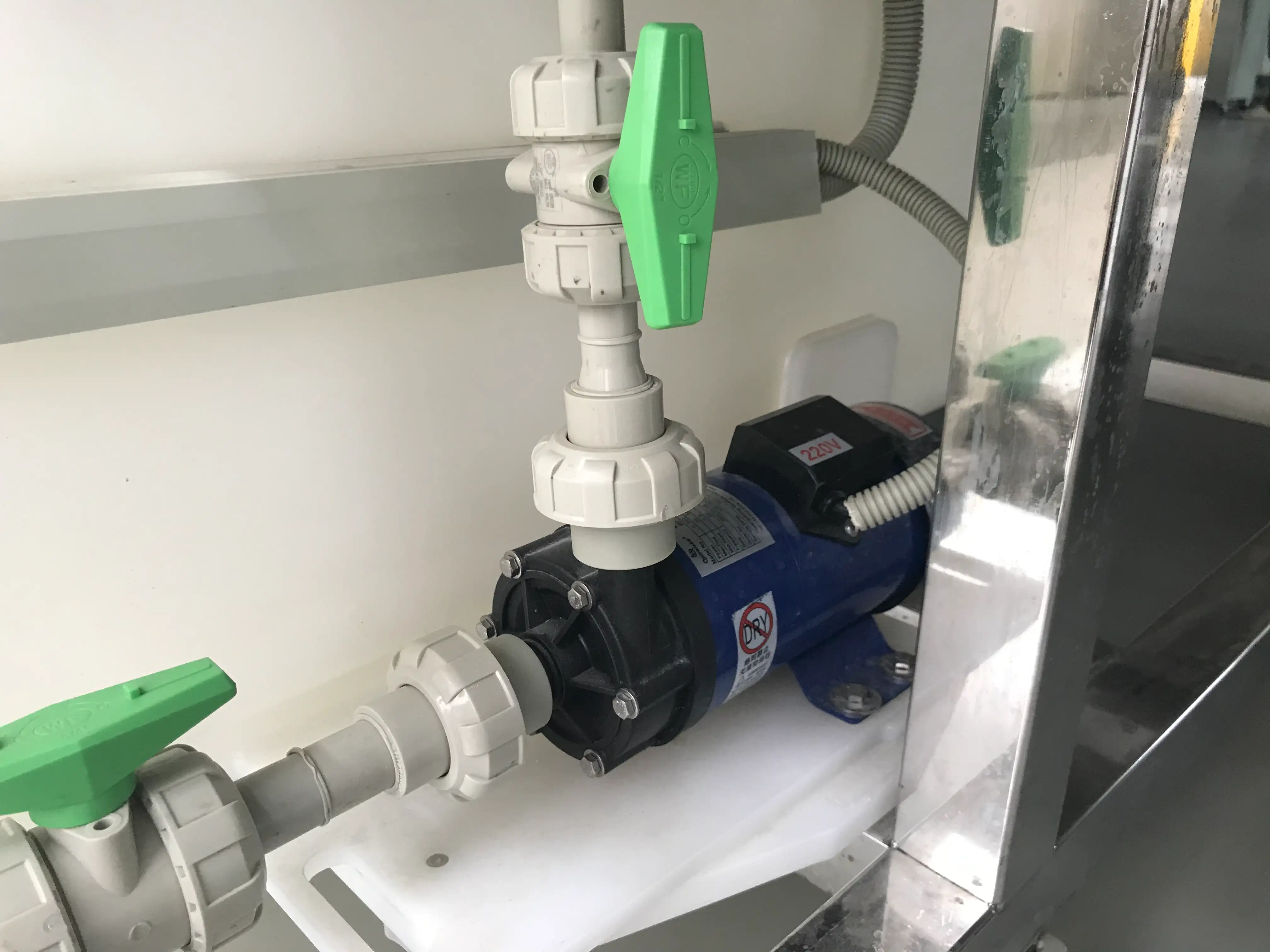
Material compatibility still has to be checked at the wetted end, valves, tubing, and seals. If the site expects oxidation-reduction service changes, flushing practices and dead-leg control matter too. QEEHUA’s precision chemical dosing and metering pump solutions page is the most relevant product-side reference for the controlled-feed part of this decision, but the final fit still depends on chemistry, concentration, and plant layout.
Where Dosing Accuracy Drifts First on Site
In the field, chromium-reduction feed rarely goes off target because of one dramatic pump failure. More often, it drifts because several small issues stack up. A check valve starts to foul. The suction line picks up air after a day-tank refill. A calibration column check is skipped. A controller output is reduced to stop overshoot, but the real issue is pulsation or poor mixing. Operators compensate by manual feed bursts, and the process becomes less stable than the equipment list suggests.
A common site pattern looks like this: the reduction tank misses the target, operators increase reagent concentration, ORP overshoots, chemical use rises, and sludge generation becomes less predictable in the next step. Maintenance then focuses on the analyzer because that is where the bad number is visible. But the root cause may sit upstream in the feed pump, suction arrangement, or injection quill position. In similar dosing systems, ORP-based control is only as good as the chemical feed actually reaching the reaction point at a stable rate. The same logic appears in ORP-controlled reducing-chemical applications outside chromium treatment as well, such as sodium bisulfite dechlorination systems discussed by Process Instruments’ ORP control note.
For that reason, the commissioning review should include more than calibration. Check stroke setting, real delivered volume, suction condition during the lowest day-tank level, pulse damping if used, injector placement, and whether the control loop is responding to chemistry or to noise. If the plant already had problems with unstable flow or false trips on other dosing skids, it is worth comparing the control architecture with QEEHUA’s article on pump interlock logic for wet process lines, especially where low level, no flow, or shutdown permissives affect reagent feed continuity.
Before You Buy, Confirm These Numbers
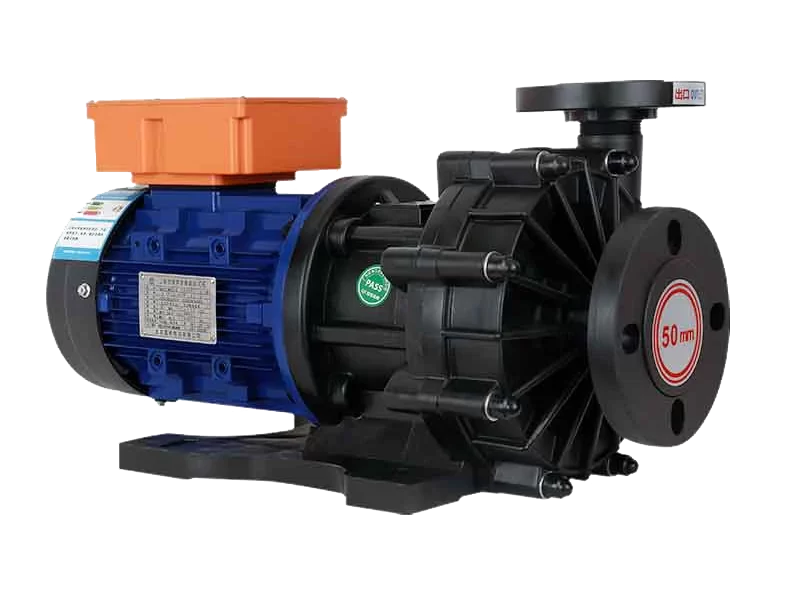
Most buying mistakes in this duty start with incomplete data. The supplier sees a wastewater flow and a chemical name, then quotes a pump that can theoretically deliver enough reagent per hour. That is not enough information for a stable chromium-reduction feed point.
- Confirm the reducing chemical, normal concentration, and whether the day tank stays clear or leaves solids and residue.
- State the minimum, normal, and upset feed rates, not only the maximum feed rate.
- Define whether the control signal is ORP-based, flow-paced, batch-timed, or manually adjusted.
- Record the suction condition at the lowest real tank level, including suction lift, line length, and any air-entry risk.
- Confirm the required turndown range and whether the pump must operate stably for long periods near the low end.
- State the wetted-material requirement for pump head, valves, tubing, seals, and accessories.
- Check whether pulsation damping, calibration column checks, or injector upgrades are part of the package.
- Clarify whether this feed point is independent or expected to share spare parts and controls with other wastewater dosing duties.
That short list often separates a workable feed point from a troublesome one. If those numbers are not clear yet, the safest decision is usually to stop short of model selection and close the data gap first. If the line also treats reagent storage, leak response, and shutdown logic casually, the feed point can still become a plant-risk problem even after the right pump is purchased. QEEHUA’s guide to chemical pump skid secondary containment covers the safeguards that should be reviewed before the system is signed off.
For a useful pump recommendation, bring the real control data. ORP band, reducing-agent concentration, minimum and maximum feed rate, day-tank arrangement, suction condition, and existing dosing symptoms are more valuable than wastewater flow alone. Email QEEHUA at info@qeehua.com with those details if you want the feed point reviewed as a control duty instead of a generic transfer duty.
FAQ
Is a metering pump always the best choice for hexavalent chromium reduction?
No. A metering pump is often a strong fit when the reducing agent is a clean solution and the process needs stable low-flow control. If the reagent tank is dirty, the suction side is unreliable, or solids are present, another arrangement may be more practical.
Why does ORP control still drift after the pump is sized correctly on paper?
Because nominal pump capacity does not guarantee stable delivered feed. Pulsation, suction air entry, fouled check valves, poor injection location, and weak low-end repeatability can all make the real dose less stable than the controller expects.
What data should I send before asking for a chromium-reduction dosing pump model?
Send the reducing chemical, concentration, minimum and maximum feed rate, ORP or control method, suction condition, day-tank layout, wetted-material requirement, and any existing symptoms such as loss of prime, overshoot, or erratic feed.
Can one wastewater dosing pump specification be reused for sodium hydroxide and chromium-reduction feed?
Not safely by default. The required feed stability, chemical behavior, low-end turndown, residue tendency, and control response can be different enough that one shared specification creates avoidable instability on one of the duties.
