Introduction: Addressing Exhaust Gas Treatment Challenges with Vertical Pumps
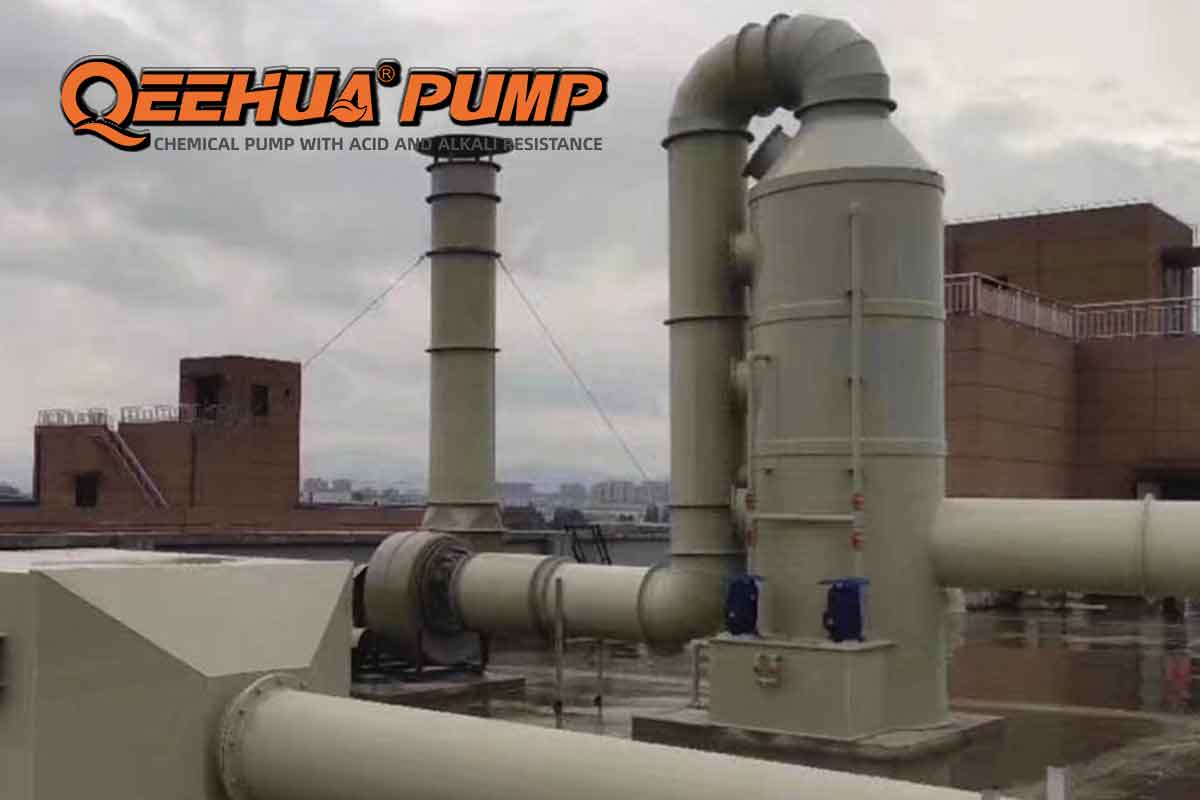
In modern industrial production, effective exhaust gas treatment is essential for environmental compliance. Industries such as chemical manufacturing, electronics, and metal processing often emit gases containing acidic or alkaline substances. If not properly treated, these emissions can pose significant risks to both the environment and human health. Wet scrubbers serve as the core equipment in exhaust gas treatment systems, utilizing scrubbing liquids to neutralize and remove harmful substances. Vertical pumps play a pivotal role in this process by transporting the scrubbing liquid from storage tanks to the scrubber’s spray layers, ensuring continuous and stable system operation.
However, traditional pump equipment often struggles with issues like leakage, rapid wear, and frequent maintenance when handling highly corrosive media and continuous operation demands. These challenges not only increase operational costs but also compromise the efficiency and reliability of exhaust gas treatment systems. Therefore, selecting a high-efficiency, corrosion-resistant, and low-maintenance vertical pump is crucial for optimizing these systems.
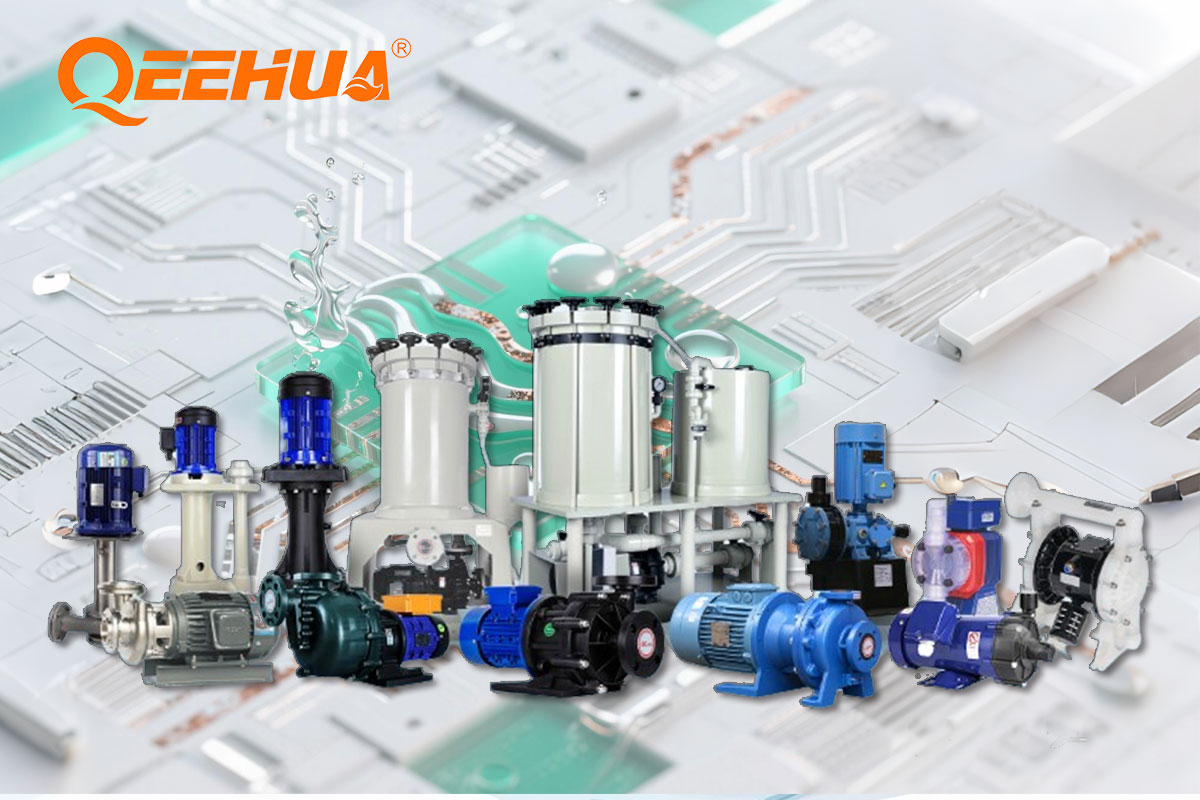
As a renowned chemical pump manufacturer in China, QEEHUA specializes in providing high-performance vertical pump solutions. Leveraging advanced technology and extensive industry experience, QEEHUA has successfully served clients across multiple countries and regions. This article delves into the application principles of vertical pumps in exhaust gas scrubbers, key selection considerations, and how QEEHUA leads industry development through technological innovation.
Application Principles of Vertical Pumps in Exhaust Gas Scrubbers
Wet scrubbers operate by introducing polluted exhaust gases into a tower where they come into contact with scrubbing liquids sprayed from nozzles. This interaction facilitates chemical reactions that neutralize and remove harmful substances. Vertical pumps are integral to this process, ensuring the continuous supply and uniform distribution of scrubbing liquids by transporting them from storage tanks to the spray layers within the scrubber.
Due to their compact structure, small footprint, and flexible installation options, vertical pumps are particularly suitable for space-constrained scrubber systems. Their vertical shaft installation minimizes space usage and facilitates integration with the overall scrubber structure. In practical applications, vertical pumps are typically constructed from corrosion-resistant materials like polypropylene (PP) and polyvinylidene fluoride (PVDF), enabling them to withstand acidic and alkaline media and extend equipment lifespan.
For instance, when treating exhaust gases containing sulfuric acid mist, the scrubbing liquid is often an alkaline solution such as sodium hydroxide. Vertical pumps must exhibit excellent alkali resistance to operate stably over extended periods in high-concentration alkaline media. Additionally, the pump’s flow rate and head must be appropriately selected based on the scrubber’s size and the design parameters of the spray system to meet processing capacity and efficiency requirements.
Key Considerations for Selecting Vertical Pumps
When choosing a vertical pump suitable for exhaust gas scrubbers, several critical factors must be considered:
-
Material Selection
Given the involvement of acidic and alkaline media in exhaust gas scrubbing, pump bodies and related components must be made from corrosion-resistant materials. Common options include:
-
Polypropylene (PP): Suitable for general acidic and alkaline media, offering a high cost-performance ratio.
-
Polyvinylidene Fluoride (PVDF): Provides superior corrosion resistance, ideal for high-concentration acidic or alkaline and high-temperature media.
-
Stainless Steel or Titanium Alloys: Used for special conditions requiring excellent mechanical strength and corrosion resistance.
-
-
Flow Rate and Head
Determine the required pump flow rate and head based on the scrubber’s dimensions, spray system design, and processing capacity. For example, for a scrubber 5 meters tall with two spray layers, each containing 20 nozzles with a flow rate of 2.5 m³/h:
20 nozzles × 2.5 m³/h × 2 layers = 100 m³/h total flow rate.
The required head should account for the scrubber’s height and pipeline resistance, typically calculated as three times the scrubber height:
5 meters × 3 = 15 meters head.
-
Installation Method
Vertical pumps can be installed either inside or outside the storage tank, depending on specific requirements:
-
Internal Installation: Saves space, suitable for small systems.
-
External Installation: Facilitates maintenance and inspection, ideal for large systems.
Additionally, consider the pump’s shaft seal design. Opting for seal-less or dry-running designs can reduce leakage risks and lower maintenance costs.
-
QEEHUA: A Professional Leader in Chemical Fluid Equipment
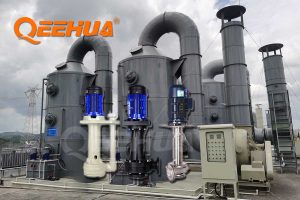
Advantages and Application Cases of QEEHUA Vertical Pumps
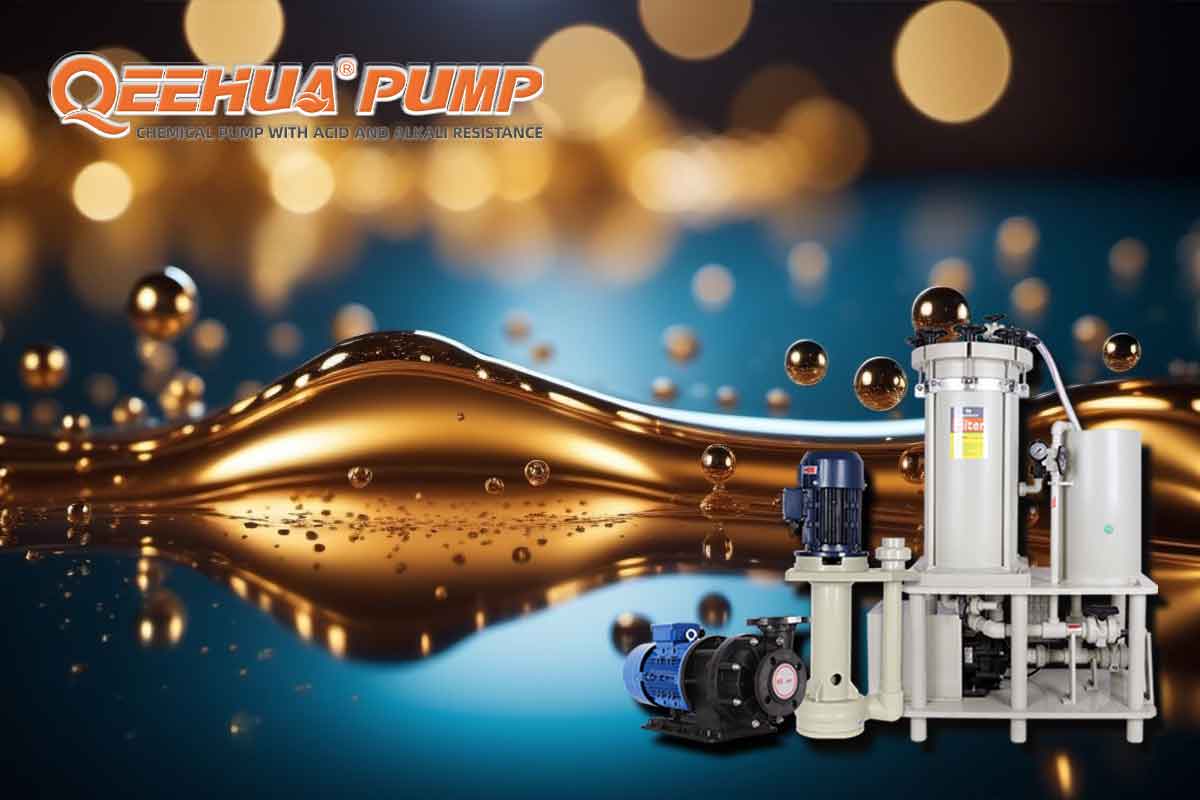
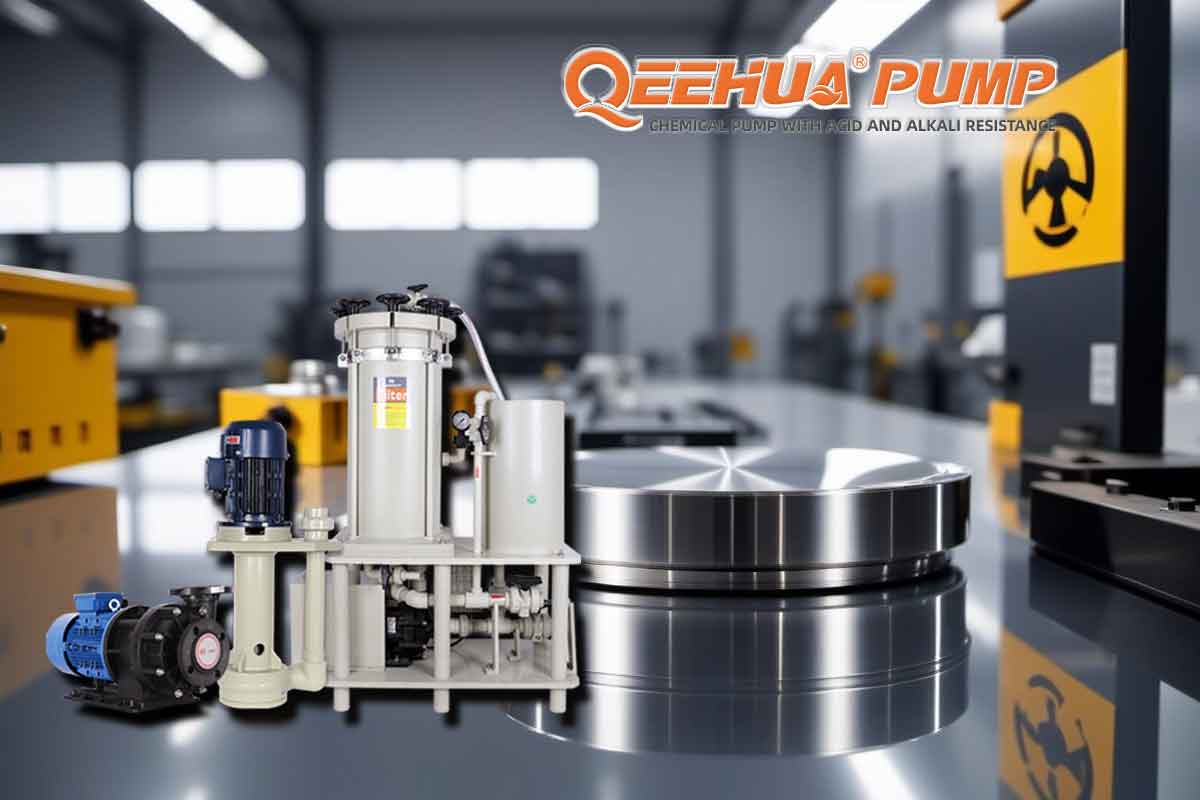
As a professional vertical pump manufacturer, QEEHUA has accumulated extensive experience in product design and manufacturing. Their vertical pumps offer the following notable advantages:
-
Excellent Corrosion Resistance
QEEHUA’s vertical pumps are constructed from high-quality materials such as PP and PVDF, enabling them to withstand long-term exposure to strong acids and alkalis, ensuring stable operation and extended service life.
-
Dry-Running Design
QEEHUA’s vertical pumps are capable of dry-running, meaning they can operate without liquid without damaging the pump body, significantly enhancing equipment safety and reliability.
-
Diverse Product Series
QEEHUA offers various vertical pump models to meet different operational conditions and customer needs. For example:
-
QHA Series: Designed for internal tank installation, featuring a compact structure for easy integration.
-
QHD Series: Suitable for external tank installation, facilitating maintenance and inspection.
-
-
Wide Range of Applications
QEEHUA’s vertical pumps are widely used in PCB manufacturing, electroplating, chemical processing, exhaust gas treatment, and other fields. For instance, in an exhaust gas treatment project for an electronics manufacturing company, QEEHUA’s vertical pumps successfully replaced traditional pump equipment, resolving issues of frequent leakage and high maintenance costs, thereby significantly improving system stability and operational efficiency.
Conclusion: Optimizing Exhaust Gas Treatment Systems with the Right Vertical Pump
The selection of vertical pumps directly impacts the operational efficiency, stability, and maintenance costs of exhaust gas treatment systems. By choosing appropriately and utilizing high-quality products, companies can effectively enhance treatment outcomes, reduce operational expenses, and improve environmental compliance.
As a professional vertical pump manufacturer, QEEHUA, with its advanced technology, extensive experience, and excellent service, has become a trusted partner for numerous enterprises. If you’re seeking high-performance, corrosion-resistant, and low-maintenance vertical pump solutions, QEEHUA is your ideal choice.