

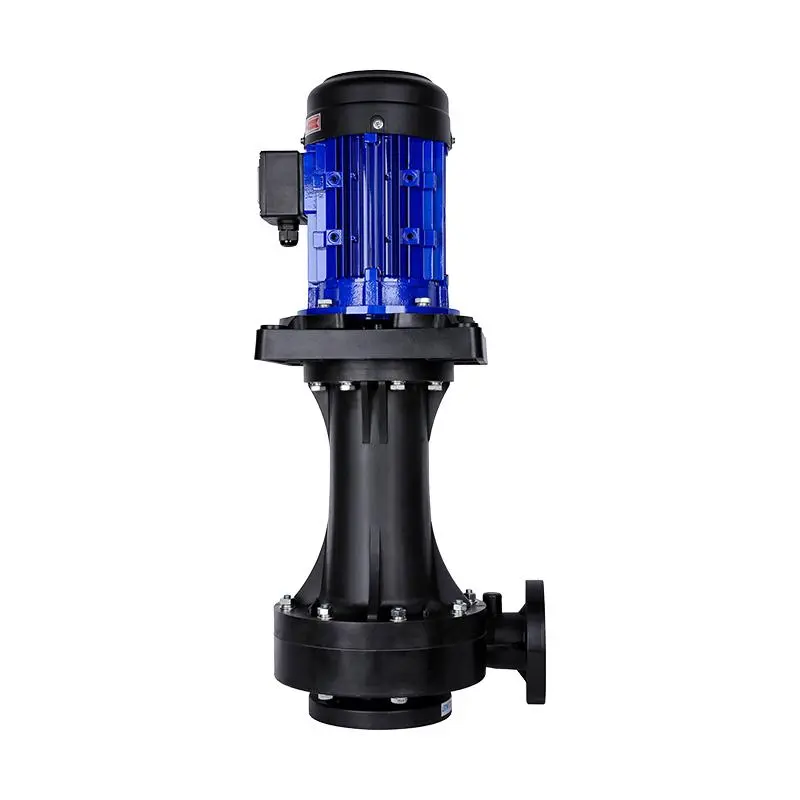
NPSH margin for PCB chemical pumps is the difference between the suction head available in the wet-process line and the suction head required by the pump at the selected flow. If NPSHa is too close to NPSHr, the pump can cavitate, lose flow, vibrate, damage bearings, and create unstable chemical circulation. This is different from the installation issue covered in QEEHUA’s article on PCB pump suction piping air pockets; NPSH checks whether the liquid has enough pressure before it reaches the impeller.
For PCB developing, etching, stripping, electroplating, and filtration loops, NPSH matters because suction conditions change quickly. Tank level falls. Filters clog. Suction screens collect particles. Temperature rises. Operators may also increase flow after quality problems appear. Each change can reduce the suction margin.
The NPSH margin rule for PCB chemical pumps
NPSHa is a system value. The buyer, line builder, or plant engineer calculates it from tank pressure, liquid level, suction piping loss, and vapor pressure. NPSHr is a pump value. The manufacturer provides it on the pump curve at the selected flow. Engineering Toolbox defines NPSH as the suction head minus the liquid vapor head in its NPSH reference.
NPSH margin = NPSHa - NPSHrFor an open tank: NPSHa = atmospheric head + liquid level above pump - suction friction loss - vapor pressure headFor pressurized or closed tanks, use absolute tank pressure instead of normal atmospheric pressure.
A positive margin is required, but a tiny positive number is not enough for a real chemical line. Michael Smith Engineers notes in its NPSH margin guide that NPSHa must exceed NPSHr by a margin, and that chemical process applications may need a margin ratio or an additional head allowance. In PCB lines, the practical margin should also account for dirty filters, falling tank level, and higher bath temperature.
A practical NPSHa calculation worksheet
The worksheet below uses a simplified open-tank example. It is for engineering discussion, not final system certification. The goal is to show which inputs affect suction safety before the pump model is finalized.
| NPSHa input | Example value | Effect on NPSHa | Result in meters |
|---|---|---|---|
| Atmospheric pressure head | Sea-level open tank, approximate | Adds available suction head | +10.3 m |
| Liquid level above pump centerline | Tank liquid surface is 0.6 m above pump centerline | Flooded suction improves margin | +0.6 m |
| Suction pipe and fitting loss | Small inlet pipe, two elbows, one valve, suction screen | Subtract friction loss before the impeller | -1.4 m |
| Vapor pressure head | Warm chemical bath; use actual liquid data when available | Subtract because vapor pressure reduces margin | -0.8 m |
| Estimated NPSHa | At the target flow and temperature | 10.3 + 0.6 – 1.4 – 0.8 | 8.7 m |
| Pump NPSHr from curve | Manufacturer curve at selected flow | Compare with available NPSH | 4.8 m |
| NPSH margin | NPSHa – NPSHr | 8.7 – 4.8 | 3.9 m |
This example has a comfortable margin. But the same line can become risky if the tank level drops by 0.4 m, the suction screen clogs, or the bath temperature rises. That is why NPSH should be checked at the worst expected operating condition, not only at startup.
PCB wet-process conditions that reduce NPSHa
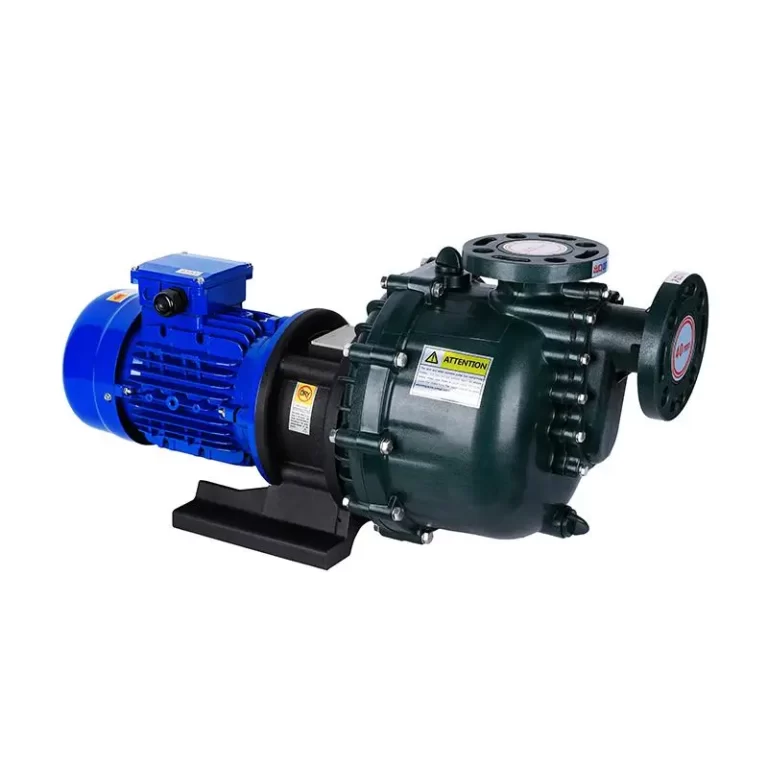
Local QEEHUA application data shows several PCB-specific suction risks. A pump installed too high can exceed practical suction limits. A suction pipe smaller than the pump inlet can reduce etching flow. An uphill suction run can trap gas. A blocked bottom valve or suction screen can add friction loss. A hot etching or plating bath can increase vapor-pressure risk.
For installation review, start with physical layout. Keep the suction line short. Use a suction pipe at least as large as the pump inlet. Avoid sudden throat reductions. Use an eccentric reducer where air pocket risk exists. Keep the pump flooded where practical. If the pump is vertical, confirm immersion depth and low-level protection. QEEHUA’s TDH article for PCB chemical pumps covers the discharge-side calculation; NPSH focuses on the suction side.
Cavitation should not be confused with dry running. Dry running means the pump lacks enough liquid for cooling and lubrication. Cavitation can occur while liquid is still present, because local pressure falls near vapor pressure. For the low-level protection side of the problem, see QEEHUA’s guide to PCB wet process pump dry running.
How to judge pass, risk, or fail
Use the margin as a decision filter. Then verify the physical layout. A clean formula result can still be wrong if the plant ignores gas pockets, clogged screens, or flow changes after commissioning.
NPSHa is clearly above NPSHr at the required flow, with allowance for dirty suction screens, low tank level, and warm liquid. The suction line is short and not smaller than the pump inlet.
NPSHa barely exceeds NPSHr, or the line has uphill suction sections, many elbows, high temperature, or frequent flow increases. Recheck the curve and reduce suction losses.
NPSHa is below NPSHr at the target flow, or the pump already has gravel-like noise, unstable flow, vibration, or repeated bearing damage. Change the suction layout or pump selection.
Do not fix a failed NPSH margin by only choosing a larger motor. A larger motor does not create more suction head. The real fix is usually to lower the pump, raise liquid level, enlarge suction piping, remove restrictions, reduce flow, lower temperature, clean the inlet, or select a pump with lower NPSHr at the required flow.
Data to send before pump selection
When asking QEEHUA to check a PCB chemical pump duty point, send the suction-side data together with the normal flow and head requirement. This prevents selecting a pump that looks correct on discharge head but fails on suction margin.
- Target flow rate and whether the pump runs continuously or intermittently.
- Tank type: open, closed, flooded suction, suction lift, or vertical immersion.
- Lowest expected liquid level relative to the pump centerline or inlet.
- Suction pipe size, length, number of elbows, valves, filters, and bottom-valve details.
- Chemical name, concentration, temperature range, specific gravity, and vapor-pressure data if available.
- Known symptoms: noise, vibration, flow loss, gas binding, dry running, or particle generation.
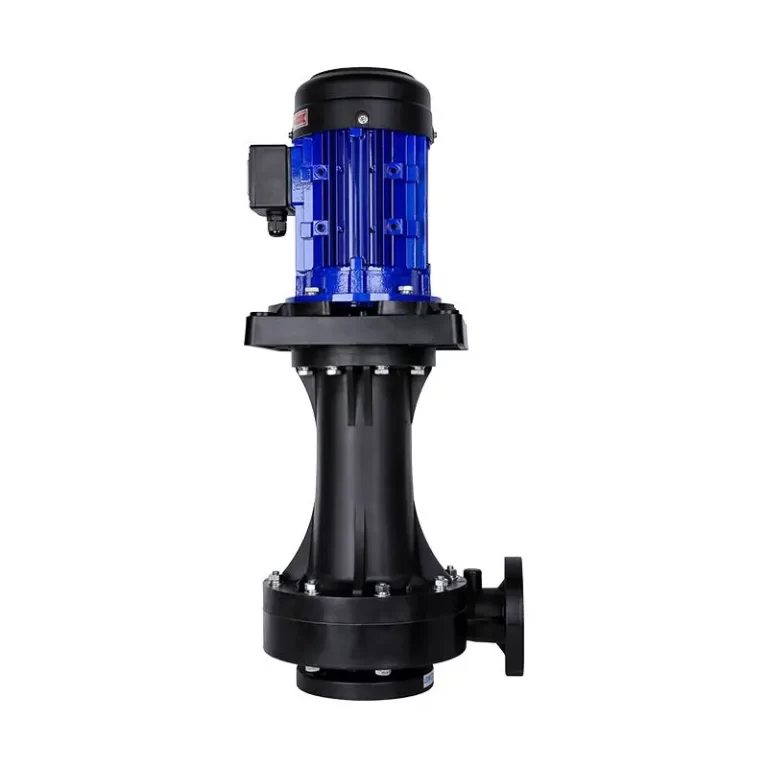
If the application needs leak-free chemical containment, QEEHUA can review whether a magnetic pump product range, vertical pump, or centrifugal pump is the better starting point. The final model should still be selected from the pump curve, NPSHr data, chemical compatibility, and the real wet-process layout.
Need help checking suction safety before selecting a PCB chemical pump? Send the flow rate, liquid level, suction layout, chemical data, and target duty to info@qeehua.com. QEEHUA can review the NPSH margin and pump-fit risk before quotation.
FAQ
Is NPSH only important for self-priming pumps?
No. Self-priming and suction-lift layouts are sensitive to NPSH, but flooded suction and vertical pump layouts still need checks when liquid level is low, suction loss is high, or temperature rises.
Can a PCB pump cavitate even if the tank still has liquid?
Yes. Cavitation depends on local pressure near the impeller. A tank may still contain liquid while suction loss, high temperature, or low liquid level reduces NPSHa enough to cause cavitation.
Does a bigger pump solve low NPSH margin?
Not necessarily. A bigger pump may require more NPSHr at higher flow. It can make suction cavitation worse if the suction line cannot feed the pump properly.
What suction layout changes improve NPSHa in PCB wet lines?
Lower the pump, keep the line flooded, increase suction pipe size, shorten suction piping, remove blocked screens, reduce elbows, avoid uphill pockets, and keep the liquid temperature within the process range.
What information should an OEM send for NPSH review?
Send flow rate, lowest liquid level, suction pipe size and length, fittings, inlet filter details, chemical name, concentration, temperature, specific gravity, and any known suction noise or flow-loss symptoms.
