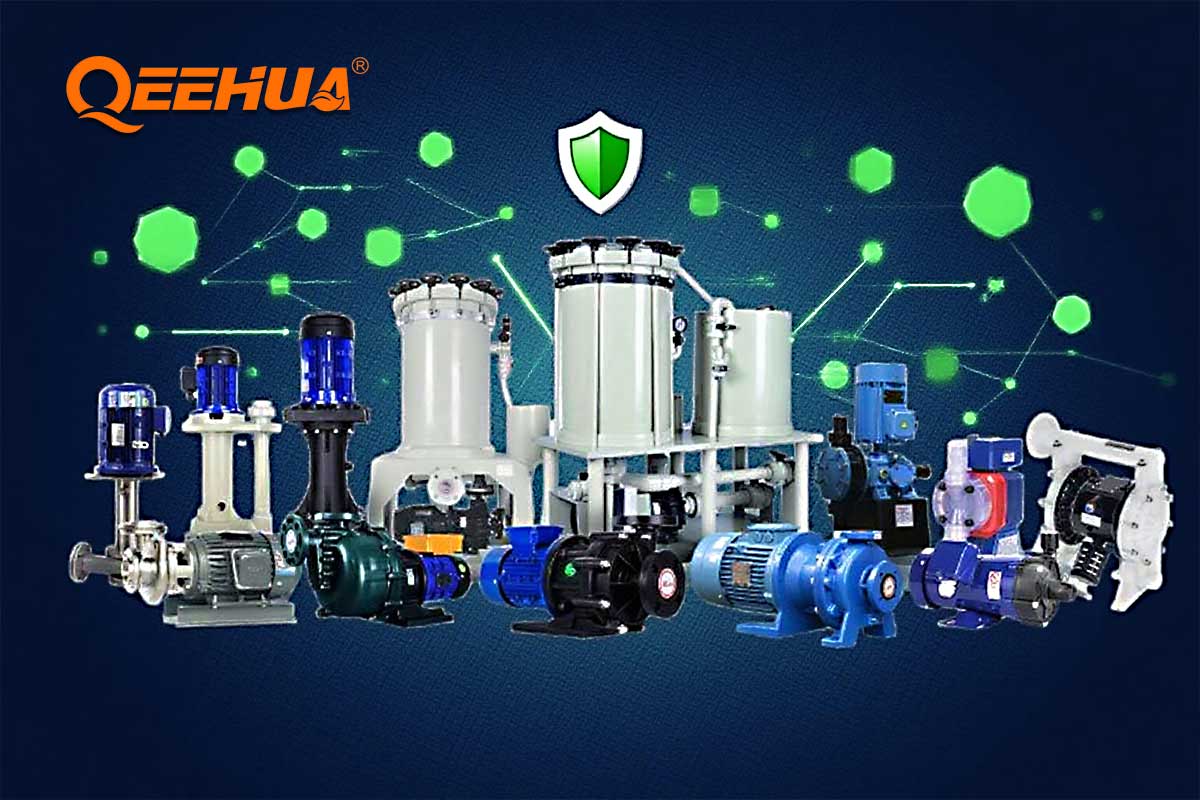
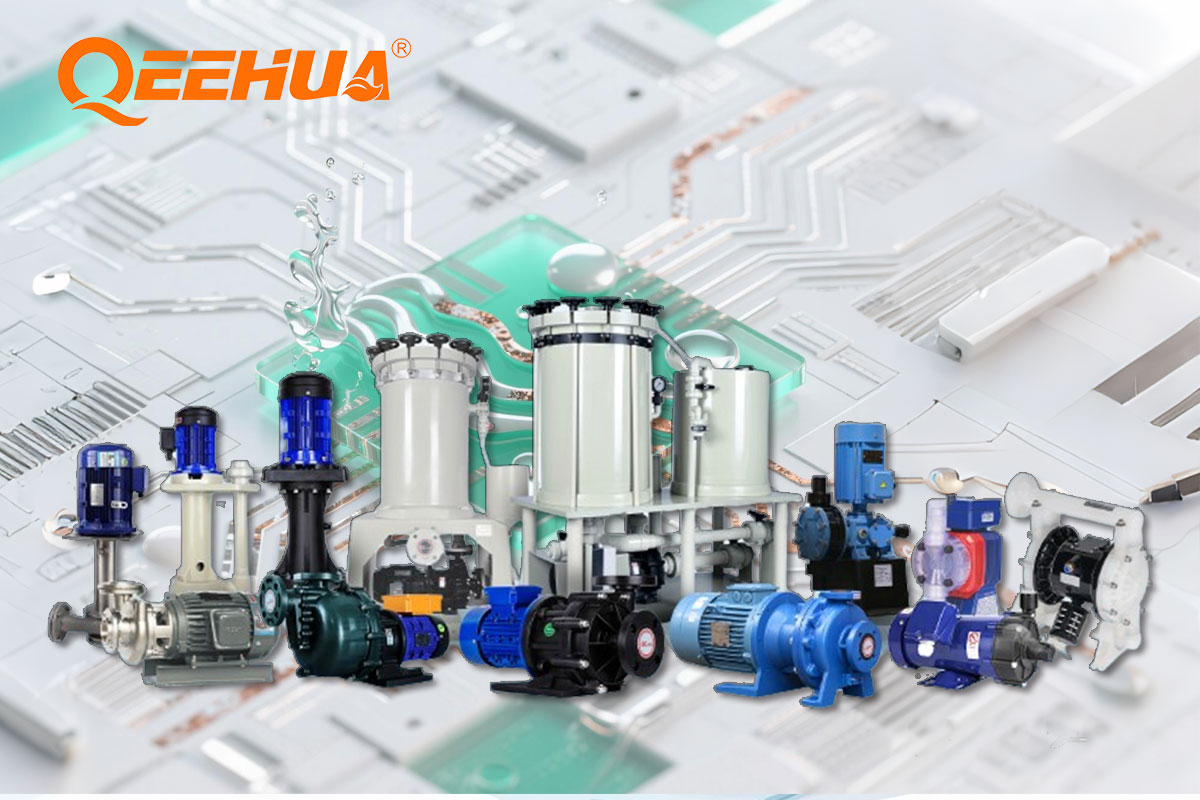
In modern industry, handling and transporting corrosive or hazardous chemicals require equipment with exceptional durability and safety. Chemical pumps are specifically designed to safely manage corrosive fluids, ensuring smooth production processes across various sectors. From pharmaceuticals and petrochemicals to food processing and water treatment, chemical pumps play a vital role. Their use enhances operational safety, boosts efficiency, and contributes significantly to cost savings and environmental protection.
Core Functions and Importance of Chemical Pumps
Chemical pumps are specialized devices designed for transferring chemicals with properties like corrosion resistance and high-temperature tolerance. These features enable them to manage toxic, high-temperature, and corrosive liquids effectively. For applications involving acidic or alkaline chemicals, leak prevention and corrosion resistance are crucial. As a professional chemical pump manufacturer, QEEHUA PUMP ensures each pump can withstand challenging conditions through advanced materials and design.
Key Features of Chemical Pumps
Corrosion-Resistant Materials
Chemical pumps are typically constructed from corrosion-resistant materials such as high-strength stainless steel, Hastelloy alloys, or advanced plastics. These materials resist most chemicals, extending pump life. For instance, in applications with strong acids or alkalis, QEEHUA PUMP offers pumps with special alloy materials to ensure durability and operational stability.
Leak-Proof Design
Leakage is a significant risk when handling hazardous chemicals. QEEHUA PUMP incorporates advanced anti-leakage technologies like magnetic drive and double mechanical seals, effectively preventing harmful substances from leaking into the work environment. This design ensures greater compliance with environmental and safety standards.
High Efficiency and Energy Savings
The efficiency of a chemical pump significantly impacts operational costs. QEEHUA PUMP uses optimized impeller designs and variable frequency drive (VFD) systems to adjust pump speed according to flow requirements, reducing energy consumption and operating costs—ideal for continuous, long-term operations.
How to Choose the Right Chemical Pump
Selecting the right chemical pump involves more than just technical specifications; it requires considering fluid characteristics, operating conditions, and budget. Here are key factors to consider:
1. Understand Fluid Characteristics
First, determine the properties of the fluid being transported, including viscosity, temperature, corrosiveness, and toxicity. For example, highly corrosive liquids require pumps made from corrosion-resistant materials, while high-temperature fluids demand heat-tolerant designs. QEEHUA PUMP offers pumps in various materials and models, with customizable options to meet specific needs.
2. Evaluate Flow Rate and Pressure Requirements
Flow rate and pressure directly influence pump selection and cost. Applications with high flow demand pumps that maintain a stable flow rate. QEEHUA PUMP provides performance curves for each product, helping users assess pump output and select the ideal model for accurate and efficient operation.
3. Consider Operating and Maintenance Costs
The initial purchase price is only part of the total cost; operating and maintenance costs are also important. QEEHUA PUMP focuses on designing energy-efficient, low-maintenance pumps to reduce total cost of ownership (TCO). With reasonable pricing, QEEHUA PUMP chemical pumps fit various procurement budgets, providing excellent value.
Application Scenarios for Chemical Pumps
Wastewater Treatment
In wastewater treatment, chemical pumps transport corrosive waste fluids and reagents. Corrosion-resistant designs prevent pump degradation, ensuring continuous and stable operation.
Chemical Production
Chemical pumps transport various corrosive raw materials and intermediates. QEEHUA PUMP chemical pumps are ideal for applications with strong acids like hydrochloric and sulfuric acid, minimizing leakage risks.
Pharmaceutical Industry
In pharmaceutical production, chemical pumps transfer high-purity reagents, where non-contamination is critical. QEEHUA PUMP uses contamination-free materials to maintain chemical purity.
Food Processing
In the food industry, chemical pumps handle acidic or alkaline cleaning solutions. QEEHUA PUMP’s food-grade pumps use non-toxic materials, complying with hygiene standards and ensuring food safety.
Conclusion: Choosing a Reliable Chemical Pump Manufacturer is Crucial
Finding an experienced and reliable chemical pump manufacturer is essential. With advanced technology and a comprehensive product line, QEEHUA PUMP has become the preferred choice for many businesses. Whether for standard models or custom solutions, QEEHUA PUMP provides tailored chemical pump solutions. Furthermore, we offer excellent after-sales service and technical support to safeguard clients’ operations.
With the further tightening of environmental and safety regulations, the demand for corrosion-resistant, energy-efficient chemical pumps will continue to rise. QEEHUA PUMP is committed to driving innovation in chemical pump technology, helping clients tackle diverse challenges, and becoming a trusted partner for safe and efficient fluid management.