

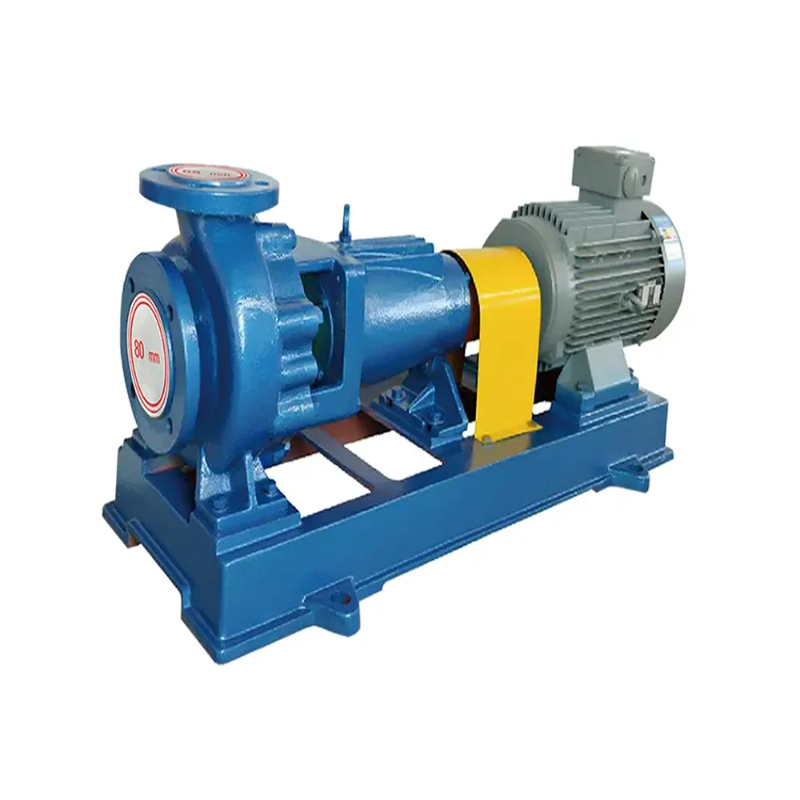
Chemical pump foot valve problems usually show up as loss of prime, slow start-up, unstable discharge flow, motor overload, or repeated dry-running alarms in a suction-lift chemical tank. The foot valve keeps liquid in the suction pipe after shutdown, but it can also become the restriction that starves the pump if the strainer plugs, the valve seat leaks, the material is attacked by acid or alkali, or the tank level falls below the inlet. Before replacing the pump, maintenance teams should check priming, suction-line air leaks, valve cleanliness, liquid level, and NPSH margin. QEEHUA has a separate note on centrifugal pump priming practice; this article focuses on the foot valve and suction-lift details that often get missed in corrosive service.
A foot valve is not a universal cure for a difficult suction line. In a water system it may be a simple check-and-strainer assembly. In a PCB, plating, scrubber, wastewater, or acid-transfer tank, the same part must survive corrosion, crystallization, solids, cleaning chemicals, low liquid levels, and poor access for maintenance. If it is selected like a generic plumbing item, it can turn into a hidden bottleneck at the lowest point of the system.
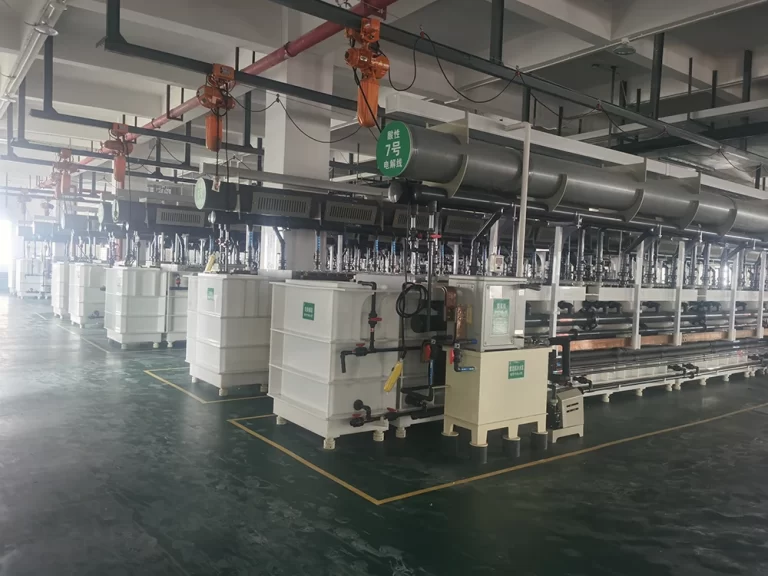
Why Foot Valves Fail In Chemical Tanks
A foot valve sits at the end of the suction pipe. It allows liquid to enter the pipe during operation and limits drainback when the pump stops. In a negative suction arrangement, this helps the operator restart the pump without filling the entire suction line every time. Industry guidance on suction-side troubleshooting also connects starvation, air leaks, submergence, and blocked suction lines with cavitation and poor delivery. For corrosive service, those same issues become more severe because the valve, gasket, spring, pin, or strainer may not match the liquid.
The first failure mode is leakage through the valve seat. If the valve does not seal after shutdown, the suction line drains back into the tank. The next start begins with air in the casing or suction pipe. A centrifugal pump then rattles, loses discharge pressure, or runs hot while operators try to reprime it. If the pump uses a mechanical seal, repeated dry starts can shorten seal life.
The second failure mode is restriction. A foot valve normally includes a strainer or screen. That screen protects the pump from large debris, but it can catch crystals, sludge, broken filter media, plastic chips, anode slime, or tank-bottom solids. The pump may still run, but the inlet pressure drops. Hydraulic Institute guidance on NPSH explains that NPSHA is a system condition, while NPSHR is pump-specific; a blocked suction inlet reduces the available side of that comparison. See the Hydraulic Institute explanation of NPSH and pump operating regions for the general concept.
The third failure mode is poor location. A foot valve that is too close to the tank bottom can pull sludge. A foot valve that is too close to the liquid surface can ingest air when the level fluctuates. A suction pipe that rises and falls between the tank and the pump can trap air pockets. QEEHUA’s local PCB troubleshooting materials flag suction piping that climbs upward, undersized suction pipe, and low liquid level as recurring causes of unstable chemical circulation.
Symptoms, Checks, And Corrective Actions
Use symptoms to decide whether the problem is the foot valve, the suction line, the tank condition, or the pump. Do not start by tightening every flange or increasing motor power. A stronger pump cannot overcome a blocked or aerated suction path safely.
| Field symptom | Likely foot valve or suction-side cause | Practical check | Corrective action |
|---|---|---|---|
| Pump loses prime after shutdown | Foot valve seat leakage, worn gasket, debris under the disc, or suction pipe air leak | Prime the pump, stop it, and watch whether liquid level in the priming port falls after a short hold period | Clean or replace the valve, verify gasket material, pressure-test suction joints, and record how fast prime is lost |
| Low flow with high noise or vibration | Partially plugged strainer, undersized valve, high suction lift, or air pocket in the suction pipe | Compare clean-system flow with current flow; inspect strainer area and suction pipe slope | Clean the inlet, increase open area, shorten suction lift where possible, and review NPSH margin |
| Flow starts, then collapses | Valve disc sticks, solids shift across the screen, or tank level drops below safe submergence | Check tank level during peak flow, not only when the pump is stopped | Raise the low-level stop point, add a maintenance-accessible screen, or move to flooded suction |
| Repeated seal leakage or dry-run alarms | Air remains in the suction line at each restart or the pump is starved during operation | Review start-up sequence, venting, motor current, and discharge pressure trend | Add a verified priming step, use dry-run protection, and consider a different pump layout |
Specification Checks Before Buying Parts
Foot valve selection for a corrosive line begins with the liquid, not the pipe size alone. The buyer should confirm concentration, temperature, solids, crystal risk, pH range, cleaning cycle, and whether the tank is open, covered, agitated, or intermittently drained. The U.S. Department of Energy and Hydraulic Institute pumping system sourcebook stresses that pump problems are often system problems, not only equipment problems. The same logic applies here: the valve, suction piping, operating level, and pump curve must be checked together. The DOE/HI pumping system performance sourcebook is a useful general reference for this system view.
For acid and alkali tanks, valve material should be checked against the actual chemical mix. PP, PVDF, PTFE, FKM, EPDM, stainless steel, and ceramic parts behave differently depending on concentration and temperature. Avoid assuming that a valve sold as corrosion resistant is compatible with every bath. If the line handles oxidizers, chlorides, hypochlorite, hot alkali, ferric chloride, copper chloride, or mixed plating chemistry, ask for a compatibility confirmation instead of using a generic foot valve.
Valve open area also matters. A small strainer may look neat in a quotation, but it can load quickly in plating sludge, developer crystals, or wastewater solids. For liquid with suspended particles, compare the free area of the strainer with the pump inlet area. If the screen plugs often, do not simply drill larger holes. That may protect flow while allowing damaging solids into the pump. Instead, define a cleaning interval, a removable basket, or a better upstream separation method.
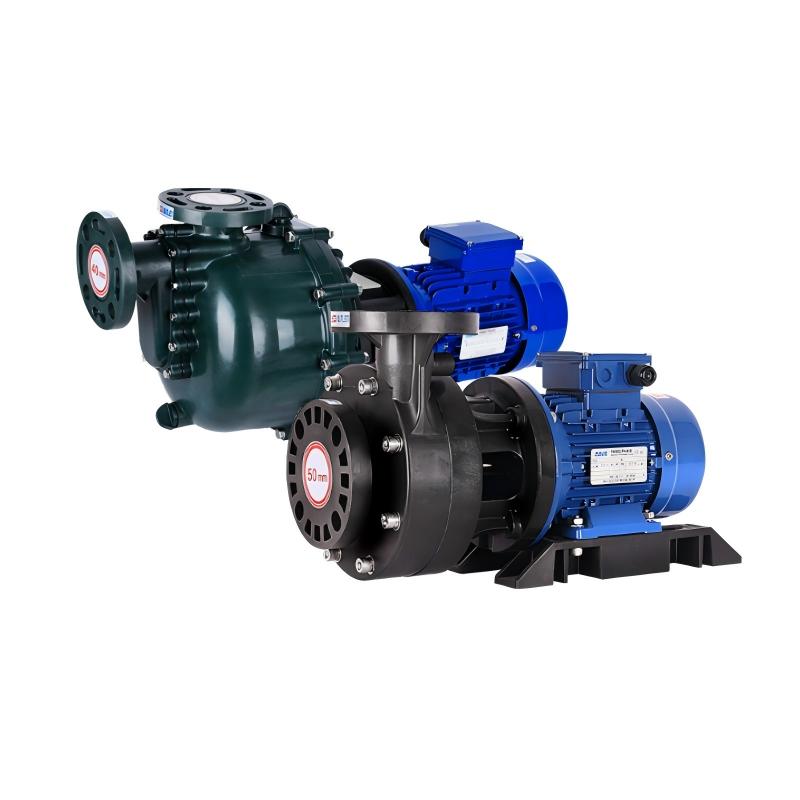
Check suction lift against pump capability. QEEHUA product data for plastic centrifugal pump families lists suction height limits for some self-priming designs, but those limits depend on clean water conditions and correct priming. Corrosive liquids with higher specific gravity, vapor pressure, temperature, or entrained gas reduce the practical margin. If the operator has to reprime the pump after every stop, the line may need a self-priming centrifugal pump explanation, a lower pump elevation, a flooded suction layout, or a vertical pump instead of a larger foot valve.
When A Foot Valve Is The Wrong Fix
A foot valve is often attractive because it is inexpensive and familiar. In corrosive service, it may still be the wrong component if the line is hard to access, the tank collects solids, or operators cannot verify the valve condition safely. Repeated prime loss is a signal to review the layout, not only the valve brand.
Consider changing the arrangement when the suction lift is near the pump’s practical limit, the tank runs through frequent low-level cycles, the liquid crystallizes during shutdown, or the line handles abrasive solids. A flooded suction arrangement can remove the need to lift liquid into the pump. A vertical chemical pump can put the hydraulic end into the tank. A self-priming pump can make restart easier, but it still needs liquid in the casing and cannot ignore NPSH. AODD pumps may fit intermittent transfer or viscous liquids, but air quality, pulsation, and chemical compatibility must be checked.
Do not add multiple check valves to hide a leaking foot valve without calculating the extra suction loss. Each valve adds resistance. On a marginal suction line, the extra pressure drop can make cavitation, air release, or flow collapse worse. If backflow or reverse rotation is also a concern, read QEEHUA’s article on pump check valve failure and backflow risk and separate discharge-side protection from suction-side priming needs.
Maintenance judgment: If the foot valve must be pulled every week, the design is not maintenance-friendly. Move the screen to a serviceable position, improve tank-bottom cleaning, or change the pump arrangement before the next shutdown.
RFQ Checklist For QEEHUA Review
When a buyer asks QEEHUA to review a suction-lift chemical pump duty, the RFQ should include enough information to judge whether a foot valve is suitable. A pump model cannot be selected from flow and head alone when the suction source is below the pump.
| RFQ item | Why it matters | Useful detail to send |
|---|---|---|
| Liquid chemistry | Controls pump, valve, gasket, and strainer material | Chemical names, concentration, pH, temperature, density, and cleaning chemical |
| Suction geometry | Determines prime stability and NPSH margin | Tank level range, pump centerline height, pipe diameter, pipe length, elbows, and valve location |
| Solids and crystallization | Controls screen area and maintenance interval | Particle type, expected sludge, crystal risk, filter upstream or downstream, and cleaning frequency |
| Operating sequence | Shows whether the pump sees dry starts or repeated stop-start cycles | Start frequency, shutdown length, priming method, venting method, and low-level interlock setting |
| Failure history | Separates valve problems from pump or system problems | Photos, pressure trend, flow trend, motor current, noise, vibration, and removed strainer condition |
QEEHUA can review whether a QFC self-priming centrifugal pump, plastic centrifugal pump, magnetic drive pump, vertical pump, or diaphragm pump is a better match for the duty. The right answer depends on the suction level, chemistry, solids, restart behavior, and maintenance access. A low-cost valve is not low cost if it causes unplanned line stoppage, seal leakage, or repeated product-quality defects.
For a corrosive suction-lift line that keeps losing prime, send the liquid data, suction sketch, tank level range, and photos of the foot valve area to info@qeehua.com for a practical QEEHUA selection check.
FAQ
Does every chemical centrifugal pump need a foot valve?
No. A foot valve is mainly used on suction-lift systems where the liquid level is below the pump and the suction line must stay filled after shutdown. Flooded suction, vertical pumps, and some self-priming layouts may not need the same suction-end valve.
Why does a chemical pump lose prime even after replacing the foot valve?
The new valve may not be the real problem. Common causes include suction pipe air leaks, trapped high points, low tank level, wrong gasket material, debris under the valve seat, or suction lift beyond the pump’s practical limit.
Can a clogged foot valve cause cavitation?
Yes. A clogged foot valve or strainer increases suction-side loss and can reduce NPSH available at the pump. The result may be noise, vibration, low flow, seal stress, and impeller damage if operation continues.
What material should a foot valve use for acid or alkali service?
Material depends on the exact chemical, concentration, temperature, solids, and cleaning cycle. PP, PVDF, PTFE, FKM, EPDM, stainless steel, and ceramic parts should be checked against the real bath instead of chosen from a generic corrosion-resistant label.
When should I choose a self-priming or vertical pump instead of a foot valve?
Consider another layout when the foot valve is hard to clean, the tank has sludge or crystals, the suction lift is high, low-level operation is frequent, or the pump loses prime after every stop. The better option depends on the duty point and chemical compatibility.
