

Extend the life of your chemical acid pump. Learn maintenance tips for sulfuric acid and corrosive liquid transfer.
Table of Contents
1. Selecting the Right Pump for Sulfuric Acid
Choosing a sulfuric acid transfer pump requires a deep understanding of concentration and temperature. For strong, concentrated acids, specialized plastic materials or high-grade alloys are required. Standard acid pumps might handle dilute solutions, but high temperatures demand PVDF or ceramic-lined magnetic drives to prevent heat-induced deformation.
 QEEHUA acid-resistant pump optimized for high-concentration acids.
2. Daily Inspection Routines: Identifying Early Failure
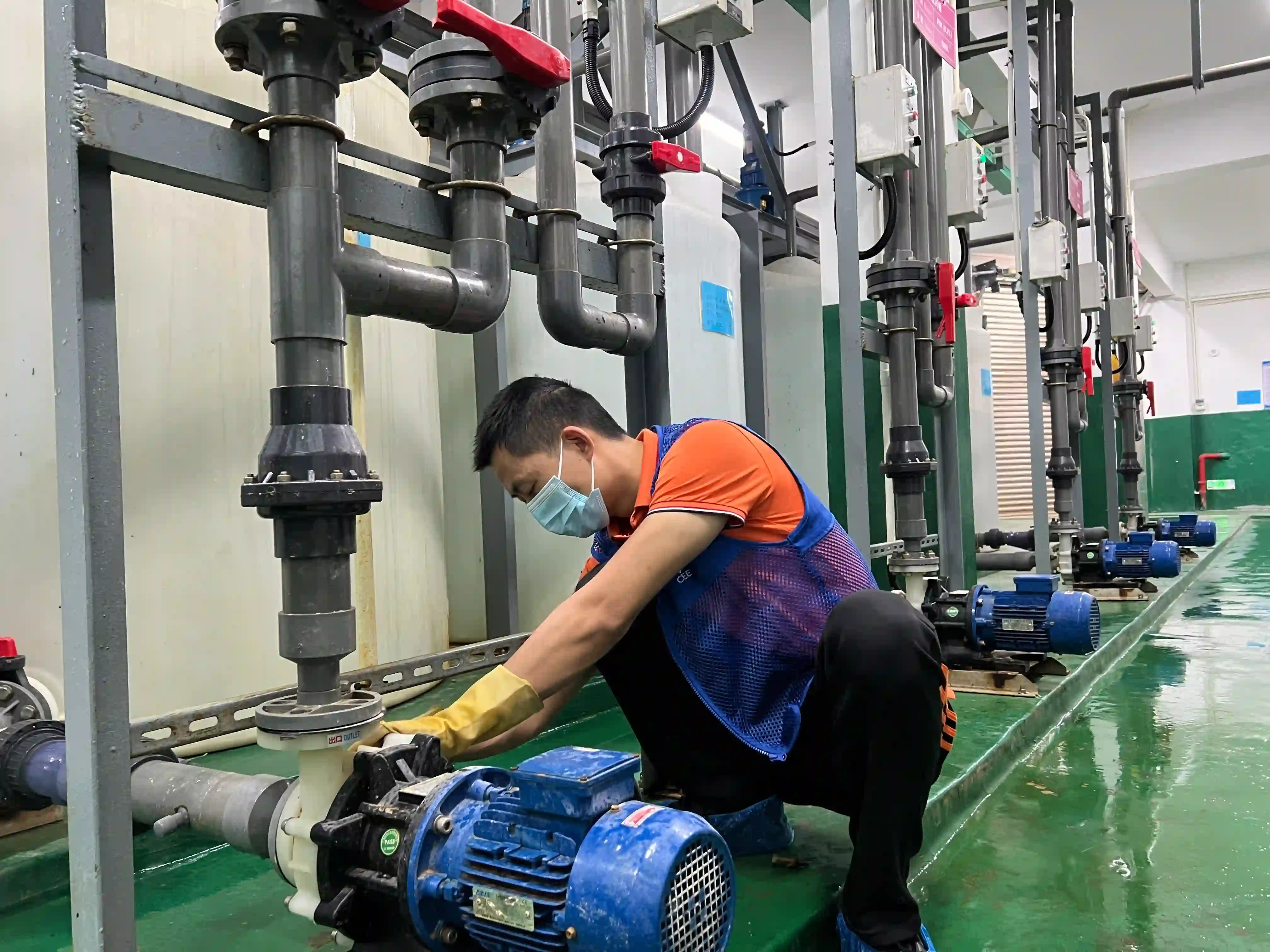
Preventative maintenance starts with the ears and eyes. Listen for abnormal noise (cavitation sounds like gravel in the pump) and check for vibration. In electroplating environments, checking the floor around the pump for leaks is vital. Even a small drop of acid can lead to significant safety hazards over time.
3. Proper Valve and Bottom Valve Installation
A common error found in our industry analysis is installing the check valve or bottom valve in the wrong direction. Always follow the arrow for flow direction and ensure the bottom valve is submerged at least 200mm below the liquid level. This prevents the pump from sucking in air and ensures it remains primed for the next cycle.
4. Dealing with Crystalline Buildup in Acid Lines
In processes involving chemicals that crystallize (like certain plating baths), digital flow meters can become clogged. Adding heat tracing or choosing a “clog-resistant” flow meter design is recommended. Regular flushing with pure water after a shift can also prevent the buildup that causes sensor inaccuracy and pipe blockage.
5. Conclusion: Reliable Service for Harsh Chemicals
Maintenance is an investment, not an expense. By following these expert guidelines, you can double the lifespan of your chemical pumps. Need a maintenance checklist for your facility? Contact our support team for a free PDF guide!
