



Direct answer
For PCB copper sulfate plating lines, choose a corrosion-resistant sealless magnetic drive pump when leakage control is important, and specify the wet-end material by sulfuric acid concentration, copper sulfate load, chloride contamination risk, bath temperature, solids level, and required flow stability. PVDF is often suitable for many acidic PCB plating duties within its temperature limit, while fluorine-lined or PTFE/FEP/PFA wet ends become stronger choices for hotter, more aggressive, or higher-risk acid systems. The pump should also be paired with compatible O-rings, filtration, dry-run protection, and pressure or flow monitoring.
This topic is narrower than a general acid-transfer pump question. A copper sulfate plating circulation pump must protect bath chemistry, board quality, operators, and nearby equipment at the same time. The line may run continuously, and even a small leak, particle release, or flow drift can show up as rough plating, thin copper, burning, pinholes, or unstable thickness distribution.
QEEHUA local application materials list PCB wet processes such as electroplating copper, electroless copper, nickel/gold, tin, etching, chemical silver, and OSP as chemical circulation duties where magnetic pumps, vertical pumps, filters, metering pumps, and diaphragm pumps may all appear. For the pump itself, the usual starting point is a sealless magnetic drive design. If the engineer is comparing the basic pump family first, QEEHUA’s guide on choosing a magnetic drive pump for PCB wet process lines is the closest companion article.
Why copper sulfate plating is hard on pumps
Acid copper plating is not just water with copper salt. The bath is normally acidic, conductive, metal-bearing, and sensitive to contamination. It may include sulfuric acid, copper sulfate, chloride, brighteners, levelers, wetting agents, and organic additives. Those additives support plating quality, but they also make filtration, pump cleanliness, and stable circulation more important.
NIOSH identifies sulfuric acid as a corrosive chemical and notes that it can react violently with water while releasing heat. It also lists skin, eye, and respiratory exposure concerns. That does not define a PCB bath formula, but it explains why pump leakage, splash, and uncontrolled maintenance are not minor issues in acid plating areas. The public NIOSH sulfuric acid guidance is a useful safety reference for engineers who handle acid circulation equipment.
Copper sulfate itself is a soluble copper salt used in many industrial and laboratory contexts. For pump selection, the key point is not only chemical corrosion. The pump must also avoid shedding particles, rust, seal debris, or metal ions into a bath where copper deposit quality depends on controlled chemistry. PubChem’s copper sulfate compound page is a simple reference for the chemical identity, while the real compatibility decision still depends on bath concentration, temperature, additives, and local process limits.
EPA’s metal finishing page also confirms that electroplating, chemical etching, electroless plating, and printed circuit board manufacture fall within metal finishing wastewater and process-water concerns. This matters because pump leaks and drain-down errors can become environmental and wastewater-control problems, not only maintenance events. See the EPA Metal Finishing Effluent Guidelines for the regulatory context.

Material and seal selection
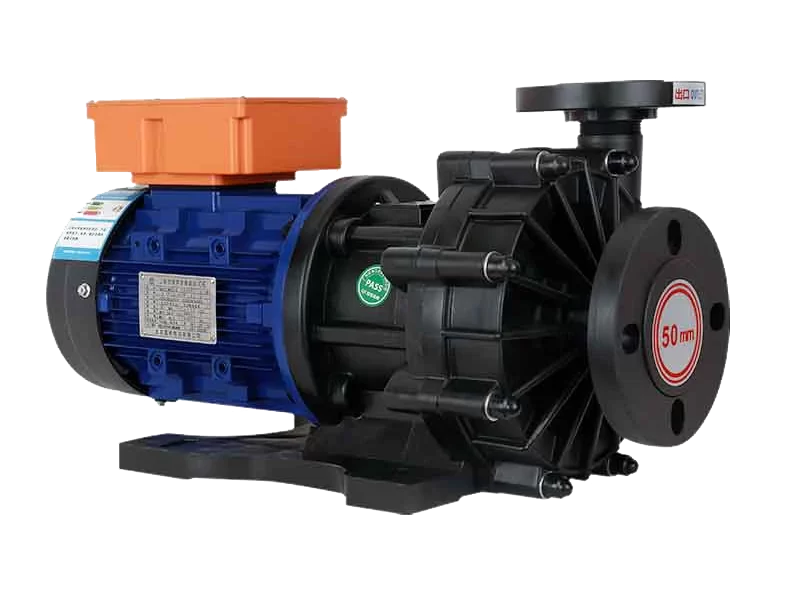
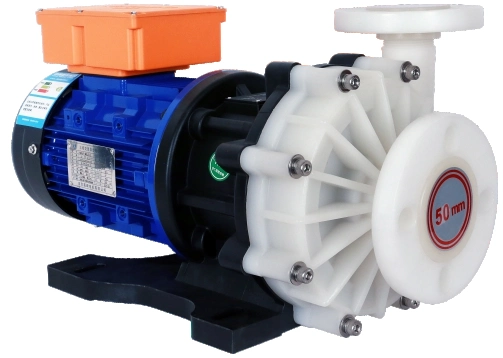
The first pump decision is the wet-end material. QEEHUA product knowledge separates common acid and alkali duties from stronger acid, high-temperature, and solvent duties. PPH is listed for ordinary acid and alkali service at lower temperatures. PVDF is positioned for strong acid service and smoother wet-end surfaces. CFRETFE/PTFE and fluorine-lined structures are positioned for stronger acid, alkali, and solvent resistance over a wider temperature range.
For copper sulfate plating, the usual buyer mistake is to ask only for flow and head. That is not enough. A useful RFQ also states sulfuric acid concentration, copper sulfate concentration, chloride level if relevant, bath temperature, filtration loop pressure, continuous operating hours, any suspended particles, and whether the pump is below, beside, or above the tank liquid level.
| Selection point | Preferred direction | Risk if ignored |
|---|---|---|
| Wet-end body material | Use PVDF for many acidic PCB plating duties within its temperature and compatibility range. Consider fluorine-lined or PTFE/FEP/PFA structures for hotter or more aggressive acid service. | Body swelling, cracking, corrosion, metal contamination, or sudden leakage. |
| Shaft and bearing material | Use ceramic or SSIC materials where corrosion and wear resistance are required. Avoid exposed metals in the liquid path unless the chemistry has been reviewed. | Wear debris, shaft scoring, vibration, and particles in the plating bath. |
| O-ring and static seals | Match EPDM or FKM to the actual acid, temperature, and additive package. Do not assume one elastomer fits all plating baths. | O-ring swelling, hardening, dripping, and repeated cap or casing leakage. |
| Magnetic drive containment | Use sealless magnetic drive construction when leakage control is a priority. Add dry-run and overload protection for continuous lines. | Seal leakage, motor overload, isolation sleeve damage, and unplanned shutdowns. |
| Filtration loop design | Keep pump flow, filter micron rating, cartridge pressure drop, and bypass logic in the same specification. | Low turnover, high pressure, broken cartridges, and particles returning to the plating tank. |
Seal choice deserves special attention. QEEHUA’s local pain-point spreadsheet flags incompatible seals as a direct cause of leakage in plating systems. It also warns against ordinary rubber in strong acid or strong alkali areas. If the bath is acidic but includes oxidizing additives, high temperature, or cleaning chemicals, the seal review should include all chemicals that touch the pump during operation, cleaning, and maintenance. For deeper seal symptoms, see the article on chemical pump O-ring swelling in PCB plating lines.
Flow, temperature, and filtration control
A copper sulfate plating pump should be selected around the real operating point, not only the nameplate flow. The system curve includes pipe length, bends, valves, filter housing pressure drop, cartridge loading, spray or eductor losses, and return-line elevation. As the filter loads with particles, the operating point moves. If the pump is selected with no margin, the line may start correctly after maintenance and then lose circulation during production.
Stable circulation protects plating uniformity. Low flow can reduce bath exchange at the board surface. Excessive flow can disturb additives, increase foaming, overload filters, or raise pressure at weak pipe joints. For system-curve thinking, the related QEEHUA article on pump curve versus system curve for PCB chemical pumps gives the calculation background.
Temperature also changes the decision. Higher temperature can soften elastomers, increase vapor and gas-release problems, and accelerate corrosion at weak material boundaries. Local QEEHUA materials list PVDF temperature capability higher than PPH, and fluorine-lined structures for stronger chemical resistance. The engineer should still confirm the specific bath and maximum upset temperature. The upset case matters more than the normal average.
Filtration should not be treated as a separate purchase. If the cartridge micron rating is too fine for the solids load, pressure rises fast. If it is too coarse, particles return to the bath. QEEHUA’s recent PCB plating filter RFQ checklist is useful when the buyer needs to combine pump flow, filter area, micron rating, pressure drop, and spare-cartridge planning in one specification.

RFQ and commissioning checks
A strong RFQ for copper sulfate plating duty should describe the liquid and the system. It should not only list a pump model. The supplier needs enough context to select material, impeller, motor, seal package, and protection logic.
Minimum RFQ fields: bath name, sulfuric acid concentration, copper sulfate concentration, chloride range if controlled, operating temperature, maximum upset temperature, flow, total head, filter model, expected clean and dirty filter pressure, tank arrangement, suction condition, pipe size, run schedule, dry-run protection requirement, and any wastewater or containment requirement.
During commissioning, verify rotation direction, priming, valve position, filter venting, pressure gauge response, flow reading, vibration, motor current, and leak-free operation at all joints. The team should also simulate low-level or blocked-filter alarms before production boards enter the line. This is where controls matter. The QEEHUA article on PCB pump interlock logic explains how level, pressure, flow, and VFD signals can protect a wet process line.
For stronger acid or higher-temperature specifications, a QEEHUA fluorine-lined magnetic pump may be the better starting point than an ordinary plastic pump. One relevant product family is the QBF Series fluorine magnetic pump. Use the product page as a model-family reference, then confirm the exact wet-end material and duty point with the QEEHUA engineering team.
FAQ
Is PVDF always enough for copper sulfate plating solution?
No. PVDF is often suitable for many acidic PCB plating duties, but the final choice depends on sulfuric acid concentration, temperature, additives, chloride level, cleaning chemicals, and upset conditions.
Why use a magnetic drive pump instead of a mechanical seal pump?
A magnetic drive pump removes the dynamic shaft seal, so it reduces leakage risk in acidic copper plating circulation. It still needs dry-run protection, proper priming, and clean fluid conditions.
What causes unstable flow in a PCB copper plating circulation loop?
Common causes include clogged cartridges, air in the suction line, undersized suction piping, excessive valve throttling, incorrect rotation, filter pressure rise, and a pump operating away from its proper duty point.
Which seal material should be specified for acid copper plating?
The seal must match the full bath chemistry and temperature. EPDM and FKM can both appear in acidic service, but neither should be selected without checking additives, oxidizers, cleaning chemicals, and maximum temperature.
What should be checked before replacing only the pump?
Check filter pressure, pipe blockage, suction geometry, tank level, flow meter accuracy, valve position, rotation direction, and interlock status. A new pump will not solve a system restriction or air-ingress problem.
Sources
Need help matching a copper sulfate plating pump to your bath chemistry, filter pressure, and production line layout? Email QEEHUA at info@qeehua.com with your flow, head, temperature, and chemical data.
Final note: Pump selection for PCB copper sulfate plating should be based on the whole circulation loop. The right material, compatible seals, stable operating point, clean filtration, and protective controls work together. Treat any one of them as optional, and the plating line can still lose quality or leak.