



Direct Selection Answer
For PCB alkaline developer and stripping lines, select the pump by chemical strength, temperature, solids or crystal risk, required flow stability, and seal compatibility. Mild alkaline developer service may allow ordinary corrosion-resistant plastic pumps when temperature and concentration stay inside limits. Strong caustic stripper, sodium hydroxide cleaning, and high-temperature alkaline baths need a more conservative check of wetted materials, shafts, bearings, O-rings, dry-run protection, and maintenance access.
This topic is different from a broad sodium hydroxide transfer problem. QEEHUA already has a general article on sodium hydroxide transfer pump selection. This article focuses on PCB wet process equipment, where the same alkaline fluid can affect board quality through unstable developer flow, stripping residue, foam entrainment, pump leakage, crystal blockage, or metallic contamination.
Developer, Stripper, and Caustic Bath Differences
PCB wet processing uses several alkaline liquids. They do not behave the same inside a pump. Developer systems may use alkaline carbonate chemistry and can form crystals when temperature, concentration, shutdown drainage, or evaporation are poorly controlled. Stripping systems are usually harsher because they attack organic film and may contain stronger caustic chemistry. Cleaning and pretreatment tanks can be hot, high-pH, and loaded with oil, residue, or fine particles.
The chemical identity matters. PubChem identifies sodium carbonate as an alkaline inorganic salt, while CDC/NIOSH treats sodium hydroxide as a caustic substance with serious exposure limits and handling concerns. In pump selection, that difference translates into material checks, seal choice, operator protection, and whether the plant should treat the loop as mild alkaline circulation or strong caustic service. The NIOSH Pocket Guide entry for sodium hydroxide is useful safety background for caustic systems.
Local QEEHUA application notes also connect PCB wet process lines with magnetic pumps, vertical pumps, chemical filters, metering pumps, and diaphragm pumps. For alkaline developer and stripping, the pump is not just moving liquid from one point to another. It is protecting spray uniformity, board surface cleanliness, chemical concentration, and the reliability of a production line that cannot tolerate repeated leakage or unstable circulation.

Material and Seal Choices
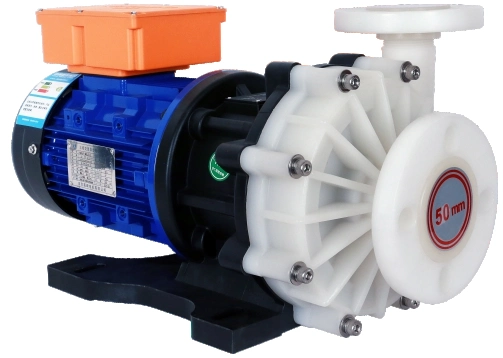
Material compatibility should be confirmed for the exact bath formula. QEEHUA’s product training materials describe PPH and FRPP as suitable for ordinary acid and alkali solutions within their temperature boundaries. PVDF offers a smoother surface and wider use in stronger or cleaner chemical services. CFRETFE and fluoropolymer-lined options are used for more aggressive acid, alkali, solvent, or high-temperature environments. Stainless steel can be suitable for some alkaline duties, but QEEHUA’s vertical-pump notes warn that stainless steel is not a general answer for chloride-containing or most acidic chemicals.
Seals require the same discipline. QEEHUA’s internal material table states that EPDM is suitable for many alkaline solutions and ordinary acid service, while FKM is more associated with acidic solutions and some solvents and is not recommended as a general alkaline-seal answer. That does not mean one O-ring material should be chosen blindly. The supplier still needs the concentration, temperature, additive package, cleaning chemicals, and expected operating hours.
| Pump decision | Alkaline developer / stripping concern | Practical selection note |
|---|---|---|
| Pump body | Ordinary alkaline developer versus stronger caustic stripper | Confirm PPH, FRPP, PVDF, CFRETFE, FEP/PFA, or stainless compatibility against the actual bath |
| Shaft and bearing | Strong alkali, particles, and dry running can accelerate wear | Use ceramic, silicon carbide, or other confirmed wear-resistant combinations when the duty justifies it |
| O-rings and gaskets | Wrong elastomer can swell, harden, or leak | Do not copy an acid-service seal choice into a strong alkaline tank without review |
| Magnetic drive versus seal pump | Leak control and clean production environment | Magnetic drive can reduce dynamic seal leakage risk, but it still needs liquid lubrication and dry-run protection |
| Vertical pump option | Tank-side circulation, sump layout, and low-level exposure | Use a vertical pump where layout, liquid level, and material compatibility fit the tank design |
If the buyer is comparing a vertical tank pump for an alkaline sump, a relevant product starting point is QEEHUA’s QHA corrosion-resistant chemical vertical pump. Use the product page as a model reference, not as a substitute for a chemical compatibility check.
Flow Stability and PCB Defects
Alkaline pump problems often show up first as a board-quality issue. In developer service, unstable flow can leave residue or incomplete development. In stripping service, poor circulation can leave film fragments, uneven chemical attack, or contamination that travels downstream. The pump may still run, but the line loses process control.
QEEHUA’s local PCB pain-point table highlights several real field risks. Strong alkaline stripping liquid can attack pump shafts or bearings when the wrong material is used. Developer liquid can crystallize and block an impeller or pipe if temperature and shutdown drainage are poorly managed. Foam can enter the pump and create gas binding. Valve corrosion can prevent flow adjustment. Those symptoms are practical reasons to connect pump selection with filtration, spray pressure, tank turnover, and maintenance planning.
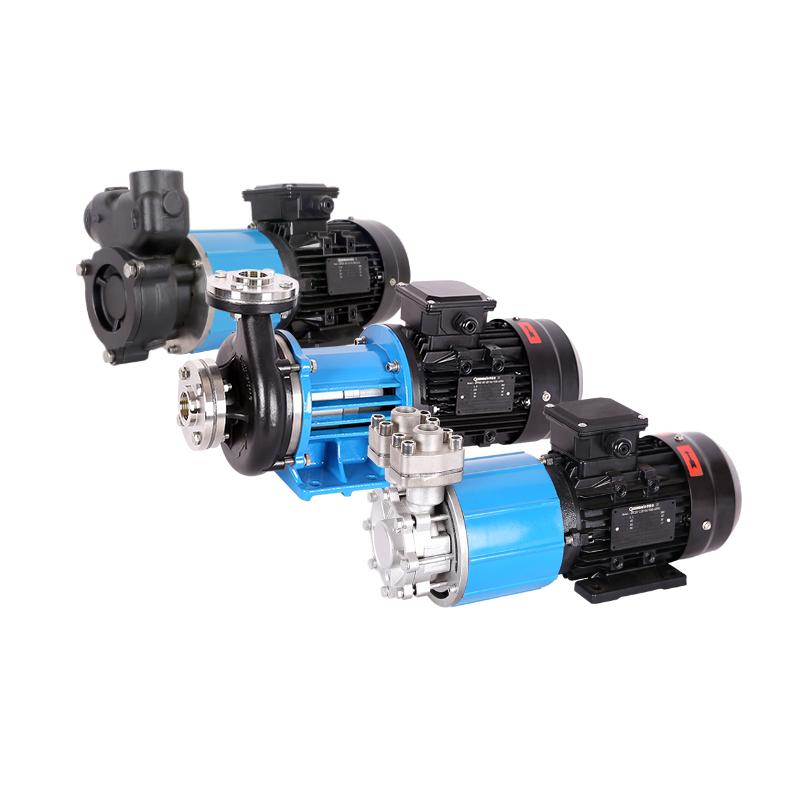
When the issue is crystallization rather than corrosion, the most helpful internal reference is QEEHUA’s article on PCB developer crystallization and pump clogging. It supports a different decision than a normal transfer-pump quote. The buyer may need heat tracing, drainage, wider passages, a cleaning cycle, or a filter plan rather than simply a larger motor.
Installation and Protection Checks
Even the right material can fail in the wrong installation. Alkaline developer and stripping systems need stable inlet conditions, correct liquid level, clear suction piping, and protection against dry running. Magnetic drive pumps are especially sensitive because the internal bearing surfaces and containment area depend on liquid cooling and lubrication. If the pump runs dry after a tank is drawn down, heat and friction can damage the internal parts quickly.
Use the pump selection step to define protection, not just model size. Low-level sensors, flow switches, overload protection, phase-loss protection, and startup checks are practical safeguards. QEEHUA’s article on PCB wet process pump dry running gives a useful failure background for this part of the RFQ.
Field warning signs:
- Developer residue appears after a pump change or piping modification.
- Flow drops during long runs but partially recovers after cleaning.
- Foam accumulates near the suction point and the pump loses stable discharge.
- The O-ring looks swollen, flattened, brittle, or chemically attacked.
- Bearings or shafts show unusual wear in alkaline stripping service.
- The pump restarts after shutdown with noise, heat, or delayed flow.

RFQ Checklist
A strong RFQ should make the chemical service measurable. Avoid sending only “alkaline pump” or “developer pump” as the description. Those labels do not tell the supplier enough about concentration, additives, operating temperature, cleaning practice, crystal risk, foam risk, solids loading, or whether the pump must protect a clean PCB transfer area.
| RFQ item | What to send | Why it matters |
|---|---|---|
| Bath identity | Developer, stripper, sodium hydroxide cleaning, alkaline rinse, or mixed alkaline process | Separates mild carbonate systems from strong caustic service |
| Chemical data | Concentration, pH range, additives, temperature, and cleaning chemicals | Controls pump body, bearing, shaft, and O-ring selection |
| Process quality target | Residue, incomplete development, film removal, particle limit, or spray pressure stability | Links pump flow with the real board-quality problem |
| Operating pattern | Continuous, batch, intermittent, hot standby, or frequent shutdown | Affects crystal control, drainage, and dry-run protection |
| Installation layout | Tank level, suction height, pipe route, foam area, and maintenance access | Prevents air entrainment, gas binding, and unsafe service work |
| Protection requirement | Low-level stop, overload, phase loss, flow switch, or VFD control | Reduces damage from dry running, overload, and unstable flow |
Because metal finishing and printed circuit board production are recognized process categories in U.S. EPA metal finishing guidance, plants should also think about chemical handling, wastewater path, and maintenance waste when they specify the pump. The EPA metal finishing effluent guidelines are useful background for that wider process-control view.
The final selection should connect three things: chemical compatibility, hydraulic stability, and maintenance behavior. If any one of them is weak, the pump may look acceptable on paper but still create residue, leaks, clogged lines, or downtime on the PCB line. For related material-seal risk, QEEHUA’s article on chemical pump O-ring swelling is a useful follow-up before approving final spare parts.
Need help checking an alkaline developer or stripping pump specification? Send the bath name, concentration, temperature, tank volume, required flow, pump position, and current failure symptom to info@qeehua.com and QEEHUA will review the basic pump-selection points with you.
FAQ
Can the same pump handle PCB developer and alkaline stripper?
Not automatically. Developer and stripper can differ in concentration, additives, temperature, crystal risk, and attack on seals or bearings. Confirm the exact chemistry before using one pump model for both duties.
Is EPDM always the best O-ring for alkaline pump service?
EPDM is often a strong candidate for alkaline service, but it is not universal. The final choice depends on concentration, temperature, additives, cleaning chemicals, and whether the bath includes oxidizers or solvents.
Why does developer crystallization affect pump selection?
Crystals can block impellers, valves, filters, and small passages. A buyer may need drainage, temperature control, wider passages, and a cleaning plan instead of only increasing pump size.
Should a magnetic drive pump be used for strong alkaline stripping?
A magnetic drive pump can reduce shaft-seal leakage risk, but it must be chemically compatible and protected from dry running. Strong alkaline service still requires material, bearing, temperature, and protection checks.
What causes unstable flow in PCB alkaline wet process pumps?
Common causes include suction air, foam entrainment, crystal buildup, clogged filters, valve corrosion, wrong pump sizing, worn bearings, and dry-running damage. Check hydraulics and chemistry together.